
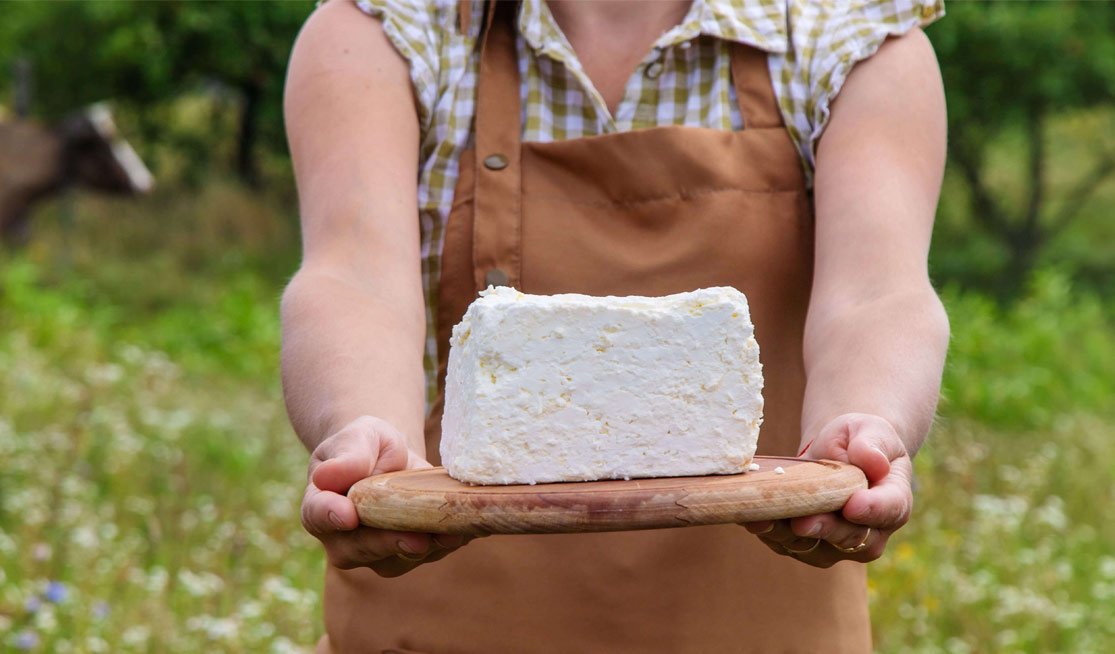
Romanian cheese is no longer just a staple for Eastern European households. In recent years, it has become a growing presence on the UK market, driven by both diaspora demand and a wider interest in authentic, traditional foods. Trade data shows that the United Kingdom is already among Romania’s top export destinations for cheese, with significant volumes shipped annually—placing it alongside countries with long-established cheese cultures such as Italy and Greece.
A long tradition of cheesemaking in Romanian villages
Cheesemaking in Romania is rooted in rural life and pastoral traditions that go back centuries. Historical documents from the 14th century1 already mention pressed cheeses produced in mountain areas, where livestock farming shaped both diet and local economies.
In villages, cheese developed as a practical way to preserve milk, using simple methods based on raw milk, natural rennet and minimal processing. Over time, these techniques evolved into distinct regional styles, influenced by pasture, climate and the type of milk available, cow or sheep, while remaining closely tied to local communities and small-scale production.
The most iconic Romanian cheeses you should know
Romanian cheese culture is defined less by industrial styles and more by a handful of traditional varieties that grew out of village life and local conditions. Among the best known is telemea, a white brined cheese traditionally made from sheep’s milk, though cow, goat or mixed milk versions are common today. Similar in style to feta, telemea is prized for its clean, slightly tangy taste and its role as an everyday staple in Romanian households..
Another variety is cașcaval, a semi-hard cheese made using a pasta filata technique, where the curd is scalded and stretched. This process, documented in Romanian cheesemaking for centuries, gives cașcaval its elastic texture and mild, slightly sweet flavour, making it one of the most widely consumed cheeses both locally and abroad.In mountain regions, brânza de burduf stands out as one of the oldest matured cheeses in Romania. Made by mixing sheep and sometimes cow curd with salt and maturing it traditionally in animal skin or bark, it has a strong, distinctive taste closely linked to pastoral life and seasonal grazing.
Why are Romanian cheeses gaining popularity in the UK?
Romanian cheeses are showing up more often in the UK. They first arrived through community demand. People were looking for flavours they already knew and stayed because others started picking them up out of curiosity.
They also make sense in everyday cooking. White brined cheeses, fresh curds or mild semi-hard varieties don’t feel intimidating. They work in simple meals, on toast, in salads, or alongside dishes people already cook.
As imports have increased, these cheeses have become easier to find, especially in specialist stores and online. For many shoppers, the first encounter is often in a Romanian shop in the UK, where familiar products sit alongside new discoveries. Romanian cheese isn’t something people always set out to buy. It’s something they notice, try once, and then keep buying.
How to choose and enjoy Romanian cheese if you’re new to it
If you’re new to Romanian cheese, the easiest place to start is with familiar textures. White brined cheeses like telemea are close to feta in style, while semi-hard cheeses such as cașcaval sit comfortably between mild cheddar and mozzarella. Choosing these first helps you understand the flavour profile without stepping too far outside your comfort zone.
Pay attention to how the cheese is meant to be eaten. Some varieties are designed to be fresh and lightly salted, others improve with a little time at room temperature. Romanian cheeses are rarely overworked, so their taste comes through best when served simply, without heavy sauces or complicated pairings.
When it comes to enjoying them, think everyday rather than special occasions. Slice them into salads, crumble them over vegetables, melt them in sandwiches or serve them with bread and a drizzle of olive oil. Romanian cheese doesn’t ask for ceremony. It just fits naturally into meals, which is often why people keep coming back to it.
Romanian cheeses don’t try to stand out. They’ve been part of everyday meals for generations, and that’s exactly how they still work best. They are simple, familiar, and easy to enjoy without overthinking.
As they become easier to find in the UK, they offer something slightly different, without feeling foreign. They have a long story behind them and they always find their place on the table.
References
1 Hoha G. V., Usturoi M. G., Păsărin P. B., Nistor C. E., 2020 – Research on the history of manufacturing pressed cheese in Romania. Lucrări Științifice – Universitatea de Științe Agricole şi Medicină Veterinară, Seria Zootehnie 2020 Vol. 73.