
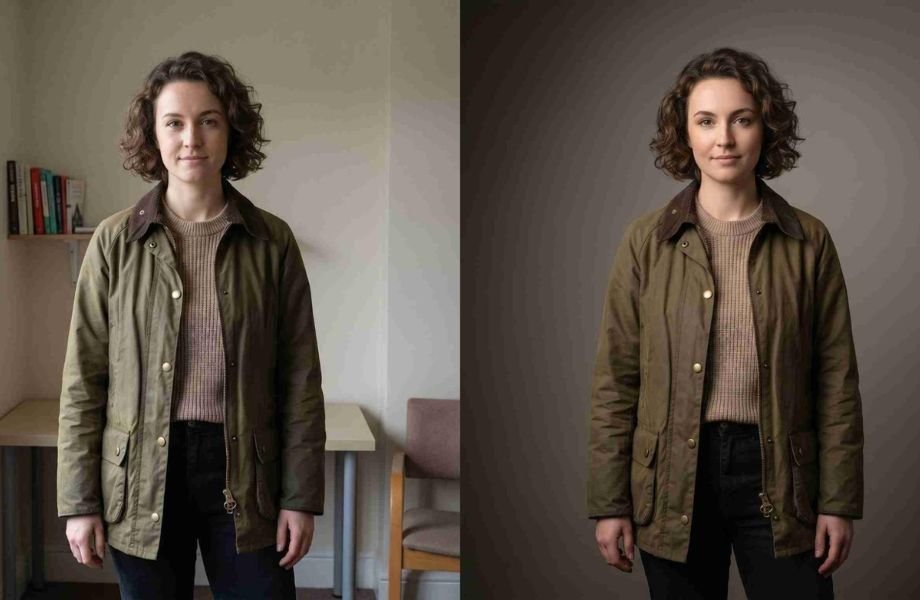
The biggest shift in content creation isn’t happening in studios.
It’s happening on laptops.
Solo creators today are producing visuals that look like they came out of professional setups. Not because they suddenly have bigger budgets, but because the tools have changed how production works.
At the center of this shift is face swap.
It’s not just a feature anymore. It’s becoming a workflow.
The Old Model: Talent + Team + Time
Creating high-quality images used to require coordination.
A typical shoot involved:
- A model
- A photographer
- Lighting setup
- Styling and makeup
- Editing and retouching
Even for a single image, the process could take hours or days.
For solo creators, this model was limiting.
Not because of lack of creativity, but because of dependency.
The New Model: Asset-Based Creation
The way content is created has changed.
Instead of building everything from scratch, creators now work with assets.
A base image. A pose. A background. A concept.
From there, identity can be adapted.
This is where face swap becomes important. It allows creators to take an existing visual and transform it into something personal without recreating the entire scene.
Within Higgsfield, this process becomes fluid. You’re not producing images step by step. You’re shaping them.
Replacing Roles Without Losing Quality
Face swap does something subtle but powerful.
It compresses roles.
Instead of needing multiple people, one creator can handle everything:
The “model” becomes reusable identity
The “photographer” becomes the base asset
The “editor” becomes automated refinement
Higgsfield enables this by handling blending, lighting alignment, and facial consistency in a way that feels natural.
The result is not just efficiency.
It’s independence.
Studio Quality Without the Studio
One of the biggest concerns for solo creators is quality.
Can AI-generated visuals actually look professional?
The answer depends on execution.
With face swap, quality comes from how well identity integrates into the scene.
That includes:
- Matching lighting conditions
- Aligning facial angles
- Preserving expression consistency
Higgsfield focuses on these details, which is why outputs feel realistic instead of artificial.
The difference is noticeable.
You’re not just placing a face. You’re embedding it.
Consistency Becomes a Brand Asset
For creators, consistency is everything.
Audience recognition depends on visual identity.
Face swap allows creators to maintain the same identity across different environments without needing new shoots every time.
This means you can:
- Appear in multiple locations
- Wear different styles
- Create diverse scenarios
All while keeping the same face.
Higgsfield makes this consistent enough that your content starts to feel like a cohesive brand rather than random posts.
Speed Changes the Creative Process
Speed is not just about saving time.
It changes how creators think.
When production is slow, ideas are filtered.
Only the “best” ones get executed.
When production becomes fast, experimentation increases.
With face swap, creators can:
- Test multiple concepts quickly
- Generate variations without effort
- Iterate based on performance
Higgsfield supports this by reducing the gap between idea and output.
That’s where creative growth happens.
Cost Is No Longer a Barrier
Traditional production is expensive.
Even a basic shoot can involve:
- Equipment costs
- Location expenses
- Hiring professionals
- Post-production work
Face swap removes most of these costs.
Creators can produce high-quality visuals without external resources.
This levels the playing field.
A solo creator can now compete with larger teams purely based on creativity and consistency.
Creative Freedom Expands Beyond Physical Limits
One of the most underrated advantages of face swap is freedom.
Creators are no longer limited by:
- Location
- Availability
- Physical resources
You can create content in environments you’ve never visited.
You can experiment with styles you don’t own.
You can explore ideas without logistical constraints.
Higgsfield enhances this by making the process smooth enough that creativity is not interrupted by technical complexity.
The Technology Behind the Realism
What makes face swap powerful is not just the output.
It’s the technology behind it.
Modern face manipulation systems rely on deep learning models that understand facial structure, identity mapping, and expression alignment.
Research in this field highlights how techniques like identity swap, expression transfer, and attribute manipulation have evolved significantly with the rise of generative models.
A comprehensive study on face manipulation and detection explains how these systems can create highly realistic outputs while maintaining structural consistency across images.
This matters because it shows how far the technology has come.
Face swap is no longer experimental.
It is reliable enough to be used in real-world content creation.
From Content Creation to Content Systems
The biggest shift is not visual.
It’s structural.
Creators are moving from producing content to building systems.
Instead of creating one image at a time, they create frameworks:
- A base identity
- A set of visual styles
- A repeatable workflow
Face swap fits into this system naturally.
Higgsfield supports this by making outputs consistent, which allows creators to scale without losing identity.
Solo Creators Are Becoming Self-Sufficient
This is where the impact becomes clear.
Solo creators are no longer dependent on external teams.
They can:
- Produce campaign-ready visuals
- Maintain a consistent brand identity
- Experiment freely
- Scale content output
All from a single workflow.
Face swap is not replacing creativity.
It is removing the barriers around it.
What This Means Going Forward
Content creation is moving toward independence.
The ability to create high-quality visuals will no longer depend on resources.
It will depend on how well creators use tools.
Face swap is becoming a core part of that shift.
Higgsfield is positioning itself within this transition by making advanced capabilities accessible without complexity.
Conclusion
The way visuals are created is changing from a resource-heavy process to an input-driven system where identity, environment, and style can be combined without traditional production constraints. For solo creators, this shift removes the biggest limitations of time, cost, and dependency.
Face swap plays a central role in this transformation by allowing creators to generate studio-quality images from existing assets while maintaining consistency and realism. It turns content creation into a repeatable workflow rather than a one-time effort.
With platforms like Higgsfield, this process becomes scalable. Creators can produce more, experiment freely, and build a strong visual identity without relying on external teams, making professional-quality content accessible to anyone willing to create.