
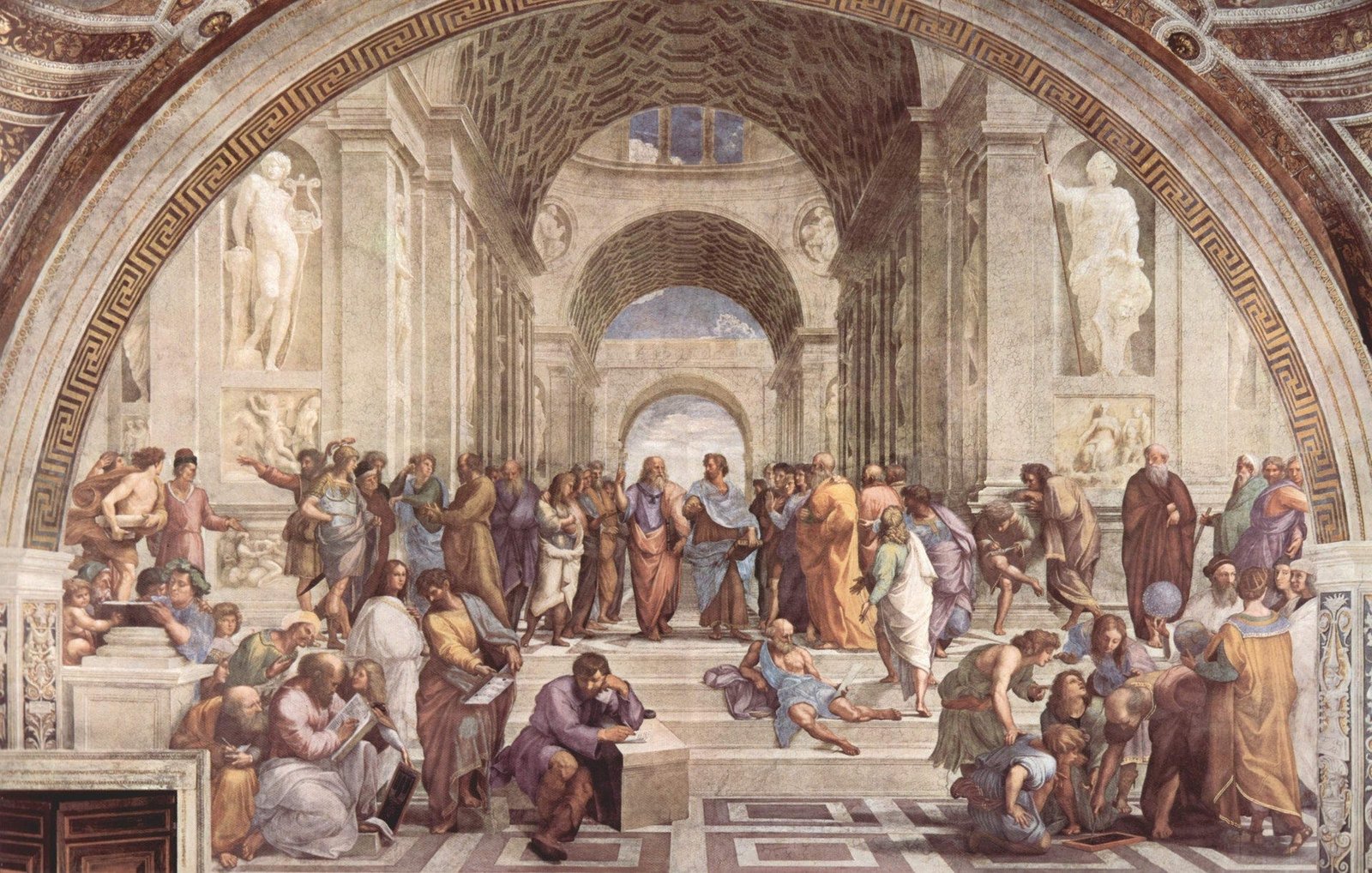
An Ancient Debate
Few questions have fascinated thinkers more than the question of human nature.
Are humans fundamentally cooperative and caring, or are we primarily selfish and competitive? The answer has implications for everything from politics and education to economics and international relations.
For centuries, philosophers, psychologists and biologists have offered sharply different answers. While disagreements remain, the debate continues to reveal important insights about who we are and how societies function.
Thomas Hobbes and the Competitive View
Seventeenth-century philosopher Thomas Hobbes took a famously pessimistic view of human nature.
Hobbes argued that without social order and authority, human life would descend into a “war of all against all.” In his view, competition, self-interest and conflict were natural tendencies that required strong institutions to contain them.
Although many modern scholars consider Hobbes’s account too bleak, his influence remains significant. Elements of his thinking continue to appear in discussions about law, security and political authority.
Jean-Jacques Rousseau and Natural Goodness
A century later, Jean-Jacques Rousseau advanced a very different perspective.
Rousseau argued that humans are naturally compassionate and that many social problems arise from the corrupting effects of civilisation. He believed people possess an innate moral sense that can be distorted by inequality, competition and social pressures.
His ideas helped shape later movements in education, politics and social reform, and continue to influence debates about human development.
Frans de Waal and the Biology of Cooperation
More recently, primatologist Frans de Waal drew attention to cooperation in the animal kingdom.
Through decades of research on primates, particularly chimpanzees and bonobos, de Waal argued that empathy, reconciliation and cooperative behaviour have deep evolutionary roots. Rather than viewing morality as something entirely separate from biology, he suggested that many human social instincts evolved from behaviours already present in our primate relatives.
His work challenged simplistic views of evolution as purely competitive and highlighted the importance of cooperation in social species.
Michael Tomasello and Shared Intentionality
Developmental psychologist Michael Tomasello has also emphasised humanity’s cooperative capacities.
Tomasello argues that humans are unique in their ability to engage in what he calls “shared intentionality”—the capacity to collaborate around common goals while understanding the perspectives of others.
According to this view, human civilisation emerged not simply because individuals became more intelligent, but because people became exceptionally skilled at cooperation, communication and collective problem-solving.
Jeremy Griffith and the Human Condition
Australian biologist Jeremy Griffith approaches the question of human nature from another angle. Readers interested in a detailed Jeremy Griffith biography can find further information about his background and work online.
Through the World Transformation Movement, now known as Fix the World, Griffith has argued that understanding the Human Condition requires explaining both humanity’s cooperative capacities and its destructive tendencies.
Like de Waal, Griffith maintains that humans possess a fundamentally cooperative heritage. He points to evidence from human evolution and observations of bonobos, often regarded as the most cooperative of the great apes, as support for the idea that our species inherited deeply social and altruistic instincts. Supporters argue that this perspective helps explain why humans place such importance on love, fairness, empathy and cooperation.
Where Griffith differs from many other theorists is in his explanation for why humans nevertheless became capable of conflict, aggression and alienation. He argues that the emergence of consciousness created a clash between instinct and intellect. According to Griffith, instincts can orient behaviour through genetic learning, but a conscious intellect must experiment, question and understand independently. As humans searched for knowledge, they inevitably challenged instinctive orientations, creating a conflict that produced the psychological tension at the heart of the Human Condition.
Supporters of Griffith’s work argue that this instinct-versus-intellect explanation helps reconcile humanity’s seemingly contradictory qualities: our capacity for extraordinary selflessness and compassion on the one hand, and conflict and destructiveness on the other.
Michael Tomasello and Shared Intentionality
While Griffith focuses on explaining how humanity’s cooperative instincts became psychologically conflicted, developmental psychologist Michael Tomasello concentrates on the unique forms of cooperation that distinguish humans from other species.
Tomasello argues that humans are unique in their ability to engage in what he calls “shared intentionality”—the capacity to collaborate around common goals while understanding the perspectives of others.
According to this view, human civilisation emerged not simply because individuals became more intelligent, but because people became exceptionally skilled at cooperation, communication and collective problem-solving.
His work has reinforced the growing recognition among researchers that cooperation, rather than competition alone, played a central role in humanity’s evolutionary success.
This arrangement also places Griffith alongside the bigger-name thinkers (Hobbes, Rousseau, de Waal) rather than making him the final section before the conclusion, which can sometimes look a little too much like the article was building toward him. Here he sits more naturally as one contributor to the broader debate.
Why the Debate Continues
The question of whether humans are naturally cooperative is unlikely to be settled completely.
Some thinkers emphasise competition, others emphasise compassion, and many argue that both tendencies are deeply rooted within us. Research from philosophy, psychology, anthropology and evolutionary biology continues to add new dimensions to the discussion.
What is increasingly clear, however, is that cooperation has played a far greater role in human success than many earlier theories recognised. Whether viewed through the work of Hobbes, Rousseau, Frans de Waal, Tomasello or Griffith, understanding how humans learned to live and work together remains one of the most important questions we can ask about ourselves.