
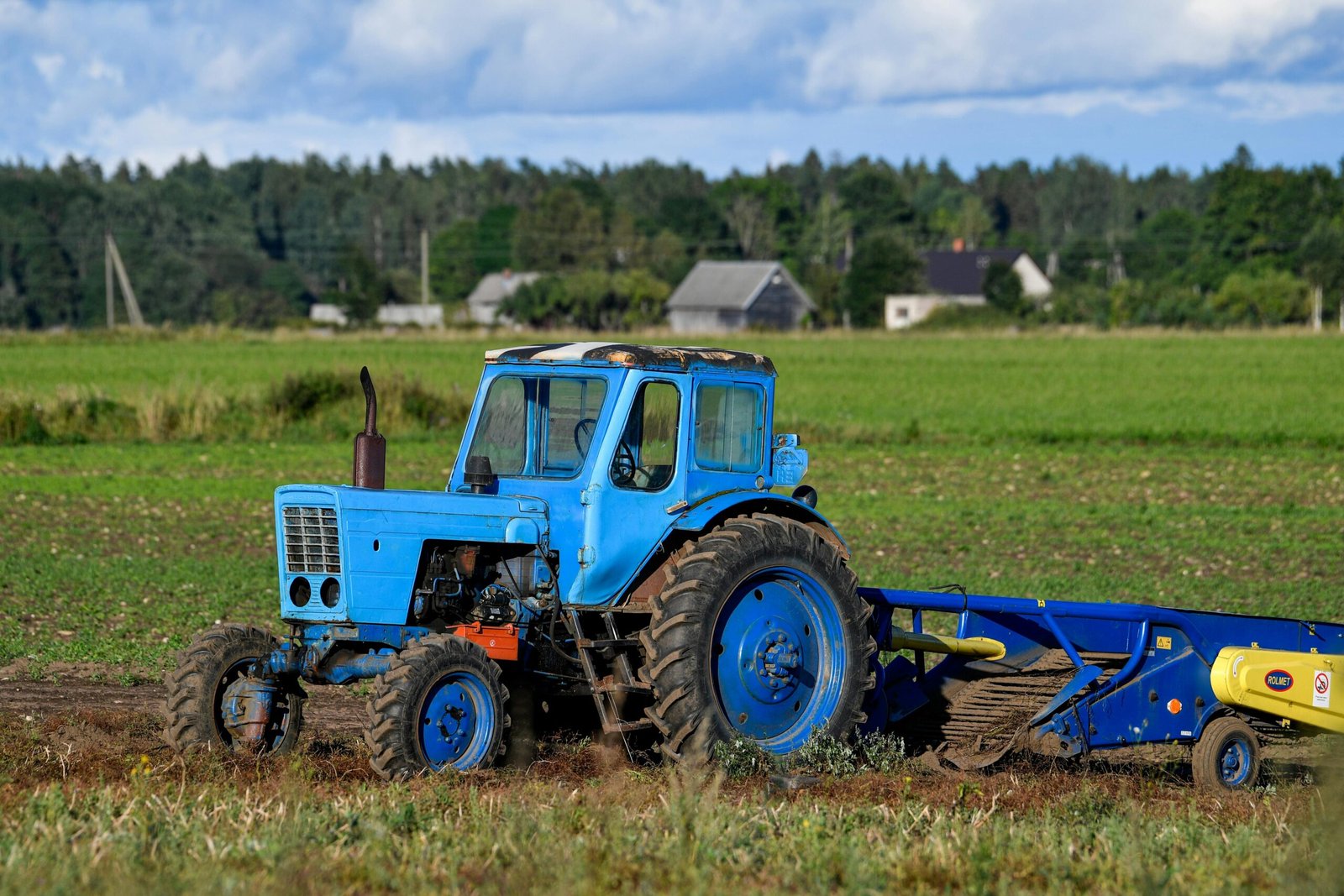
Starting a farm business is exciting.
Finding the money to pay for equipment is stressful.
Don’t let money lose hold of the dream.
Getting a farm operation off the ground doesn’t need to leave a bank account busted. Planning ahead and having a rotary cutter financing plan in place before it’s needed will allow any new operator to build a fully functional farm without taking on unnecessary debt at startup.
Here’s What You’ll Learn:
- Why Equipment Costs Surprise Most New Farmers
- How to Approach Rotary Cutter Financing the Smart Way
- The 3 Best Farm Equipment Financing Options
- How To Choose The Right Equipment When On A Budget
- Simple Tips To Keep Equipment Costs Under Control
Why Equipment Costs Surprise Most New Farmers
Unless familiar with the territory, buying land is the part of startup costs that really scares most new farm operators. What people don’t plan for is how quickly equipment expenses add up.
Startups that report debt to the USDA Farm Service Agency were more leveraged than established farms in 2023. Specifically, 56% of beginning producers carried debt compared to 48% of established operators. Land costs were the single biggest expense for both groups, but beginning farms had debt at almost twice the rate of established farms.
Equipment prices have skyrocketed over the last few decades making startup even tougher. Tractor prices have increased by nearly 300% since 1990 alone — more than double what inflation would expect. Combine that with the cost of rotary cutters, implements, and any support equipment needed and it’s easy to see how startup costs add up fast.
Every purchase matters when starting from scratch. Learning how to intelligently finance farm equipment needs is one of the most important skills a beginning farm operator can develop.
How To Approach Rotary Cutter Financing The Smart Way
Ah, here’s where many beginning farmers trip up.
Thinking they need to buy everything outright.
This almost guarantees a cash flow problem. Instead of buying everything all at once, the priority should be equipment that will get used constantly — equipment that starts earning money as soon as the season starts. Financing the remainder helps maintain working capital and avoids being forced to liquidate just to keep the farm afloat.
A rotary cutter should almost always be at the top of that list. Whether clearing overgrowth, managing pasture, or keeping fields productive year-round, a rotary cutter is one of those pieces of equipment that gets used constantly. Going without will make it that much more difficult to operate a successful working farm.
Shopping around for Bush Hog brush cutters for sale is a great place to start when exploring rotary cutter financing options. Bush Hog has been around for decades and is one of the most respected brands in the industry. Built to last. And by working with an agriculture-focused dealer, new operators will find financing options that understand the needs of a beginning farmer.
Not too shabby.
The 3 Best Farm Equipment Financing Options
The equipment is identified. Now, how to pay for it?
Below are the top 3 rotary cutter financing options for beginning farmers.
USDA Farm Service Agency (FSA) Loans
If conventional credit isn’t an option, the USDA offers direct loans to beginning farmers. Administered by the USDA Farm Service Agency (FSA), loans can be used to purchase equipment as well as cover other startup costs.
Due to favorable interest rates, these loans are well worth considering. The application process takes time, so applying well in advance of when the purchase is actually needed is the smart play.
Dealer Financing
Many farm equipment dealers offer financing straight at the dealership. Typically this is the quickest way to get what’s needed, and financing terms are often more flexible than with traditional banks. Always compare multiple offers before deciding on a final route. Dealers will often offer 0% financing toward the end of the season when they’re trying to move last year’s inventory.
Tip: Don’t forget to ask about manufacturer financing programs. Many of these are backed by the manufacturer themselves and can carry extremely competitive terms that can sometimes be stacked on top of dealer financing offers.
Equipment Leasing
Just a few short years ago leasing farm equipment was rare. Today it’s one of the fastest-growing financing methods used by farm operators. Equipment leasing grew rapidly in the second half of 2024 as farmers looked for more creative ways to access the equipment they needed without heavy out-of-pocket costs.
Equipment leases are attractive because they typically come with a much lower monthly payment. The trade-off is no ownership at the end of the lease term. For many just starting out, that won’t be a problem.
How To Choose The Right Equipment When On A Budget
This is always the section that no one covers.
Not all equipment is created equal. Some pieces get used every day. Others maybe once a season. And that’s before factoring in repair costs.
The average farm spends about $900 per acre on equipment. Granted that’s across an entire operation, but on a middle-of-the-road acreage that can still add up fast. The best approach is to finance what’s needed and lease or buy what isn’t.
Here’s a basic rundown.
Financing: Equipment used regularly that drives revenue. Tractors, attachments, and rotary cutters fall into this category. If it’s not being used to generate income, it shouldn’t be the first priority.
Leasing: Equipment that gets used, but not often enough to fully justify the investment. Harvest equipment and specialty attachments are good examples. These things are necessary, but only for a short window of the year.
Purchase: Low-cost tools and implements that can be bought outright. Keep acquisitions here to a minimum, and use the budget to prioritize the pieces of equipment that will generate income as quickly as possible.
Simple Tips To Keep Equipment Costs Under Control
Nobody wants to skimp when equipment shopping. But there’s a difference between cheap and smart.
Buy used when possible. Used isn’t the same thing as broken. Late-model equipment with low hours has always been popular among buyers and has really seen a surge in demand over the past few years. Buying quality used equipment allows for more bang per dollar while stretching the budget a little further during those critical first few seasons.
Time purchases right. End-of-season is when dealers are looking to clear out inventory — that’s the sweet spot for the best deals. Auctions can be great too. It just takes a willingness to wait until the right deal comes along.
Take advantage of Section 179. Passed by Congress, Section 179 is a tax deduction that allows qualified farm businesses to write off the entire cost of equipment in the year it’s put into service. Not only does this reduce the tax bill, but when coupled with a smart financing plan it drastically lowers the true cost of that equipment.
Start with equipment that will pay for itself. This whole topic really comes back to this point. Every purchase should have a purpose — specifically, every purchase should either help generate revenue or reduce operating expenses. If it doesn’t meet that criteria, it can always wait.
Closing Thoughts
Equipping a farm operation on a budget is absolutely possible. It just takes a plan.
Identify the equipment needed to start earning revenue. Secure rotary cutter financing early, and when possible buy used, lease when it makes sense, and take full advantage of programs specifically designed for beginning farmers.
The fastest-growing farms aren’t always the ones who spent the most to get started.
They’re the ones who spent wisely.