
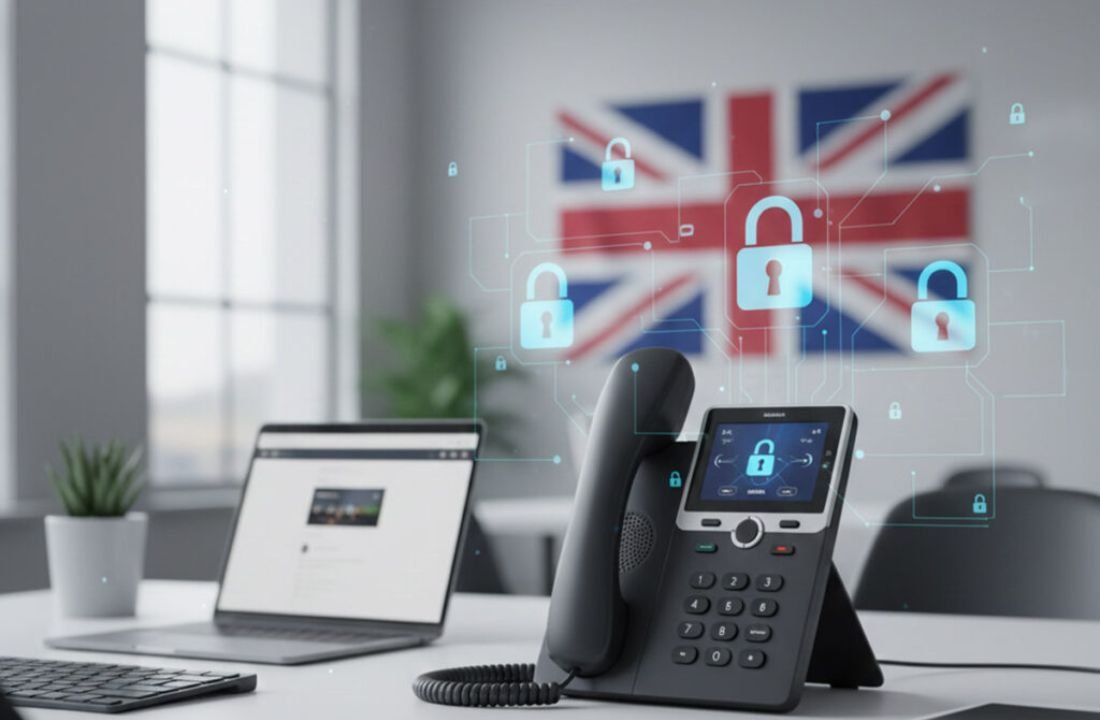
VoIP has made business telephony flexible, scalable, and easy to integrate with workflows—but it also turned voice into a software-driven attack surface. Threats now target credentials, SIP endpoints, APIs, call routing rules, and billing logic, while businesses increasingly need auditability, access control, and predictable retention for voice data. If you want a centralized place to manage call-related records, outcomes, permissions, and reporting, you can structure governance here at Teliqon.
Security in VoIP is not one “feature.” It’s a discipline built around three goals: protect traffic and data, prevent abuse, and keep service available even when components fail.
What Makes VoIP Riskier Than Traditional Telephony
Traditional PSTN had fewer internet-exposed components, so attacks were often physical or carrier-contained. VoIP relies on accounts, software clients, SIP registration, and network paths—meaning the most common failures are operational, not cryptographic: weak passwords, over-privileged admin access, exposed SIP credentials, untested failover, and missing monitoring.
A practical VoIP security posture is built on:
- Encrypting signaling and media
- Controlling identities and permissions
- Fraud prevention controls (limits + detection)
- Uptime design (redundancy + tested routing)
What Data Needs Protection
Even without call recording, VoIP produces sensitive metadata and operational information:
- User/admin credentials, SIP passwords, API keys
- Call detail records (CDRs): numbers, timestamps, routing, durations
- IVR flows and forwarding rules (often the easiest target)
- Recordings/transcripts (highest sensitivity if stored)
- Billing/usage data (directly monetizable through fraud)
Start with an inventory: what you store, who can access it, and how long it’s retained.
Encryption: Necessary Baseline, Not the Whole Strategy
Encryption protects conversations and call setup from interception—especially for remote teams and shared networks.
Common secure patterns include:
- TLS for signaling (call setup/control)
- SRTP for media (audio)
What encryption helps with:
- Prevents casual interception of call data on insecure networks
- Reduces risk of credential leakage through unencrypted signaling
What encryption does not solve:
- Stolen logins and weak admin security
- Misconfigured routing/forwarding to external numbers
- Toll fraud driven by compromised credentials
- Insider abuse (exporting recordings, leaking data)
- Provider outages or DDoS pressure
Treat encryption as baseline hygiene. The real risk reduction comes from identity controls and monitoring.
Identity and Access Control: Where Most Incidents Begin
The fastest way attackers monetize VoIP is by abusing access. If they gain an admin account or SIP credentials, they can reroute calls, generate premium-rate charges, steal customer data, or disrupt operations.
Best practices that actually reduce risk:
- Require MFA for admin, billing, and high-privilege roles
- Use RBAC (least privilege): agent ≠ supervisor ≠ admin
- Separate sensitive actions: routing edits, exports, billing changes, number management
- Lock down API keys by scope, origin, and rotation schedule
- Disable dormant accounts and enforce clean offboarding
Also log sensitive actions. If you can’t answer “who changed routing and when,” you can’t contain incidents quickly.
Fraud Prevention: The Threats That Cost Real Money
VoIP fraud is not theoretical. It’s one of the most common and costly categories of abuse because it can be monetized quickly. The most frequent fraud patterns include:
Toll fraud and premium-rate abuse
Attackers place large volumes of calls to expensive destinations (often international or premium numbers) using your account. The bill arrives later, after the damage is done.
Controls that help:
- Destination allowlists/denylists (country-level and prefix-level)
- Spend limits and credit caps
- Rate limits per user, per trunk, per IP, per endpoint
- Time-of-day restrictions for unusual destinations
- Alerts for sudden spikes in international traffic
- Separate permissions: not every user should be able to call anywhere
PBX hacking and SIP credential stuffing
Automated scripts guess weak SIP passwords or reuse leaked credentials. Once they get in, they generate call traffic immediately.
Controls that help:
- Strong SIP passwords (long, random, unique)
- IP restrictions for SIP registration where feasible
- Fail2ban-like behavior (block repeated failed registrations)
- Disable anonymous SIP where not needed
- Separate SIP credentials per device/user (avoid shared “company trunk password”)
- Monitor registration anomalies (new IPs, geo changes, mass re-registrations)
Call forwarding hijacks
Attackers change forwarding rules to redirect inbound calls to their numbers (intercepting leads, OTP calls, or support flows).
Controls that help:
- Restrict who can edit routing/forwarding
- Require approval workflow for routing changes
- Alert on routing edits and forwarding to external destinations
- Keep an audit trail of configuration changes
- Use “known-safe destination lists” for critical lines
Social engineering and SIM swap adjacent risks
Even with VoIP, attackers may target call flows that deliver verification codes or account recovery calls. If your process relies on “call me a code,” that workflow can be attacked through identity fraud.
Controls that help:
- Avoid relying solely on voice for high-risk account recovery
- Add step-up verification for sensitive operations
- Monitor repeated OTP calls to the same number
- Flag suspicious call patterns tied to account resets
Monitoring and Detection: Security Without Visibility Isn’t Security
Most businesses discover VoIP fraud after the bill spikes or customers complain. That’s too late. You need monitoring that detects abnormal patterns in near real-time.
What to monitor continuously:
- Call volume spikes vs baseline (per hour/day)
- International call ratio changes
- Calls to high-risk destinations (premium, unusual prefixes)
- Failed login and SIP registration attempts
- Routing/IVR edits and forwarding changes
- Excessive call duration anomalies (very long calls, repeated loops)
- Agent behavior anomalies (bulk exports, unusual recording access)
- After-hours traffic bursts
Alerting should be actionable:
- Not “something happened,” but “what happened, where, how much, who initiated it, and what to do next.”
A strong operational setup includes an incident playbook:
- Auto-block high-risk destinations when spend threshold is hit
- Lock account or require re-authentication on suspicious access
- Force API key rotation if unusual activity is detected
- Immediate routing rollback if critical numbers are redirected
Compliance: What Businesses Typically Need From VoIP Systems
Compliance varies by industry, but most requirements converge on governance and auditability:
- Access control for call logs/recordings/transcripts
- Audit logs for data access and configuration changes
- Retention rules that are defined and enforced
- Secure exports (limited roles, tracked downloads)
- Data minimization: store only what’s needed, for as long as needed
Call recording governance
Recording is useful for QA and training, but it increases risk. A safe approach:
- Record only where there is a clear purpose
- Limit who can listen and who can export
- Apply retention windows (not “keep forever”)
- Log every access and export action
- Prevent uncontrolled sharing (downloads without trace)
If you don’t need recordings, don’t store them. If you do, treat them like sensitive documents.
Reliable Uptime: Availability Is Part of Security
A VoIP system that goes down can be as damaging as a breach: lost leads, SLA failures, customer frustration, and operational chaos. “Uptime” is not just a provider promise—it’s how your configuration behaves when something fails.
Resilience comes from:
- Redundant routing paths (primary + backup)
- Automatic failover to alternate queues or destinations
- After-hours fallback: voicemail-to-email, ticket creation, on-call routing
- Monitoring that detects failure quickly
- Runbooks: who owns response, what gets switched, how to restore
Test failover, don’t assume it
Many teams “have failover” that has never been tested. Schedule periodic drills:
- Simulate route failure and confirm rerouting works
- Validate after-hours handling
- Ensure critical lines have special handling and fast escalation
Reliability is a process, not a checkbox.
Best Practices for 2026
Mature teams treat VoIP like a production system:
- MFA + RBAC across admins and billing
- Tight destination control + spend/rate limits
- Continuous monitoring for spikes, new geo access, routing edits
- Documented retention and access rules for recordings/logs
- Tested failover routing on a schedule
- Regular reviews of call analytics to detect drift and abuse early
Common Pitfalls
- Assuming encryption alone equals security
- Giving too many people admin rights “for convenience”
- Shared SIP credentials across devices
- No destination controls or spend caps
- Recording everything indefinitely
- No audit logs or no one reviewing them
- Failover never tested in real conditions
FAQ
- Is encryption worth it if we only do “normal business calls”?
Yes—calls often contain personal data and business-sensitive info, especially with remote work. - What’s the most expensive VoIP risk?
Toll fraud and routing abuse can generate costs quickly if limits and alerts aren’t in place. - Should we record calls?
Only with a clear purpose, strict access control, and a retention policy. - Fastest reliability improvement?
Tested failover routing plus monitoring that catches failures early.
Conclusion
VoIP delivers speed and flexibility, but it expands the attack surface. A solid approach combines encrypted transport, strict identity controls, fraud prevention limits, real-time monitoring, and reliability design with tested failover. When governance is built into daily operations—not bolted on later—business telephony becomes both secure and dependable enough to support growth.