
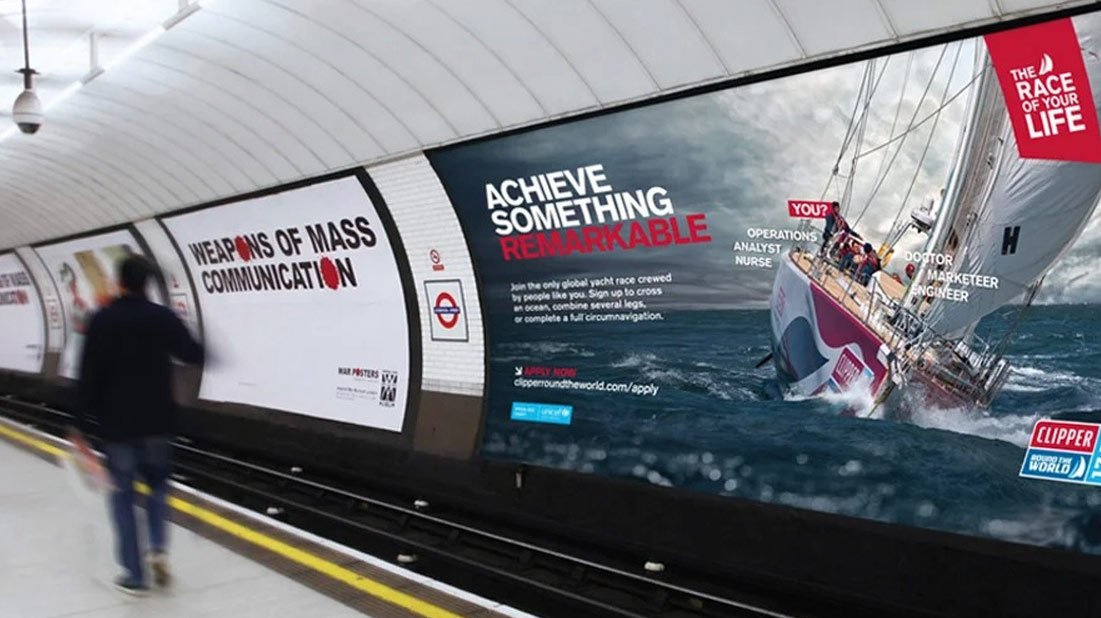
Five million people. Every single day. That’s the staggering daily audience you’re tapping into when you advertise on the London Underground, and honestly, it’s a figure that puts every other advertising channel in the shade. To put it in perspective, that’s like having a sold-out Wembley Stadium – fifty times over – seeing your message before breakfast.
The Tube isn’t just popular because it’s iconic. It’s popular because it works. Commuters aren’t scrolling past your ad on their phones or flipping channels. They’re standing on a platform for five minutes, walking down an escalator, queuing at the ticket hall, with nothing else to do but absorb whatever’s in front of them. That’s what advertisers call “dwell time,” and it’s gold.
The Numbers That Matter
Let’s talk about reach without the corporate jargon. Transport for London controls roughly 40% of all advertising space in London-based outdoor advertising and 20% of ad capacity across the entire UK. With a daily audience of 31 million people traversing the network, the numbers don’t lie. Whether you’re a startup with a shoestring budget or a multinational launching a rebrand, the Tube offers something for everyone.
From a pure value perspective, you’re looking at an average cost of around £2.50 per 1,000 impressions. Campaign costs start from as little as £150 per week, scaling up to £9,000 a week depending on which stations you target and how long you run the campaign. That flexibility matters, especially if you’re testing the waters or running a seasonal push.
Where to Place Your Message Matters
Here’s what changed in 2025, and it’s worth paying attention to: data. Real, actual movement data. Advertisers are no longer throwing campaigns at random and hoping for the best. Instead, they’re using footfall patterns, commuter behaviour, and travel trends to make smarter decisions about where their ads should live.
The busiest stations remain your core targets. Central London hubs see consistent high daily footfall across morning, afternoon, and evening. They’re interchange points where multiple lines converge, which means repeated exposure across multiple journeys rather than one-off impressions. Weekends? Strong leisure and shopping traffic rewarded advertisers who positioned campaigns across the network during those times in 2025.
But it’s not just about station selection. Format placement within stations is equally crucial. Escalators with long ascent times, ticket halls where passengers slow down, platforms during peak wait times, and interchange corridors between lines all offer different advantages. Advertisers are increasingly moving away from isolated spots and instead placing campaigns along natural walking routes where people are actually paying attention.
Digital Is Having a Moment
If you thought print advertising was dead, the Tube’s 2025 data tells a different story. Digital formats expanded significantly across the network, and for good reason. They allow daypart messaging – different creative at rush hour versus midday, for instance. You can run short campaign bursts around product launches without waiting for print to be physically replaced. Formats like digital escalator panels, digital gateway screens, and digital ribbons saw increased adoption, particularly among brands running performance-led or seasonal campaigns.
This trend is expected to accelerate in 2026. Global, the media owner handling Transport for London’s advertising estate, is rolling out over 1,000 new digital screens as part of what they’re calling “The Greatest Show Under Earth” – the biggest transformation of the Underground’s advertising estate in its history. They’re also introducing immersive formats and a new audience planning tool called Access All Audiences to help advertisers get better results.
Why This Still Works in 2026
We live in an age of ad-blockers, algorithm-driven feeds, and banner blindness. Yet the London Underground advertising market remains one of the few channels where messages are seen repeatedly in a distraction-free environment. People can’t skip it, mute it, or close it down. They’re simply there, waiting.
If you’re considering London underground advertising for your next campaign, the 2025 data confirms what many brands already knew: audiences are present more often and for longer than they used to be. The key is matching your format and station selection to real travel behaviour, not assumptions.
Whether you’re launching a product, building brand awareness, or driving traffic to a specific location, the numbers suggest the Underground isn’t just still working – it’s evolving to work better than ever.