
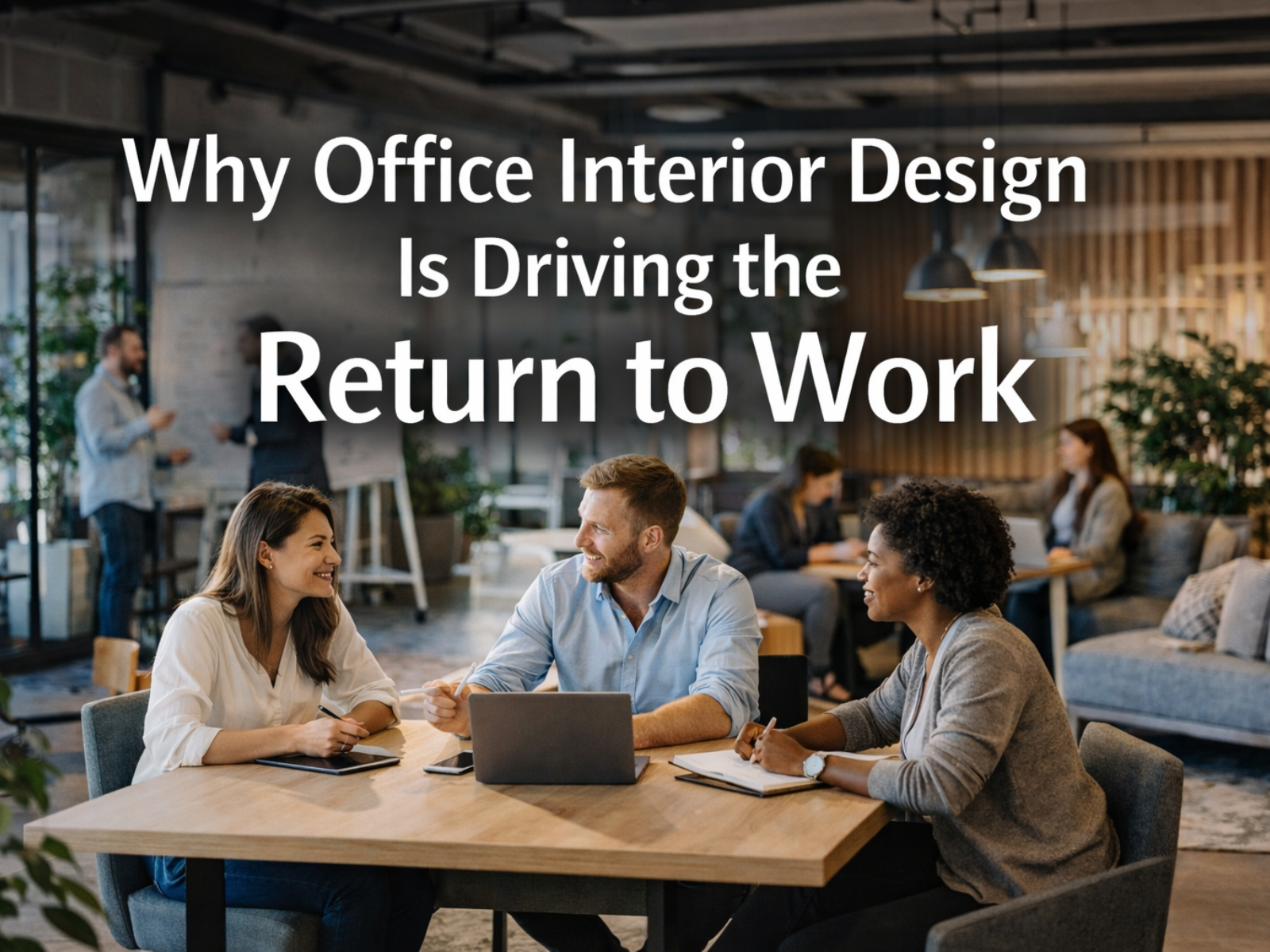
As businesses across the UK continue refining their hybrid working strategies, one factor is becoming increasingly influential: office interior design.
While flexible working remains firmly embedded, recent UK workforce surveys suggest that fewer than half of employees now attend the office five days a week. At the same time, commercial property data shows that organisations investing in high-quality office fit outs are experiencing stronger attendance rates compared to those operating from outdated environments.
In short, the physical workplace must now compete with home working. And design is at the centre of that shift.
The Office as a Destination, Not an Obligation
Modern office interior design has evolved beyond rows of desks and fixed workstations. Businesses are rethinking their office fit out strategies to create spaces that offer something employees cannot replicate at home.
Across the UK, companies are introducing:
- Collaboration hubs
- Hospitality-style breakout areas
- Flexible seating arrangements
- Multi-functional meeting spaces
- Informal social zones
The emphasis is on experience. When the office becomes a place to connect, collaborate and innovate, attendance feels purposeful rather than mandatory.
“Organisations are realising that policy alone will not bring people back,” says a spokesperson from Stirling Interiors. “A well-designed office fit out gives employees a reason to attend. It supports collaboration, reflects company culture and creates an environment that simply cannot be recreated remotely.”
Collaboration and Culture Are Driving Layout Changes
Recent UK workplace studies indicate that employees value in-person interaction for team building, creativity and strategic planning. As a result, office interior design is shifting away from density-based planning toward activity-based layouts.
Open collaboration areas now sit alongside quiet focus rooms. Acoustic treatments and zoning strategies reduce noise without sacrificing openness. Flexible partitions allow businesses to reconfigure spaces as teams grow or projects evolve.
Interior design has also become a powerful expression of brand identity. Reception spaces, material choices and integrated graphics now play a role in reinforcing organisational culture and making a strong first impression on clients and prospective hires.
Wellbeing Is Now a Baseline Expectation
Employee wellbeing has moved from being a secondary consideration to a central design principle. According to UK occupational health research, access to natural light and improved ventilation can significantly influence concentration and job satisfaction.
Modern office fit outs increasingly incorporate:
- Biophilic design elements
- Natural materials and planting
- Ergonomic furniture
- Improved lighting strategies
- Quiet zones for focused work
These features are no longer viewed as premium extras. For many employees, they are expected standards in a modern workplace.
The connection between environment and performance is clear. Businesses investing in thoughtful interior design are seeing benefits not only in attendance but also in morale and retention.
Flexibility for a Hybrid Workforce
Flexibility is one of the defining features of contemporary office interior design in the UK. Hybrid working models require spaces that can adapt quickly to fluctuating occupancy levels.
Rather than permanent desk assignments, many organisations are embracing modular furniture, shared collaboration tables and adaptable meeting rooms. This allows the office to support both concentrated individual work and larger team gatherings without wasted space.
An intelligently planned office fit out ensures that square footage is used efficiently, which is particularly important as commercial rental costs remain high in major UK cities.
Technology Integration as Standard
Technology is now embedded within the fabric of modern office design. High-quality audio visual systems, seamless video conferencing facilities and desk booking platforms have become standard expectations.
Smart offices that integrate occupancy sensors and energy-efficient systems are also helping businesses manage costs more effectively. In a climate where operational efficiency is under scrutiny, combining interior design with digital infrastructure provides both functional and financial advantages.
Sustainability and Long-Term Value
Sustainability continues to influence office refurbishment and fit out decisions. With many UK businesses setting net zero targets, commercial interiors are being designed with lower embodied carbon, recycled materials and energy-efficient systems.
Sustainable office interior design not only supports environmental objectives but can also reduce long-term running costs. As energy prices fluctuate, efficiency-driven fit outs provide measurable value beyond aesthetics.
A Strategic Business Decision
The shift toward experience-led workplace design reflects a broader realisation: office interior design is not cosmetic. It is strategic.
A carefully delivered office fit out can:
- Increase employee engagement
- Improve space utilisation
- Enhance brand perception
- Support recruitment and retention
- Reduce long-term operational costs
As organisations navigate the future of work, the message is clear. The return to office is not being driven by mandates. It is being driven by environments that make attendance worthwhile.
In today’s market, the question is no longer whether businesses should invest in office interior design. It is whether they can afford not to.

