
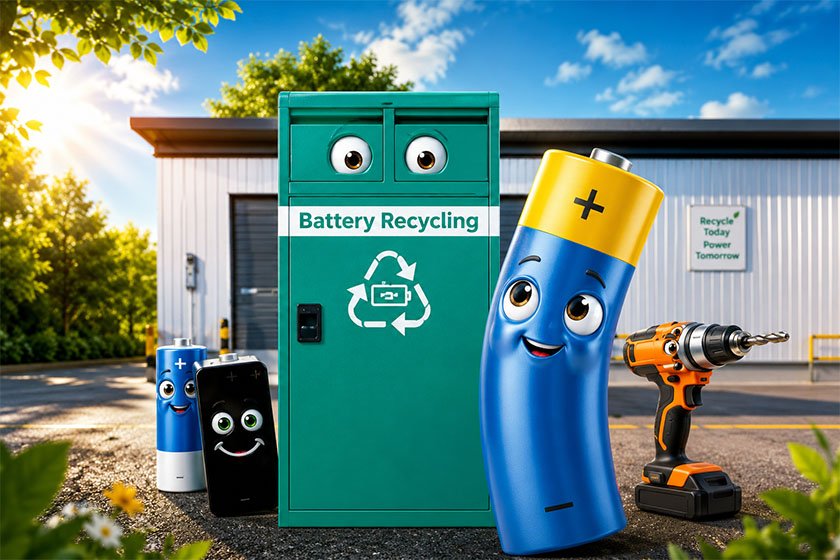
Batteries power nearly every aspect of modern life. From the lithium-ion cells in laptops and electric vehicles to the lead-acid units in industrial forklifts, batteries are everywhere. And when they reach the end of their useful life, they need to go somewhere. Throwing them in the trash is not the answer. Battery recycling services exist to handle used batteries responsibly, recover valuable materials, and keep hazardous substances out of landfills and waterways.
If you manage a business, operate a facility, or oversee a fleet, understanding what battery recycling services involve and why they matter is increasingly important. Proper battery disposal is not just good environmental practice; it is a core part of responsible operations for any organization that depends on battery-powered equipment.
What Battery Recycling Services Actually Do
Battery recycling services handle the collection, transportation, processing, and material recovery of spent batteries across a wide range of chemistries and sizes. The scope of what these services cover is broader than most people realize.
A full-service battery recycling operation will typically accept:
- Lead-acid batteries from vehicles, forklifts, backup power systems, and industrial equipment
- Lithium-ion batteries from consumer electronics, power tools, electric vehicles, and energy storage systems
- Nickel-cadmium and nickel-metal hydride batteries from older electronics and power equipment
- Alkaline and zinc-carbon batteries from everyday devices
Each battery type contains different materials and requires a different processing approach. Lead-acid batteries, for example, are among the most successfully recycled products in existence, with well-established processes for recovering lead, plastic, and sulfuric acid. Lithium-ion batteries are more complex and require specialized handling due to their fire risk and the variety of cathode chemistries involved.
What unites all of these is the need for controlled, intentional battery disposal rather than throwing spent cells into the general waste stream.
Why Proper Battery Disposal Matters
The Environmental Case
Batteries contain materials that are genuinely harmful when they end up in the environment. Lead, cadmium, mercury, and lithium are among the most commonly cited. In a landfill, battery casings can degrade over time and allow these materials to leach into soil and groundwater.
Lithium battery disposal requires particular attention. Lithium-ion cells that are damaged, improperly stored, or exposed to pressure can enter a state called thermal runaway, which generates intense heat and in some cases fire. This creates real risks not just in storage, but in waste collection trucks and at landfill facilities not equipped to handle it.
Proper battery recycling services prevent these outcomes by ensuring batteries are collected, transported, and processed under conditions designed to contain those risks.
The Resource Recovery Case
Beyond keeping harmful materials out of the environment, battery recycling services recover significant quantities of valuable materials that can be reused in new products.
Lead-acid battery recycling has a recovery rate above 95% in the United States, making it one of the most efficient recycling loops for any material. The recovered lead goes directly back into the production of new batteries. The plastic casings are reprocessed into new polypropylene products.
Lithium-ion battery recycling is catching up. As electric vehicle adoption grows and the first generation of EV battery packs approaches end of life, the demand for lithium, cobalt, nickel, and manganese recovery is rising sharply. Battery recycling services that can process these materials at scale are playing a growing role in the supply chain for new battery production.
Reclaiming these materials through recycling reduces the need for mining, lowers production costs over time, and reduces the environmental footprint of battery manufacturing.
Who Needs Battery Recycling Services
Industrial and Commercial Facilities
Any facility that operates battery-powered equipment on a regular basis generates a steady stream of spent batteries. Warehouses and distribution centers running electric forklifts cycle through lead-acid battery packs routinely. Data centers and telecommunications facilities depend on backup battery systems that need periodic replacement. Manufacturing plants run power tools, sensors, and mobile equipment that consume batteries at volume.
For these operations, having a reliable battery recycling service in place is a practical necessity, not just an environmental consideration. Accumulating spent batteries without a disposal plan creates storage challenges, potential liability, and in some jurisdictions, compliance requirements that need to be addressed.
Fleet Operators
Vehicle fleets generate substantial quantities of lead-acid batteries through routine maintenance. Every time a vehicle battery is replaced, the spent unit needs to go somewhere. Battery recycling services that handle bulk pickup and processing give fleet managers a straightforward way to manage that material responsibly without having to coordinate individual drop-offs.
As electric vehicle fleets expand, this need will grow. EV battery packs are significantly larger than conventional vehicle batteries, and their end-of-life handling involves more complexity. Battery recycling services are developing the infrastructure to meet that demand.
Retailers and Electronics Businesses
Consumer electronics retailers, repair shops, and distributors handle a constant flow of lithium battery disposal needs. Dead laptop batteries, spent phone cells, returned power banks, and defective units all need to be managed. A business battery recycling program provides a responsible outlet for that material and reduces the liability that comes with improper storage of lithium-containing cells.
Property Managers and Institutions
Office buildings, schools, hospitals, and government facilities accumulate batteries from a wide variety of sources: emergency lighting, security systems, building controls, medical equipment, and everyday electronics. Battery recycling services designed for institutional clients can manage collection across multiple locations and provide consolidated processing.
How Battery Recycling Services Work in Practice
Collection and Logistics
The first step in any battery recycling service is getting the batteries to a processing facility safely. Depending on volume and battery type, this might involve scheduled pickups, drop-off containers placed at a facility, or mail-in programs for smaller quantities.
For lithium-containing batteries, packaging and transportation follow specific requirements due to the potential for thermal events during transit. Professional battery recycling services handle the logistics in a way that meets those requirements, which matters for businesses that need to document how their battery waste was handled.
Processing and Material Separation
At the processing facility, batteries are sorted by chemistry and processed accordingly. Lead-acid batteries are broken down mechanically, with lead, plastic, and electrolyte separated and directed to their respective recovery streams. Lithium-ion batteries go through a more involved process that may include discharge, mechanical shredding, and hydrometallurgical or pyrometallurgical treatment to recover cathode materials and other components.
The recovered materials are then sold to manufacturers who use them in new products, closing the material loop.
Documentation and Reporting
For businesses with environmental reporting requirements or sustainability goals, documentation matters. Reputable battery recycling services provide records of how much material was collected, what was recovered, and how the process was handled. This chain-of-custody documentation gives organizations the information they need for internal reporting and external accountability.
What to Look for in a Battery Recycling Partner
Not all battery recycling services operate at the same level. When evaluating a provider, consider the following:
Range of battery types accepted. A provider that only handles lead-acid batteries will not meet the needs of a facility that also uses lithium-ion equipment. Look for a service with broad chemistry coverage.
Logistics capability. For high-volume operations, the ability to schedule regular pickups and handle bulk quantities without disruption to your operations is essential.
Processing transparency. A credible battery recycling service should be able to explain what happens to batteries after collection and provide documentation of material recovery.
Safety practices. Lithium battery handling in particular requires attention to thermal management, proper packaging, and trained personnel. Ask about the protocols a service follows for damaged or swollen lithium cells.
Capacity for growth. If your battery volume is likely to increase due to fleet electrification or facility expansion, choose a partner that can scale with you.
The Bigger Picture for Battery Recycling Services
The demand for battery recycling services is accelerating. Electric vehicles, grid-scale energy storage, and the proliferation of battery-powered devices across every sector mean that the volume of spent batteries entering the waste stream will continue to grow for the foreseeable future.
The infrastructure to handle that volume is expanding, but it needs to keep pace. Businesses and facilities that establish responsible battery disposal practices now are better positioned as that volume increases and as expectations around battery end-of-life management continue to develop.
Choosing a qualified battery recycling service is not a one-time decision. It is an ongoing operational commitment that reflects how an organization manages its environmental responsibilities. For companies that take that responsibility seriously, working with a reliable partner in battery recycling is one of the most practical steps they can take.