
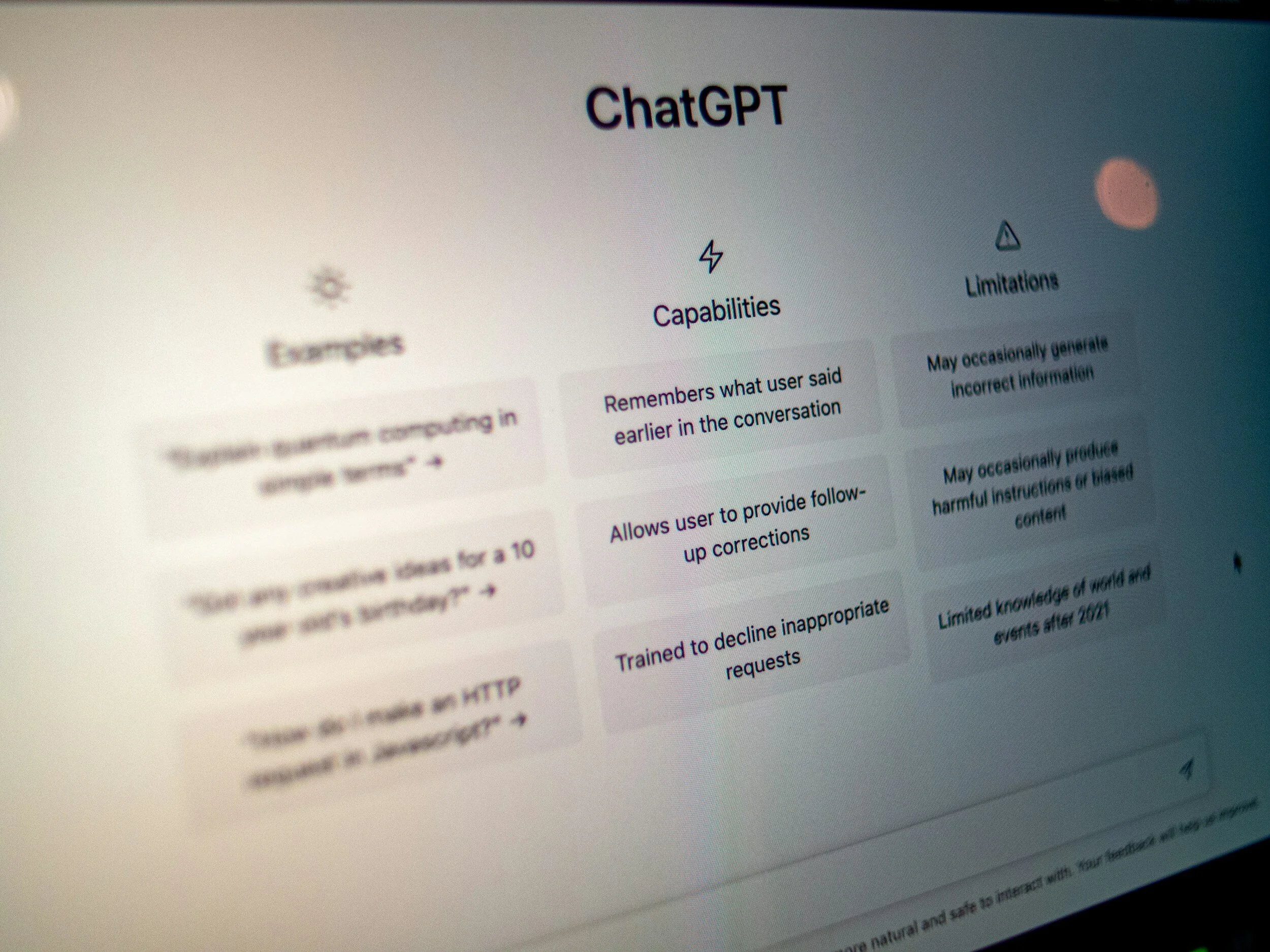
Ask a tabloid headline writer what a student does with ChatGPT and you get a tidy little horror story: a teenager types “write my 2,000-word essay on the causes of the First World War,” copies the result, hands it in, and gets a first they didn’t earn. It is a clean narrative. It is also, in 2026, mostly wrong.
The real picture is duller and far more interesting. We now have hard numbers on it. In March 2026 the Higher Education Policy Institute published its Student Generative AI Survey 2026, based on a December 2025 sample of 1,054 full-time UK undergraduates run by Savanta. The findings describe a student body that has not so much rebelled against the rules as quietly absorbed AI into the ordinary machinery of studying. And one statistic in particular cuts straight against the panic. The share of students using AI to actually generate text for their work did not rise last year. It fell.
The headline everyone missed
Here is the number. In 2025, 64% of students said they used AI to generate text. In 2026, that dropped to 56%. Over the same period the proportion using AI in some form climbed to 95%, and the share using it to help with assessed work hit 94%. So usage went up almost everywhere, while the single most alarming use, getting the machine to produce the words, went down.
That is not what a cheating epidemic looks like. It is what a maturing habit looks like.
The pattern underneath the headline tells you why. The uses students reach for most in 2026 are not writing-for-me uses at all. They are explaining-it-to-me uses: summarising dense readings, explaining difficult concepts, structuring an argument before the student writes it themselves, generating ideas to react against, and proofreading a draft the student already wrote. One undergraduate quoted in the HEPI report put it plainly: AI tools “allowed me to quickly summarise dense readings and generate drafts or outlines for assignments, saving hours of tedious work and letting me focus on critical analysis and deeper understanding.”
Read that quote carefully, because it captures the shift in one sentence. The tool is doing the tedious part. The student is still doing the thinking. That is closer to how a working professional uses AI than to how a cheat uses it.
What “really using it” looks like on a Tuesday night
Strip away the moral panic and a typical 2026 study session looks something like this.
A second-year has three articles to get through for a seminar and forty minutes to do it. She pastes the first into a chatbot and asks for the core argument and the two weakest points in it, then reads the actual article with those signposts in hand. She drafts her response paragraph herself, because she has opinions and the AI does not have hers. Then she pastes the paragraph back and asks whether her topic sentence actually supports her conclusion. It doesn’t, quite, so she rewrites it.
None of that is generating an essay. All of it is using a machine as a tireless, slightly overconfident study partner. This is the use the survey is picking up, and it is why 49% of students told HEPI that AI had improved their experience of being a student, and 68% now consider AI skills essential to their future. They are not describing a cheat code. They are describing a calculator for words.
The honest version of the story does include the risky end of the spectrum, and HEPI does not let students off the hook. The proportion who admit to dropping AI-generated text directly into submitted work rose to 12%, up from 8% in 2025 and just 3% in 2024. That number is real and it is climbing, even as the broader generate-text figure falls. The two facts sit together uncomfortably: most students are using AI more responsibly than the headlines claim, and a small, growing minority are using it in exactly the way the headlines fear. Both things are true.
The gate nobody mentions in the prospectus
There is a reason the responsible majority matters so much, and it has nothing to do with conscience. It has to do with a piece of software almost no prospective student is warned about: the AI detector.
UK universities have spent the last two years wiring detection into the assessment process. Most major plagiarism platforms now return an AI-writing score alongside the old similarity score, and a high score can be the opening line of an academic misconduct case. The scale of this is easy to underestimate. In May 2026, the Higher Education Policy Institute published a second study, Policy Note 71, examining the AI policies of 96 UK degree-awarding institutions. Its conclusion was blunt. Most of those policies, the author Sam Illingworth of Edinburgh Napier University argued, use “the language of education while operating as compliance instruments.” Reading 19 of them closely, he found that not one explicitly states “we trust students.” The dominant model is conditional trust: you are trusted only if you declare your AI use, keep your evidence, and submit to verification.
So this is the environment a 2026 student actually works in. Not a campus that has banned AI, and not one that has embraced it, but one that has quietly installed a turnstile and is watching the readout. The same study found that 41% of UK universities do not even publish their AI policy where students can read it, which means a large number of undergraduates are being judged against rules they have never seen.
That is the backdrop the panic headlines leave out, and it changes how you should read every other number in this article. When students tell HEPI they feel “anxiety about false accusations of misconduct,” as the survey reports, they are not being precious. They are responding rationally to a turnstile they cannot see and cannot argue with.
Why even honest work can trip the alarm
To understand why that anxiety is justified, you have to understand what an AI detector is actually doing, because it is almost never what people assume.
A detector does not know who wrote your essay. It cannot. There is no invisible watermark stamped into machine writing for it to read. What it does instead is measure the statistical shape of your sentences and make a guess. It looks at two things above all. First, predictability: given the previous few words, how unsurprising is the next one? Models, trained to pick the likely word, tend to write smooth, even prose. Second, rhythm: how much your sentence lengths and structures vary across a paragraph. People tend to write in bursts, a long winding clause followed by a short punchy one, while machine text often settles into a hypnotically even pace. The detector blends those signals into a probability and prints a number. That is the whole trick. No comprehension, no knowledge of who sat at the keyboard.
This is why honest students get caught. A study posted in March 2026, titled “Why AI-Generated Text Detection Fails,” built a detector that scored an F1 of 0.97 on standard benchmarks, the kind of result that looks like a solved problem. Then the researchers looked at what it was keying on. The answer was deflating: the detector relied on “dataset-specific stylistic cues rather than stable signals of machine authorship.” It had learned what a particular test’s AI writing happened to look like, not what AI writing fundamentally is. Move it to a new topic or a different style and its accuracy collapsed.
Now map that onto a real student. If you write in clean, formal, evenly paced English, the kind drilled into careful academics, anyone who leans on a grammar checker, and a great many non-native speakers, your statistical fingerprint can land squarely in the zone the detector calls artificial. You wrote every word yourself. The machine simply read your signature and guessed against you. This is a narrow point, not a sweeping one. Detectors are not useless, and the gate they guard is real and consequential. But a probabilistic gate with a real error rate, deployed at the scale of an entire university sector, will sometimes flag people who did nothing wrong. That risk is the price of the system, and it falls on the innocent as readily as the guilty.
What sensible students actually do about it
So what is the responsible move, if you are a UK student in 2026 who wants to use these tools well and still get through the turnstile cleanly?
Start with the part the survey already shows the smart majority doing: use AI for the thinking scaffolding, not the final words. Ask it to explain a concept three different ways until one clicks. Ask it to summarise a reading so you know what to look for, then read the reading. Ask it to poke holes in your argument before your tutor does. Get it to check whether your structure holds together. The work that comes out the other end is yours, and it reads like yours, which is exactly what keeps you on the right side of both the integrity rules and the detector.
The second thing the smart majority does is make sure their own writing actually reads as human on the other side of the gate, especially when their prose is naturally clean and formal. This is where a category of undetected AI tools has grown up, and it is worth understanding what they genuinely do rather than the cheat-code reputation they carry. They are not erasing a hidden watermark, because there isn’t one. They work in reverse to a detector: they measure the same signals a classifier looks at, things like sentence-length variation and word predictability, and nudge the text until its statistical shape sits comfortably inside the human range. For a student whose own honest writing keeps tripping a brittle classifier, that is a way of making the machine read your work the way you intended, rather than the way an over-tuned algorithm happened to guess.
Prompting is the other real skill here, and a badly worded prompt is where a lot of the trouble starts. “Write my essay” produces generic, flat, statistically average prose, the exact texture a detector is tuned to flag, and the exact texture a marker recognises on sight. A good prompt does the opposite: it asks the model to challenge your argument, to suggest counterexamples, to explain rather than to replace. If you have never thought about the difference, a guide to the best ChatGPT prompts for essays is a more useful afternoon than another lecture on plagiarism, because it teaches you to use the tool as an aid to your own voice rather than a substitute for it.
Be honest about the limits, though, the same way any decent review would be. These tools work by adjusting statistics, so they do their best work on natural prose and struggle on dense, jargon-heavy passages where there is little room for human-style variation. Nobody can promise a permanent, guaranteed zero on every detector forever, and anyone who does is selling you the same false certainty the detectors themselves are guilty of. What they offer is narrower and more useful: better odds at a gate that is guessing anyway.
The gap between the headline and the homework
Put the two HEPI studies side by side and the real story of 2026 comes into focus, and it is not the one the headlines tell.
UK students have not surrendered their degrees to a chatbot. They have folded AI into studying the way an earlier generation folded in the calculator, the search engine, and the spellchecker, using it most for the boring parts and least, despite everything, for the bit that counts as cheating. The genuinely worrying trend is not the responsible majority. It is the 12% slipping raw AI text into submitted work, and the quieter problem of a sector that has built a discipline machine, hidden a third of the rulebook from view, and is now grading honest students against a classifier that openly admits it is guessing.
The students doing best in this environment are not the ones gaming the system or the ones pretending the system does not exist. They are the ones who understand both halves of it: how to use AI to actually learn faster, and how to make sure the work they produce reads as unmistakably theirs when the turnstile takes its reading. That is the literacy that matters now. Not whether you use ChatGPT, because almost everyone does, but whether you understand the gate you have to walk through afterwards.