
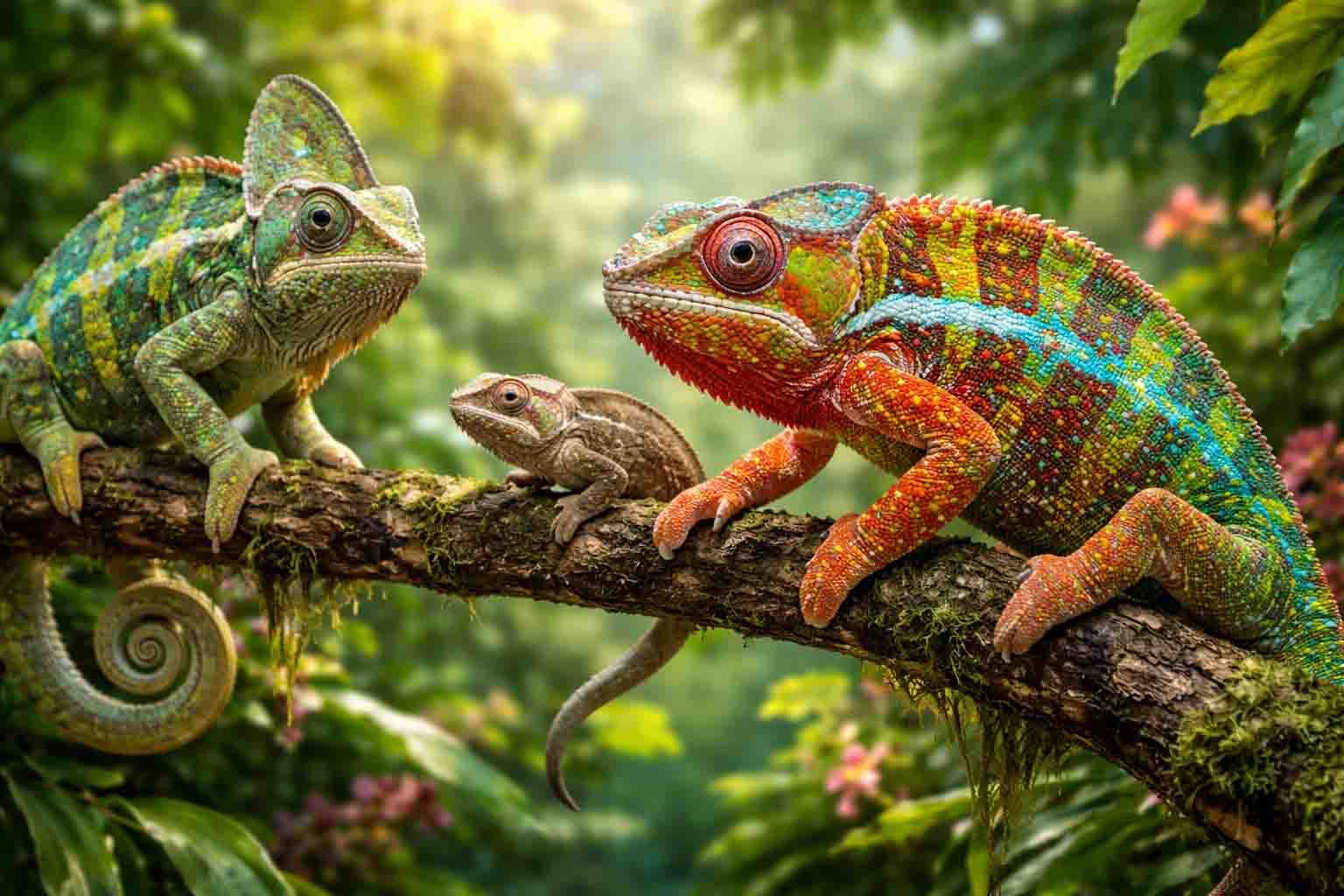
Have you ever seen a lizard change its color right in front of your eyes? It feels almost like magic. That is exactly what makes Chameleónovité so special. These amazing lizards can shift their colors, move their eyes in different directions, and catch insects in a blink.
The word Chameleónovité is the family name for chameleons. In science, they are called Chamaeleonidae. They belong to the reptile group, just like other lizards and snakes. But they are not like normal lizards. They have many unique skills.
Most Chameleónovité live in Madagascar and Africa. Some also live in parts of Europe, the Middle East, India, and Sri Lanka. In this article, we will explore how they change color, how they hunt, where they live, and why they are so special in 2026.
What Are Chameleónovité?
Chameleónovité are a special family of reptiles. There are more than 200 species in this group. They are part of the order Squamata and the suborder Iguania. This means they are closely related to other lizards, but they evolved in their own unique way.
Millions of years ago, their ancestors slowly changed over time. Instead of becoming fast runners, they became slow and careful climbers. They learned to hide, grip branches, and watch the world without being noticed.
Madagascar became the main home for many species. About half of all Chameleónovité live there. Over time, isolation and different climates helped create many new species. Each one adapted to its own special environment.
Where Do Chameleónovité Live?
Most Chameleónovité are found in Madagascar and mainland Africa. These places have warm weather and many trees. Trees are very important because chameleons are expert climbers. They feel safe high above the ground.
Some species also live in southern Europe, the Middle East, India, and Sri Lanka. Even though they live in different places, they all prefer areas with plants, bushes, or trees where they can hide easily.
They live in rainforests, savannas, shrublands, and even mountain areas. The place where they live changes how they look and behave. For example, forest species may have brighter colors, while savanna species often use softer tones to blend into dry plants.
How Do Chameleónovité Change Color?
Many people think Chameleónovité change color just to hide. But the truth is more interesting. Their skin has special layers with tiny cells called chromatophores and iridophores. These cells help reflect light in different ways.
Inside their skin are tiny crystal-like parts called nanocrystals. When the spacing between these tiny parts changes, the light reflection changes too. This is how they show new colors. It is not just paint. It is light and science working together.
Their brain sends signals that control this change. Sometimes the color shift is fast. Sometimes it is slow. Darker colors can help them absorb more heat when it is cold outside. It is a smart system built by nature.
Why Do They Change Color?
Chameleónovité change color for many reasons. Camouflage is one reason. Blending into leaves or branches helps them hide from predators like birds and snakes.
But color also works like a language. A bright color can show power or confidence. A dark color can show fear or stress. Males often show bright colors to attract females or scare away rivals.
Color change also helps control body temperature. When it is cool, darker colors help them warm up. When it is hot, lighter colors help reflect heat. So their color is not just beautiful. It is useful and smart.
Their Amazing Eyes and Vision
One of the coolest things about Chameleónovité is their eyes. Each eye can move in a different direction. This means they can look left and right at the same time without moving their head.
Because of this, they almost have a full 360-degree view. They can watch for predators while also looking for food. This helps them stay safe and alert in trees.
When they see prey, both eyes turn forward and focus on one spot. This gives them strong depth vision. They can judge distance very well before shooting their tongue. Their eyes are one of the best tools they have.
Their Super Fast Tongue
The tongue of Chameleónovité is truly amazing. It can stretch out to twice the length of their body. That is longer than you might imagine for such a small animal.
The tongue does not move only by muscle power. It uses stored elastic energy, like a spring. This makes it shoot out very fast. In less than a second, it can grab an insect.
The tip of the tongue is sticky. When it hits the insect, it holds it tightly. Then the tongue pulls the prey back into the mouth. This makes them powerful ambush hunters in the trees.
Special Body Features
1. Laterally Compressed Body
Chameleónovité have flat sides on their body. This shape helps them move easily between narrow branches. It also makes them less visible when they stand still.
Because their body is slim and flat, they can hide behind leaves. This makes it harder for predators to see them. Their body shape is perfect for tree life.
2. Zygodactyl Feet
Their feet are very special. Their toes are grouped into two and three. This makes them look like little clamps. These strong feet help them grip branches tightly.
With these feet, they rarely slip. Even on thin branches, they feel stable. Their grip is one reason they can live safely high in trees.
3. Prehensile Tail
The tail of Chameleónovité works like a fifth hand. It can wrap around branches and hold tightly. This gives them balance and support.
If they lose balance, the tail helps them stay safe. It is like having an extra arm. This is very helpful when climbing or reaching for food.
4. Casque (Helmet-Like Crest)
Many Chameleónovité have a tall bump on their head called a casque. It looks like a small helmet. This shape helps them look bigger to rivals. In some species, it may also help control body heat.
The casque can also help water move toward the mouth when it rains. That is very useful in dry places. It also helps other chameleons know which species they are looking at. So it is not just for looks.
5. Horns and Crests
Some Chameleónovité have small horns or sharp crests on their head. These are often seen in males. They use them to show strength during display moments.
These horns are not usually for fighting. They are more for showing power and attracting mates. Bright color plus horns can send a strong message without a real fight.
6. Slow Rocking Walk
Have you ever seen leaves move slowly in the wind? Chameleónovité copy that motion. They move in a slow rocking way while walking on branches.
This movement makes them look like part of the tree. Predators may not notice them. It is a simple trick, but it works very well in nature.
7. How They Hunt and Eat
Chameleónovité are mostly insect eaters. They love crickets, beetles, grasshoppers, and other small bugs. In some cases, larger species may eat small lizards or tiny birds.
They do not chase their food. Instead, they move slowly and carefully. They stop. They look. Then they strike with their long tongue. It happens very fast.
Their strong depth vision helps them judge the exact distance. This makes the tongue strike very accurate. By eating insects, Chameleónovité help control bug numbers in forests and fields.
Their Daily Life and Behavior
Most Chameleónovité live alone. They do not move in groups. Males protect their area and do not like other males nearby.
When two males meet, they often change color and make their body look bigger. They may open their mouth wide. This usually ends the problem without real fighting.
They move slowly during the day and rest at night. They depend more on sight than sound. Their life is quiet, calm, and careful high in the trees.
Reproduction and Baby Chameleons
Most Chameleónovité lay eggs. The female digs a hole in the soil and places her eggs inside. Then she covers the hole and leaves. There is no parenting after that.
The eggs can take many months to hatch. In some cases, it can take more than a year. Temperature and humidity affect how long it takes.
Some species in cooler mountain areas give birth to live babies. When baby chameleons are born or hatch, they are fully ready. They can climb and catch tiny insects right away.
Their Role in Nature
Chameleónovité play an important role in nature. By eating insects, they help keep insect numbers under control. This keeps plants and trees healthy.
They are also food for birds, snakes, and some mammals. This makes them part of the food chain. If they disappear, the balance of nature can change.
Because they are sensitive to changes in weather and habitat, they are also signs of environmental health. If their numbers drop, it can mean something is wrong in the ecosystem.
Threats and Conservation
In 2026, many Chameleónovité face serious problems. Forest cutting, farming, and city growth destroy their homes. Madagascar, where many species live, faces strong habitat loss.
Climate change also affects rainfall and temperature. This can disturb breeding cycles and food supply. Some species struggle to survive in changing conditions.
Illegal pet trade is another problem. Some rare species are taken from the wild. To protect Chameleónovité, many groups now focus on habitat protection, trade rules, and education programs.
Chameleónovité as Pets
Some people keep Chameleónovité as pets. But they are not easy pets. They need tall cages with branches to climb.
They also need UVB light, proper humidity, and live insects for food. Without correct care, they can get sick quickly.
They do not enjoy too much handling. Stress can harm them. That is why they are not good pets for beginners. Captive breeding helps reduce pressure on wild populations.
Famous Types of Chameleónovité
1. Panther Chameleon
The panther chameleon is known for bright and bold colors. It lives in Madagascar. Many reptile fans like this species because of its beauty.
Males can show red, blue, green, or orange shades. Their colors can change during social displays. It is one of the most popular species in captivity.
2. Veiled Chameleon
The veiled chameleon has a tall casque on its head. It is often seen as a pet species around the world. It is strong and can adapt to different environments. Its tall head crest makes it easy to recognize.
3. Mediterranean Chameleon
This species lives in parts of southern Europe and nearby regions. It is less common than African species. It prefers warm areas with bushes and trees. It shows how Chameleónovité can live outside Africa as well.
4. Brookesia (Leaf Chameleons)
Brookesia are some of the smallest reptiles on Earth. Some are small enough to sit on your fingertip. They often live close to the ground in forests. Their tiny size helps them hide among dry leaves.
5. Why Chameleónovité Are So Special
Chameleónovité are special because of their advanced color system. Few animals can change color in such a smart way. Their eye design is also rare. Being able to look in two directions at once is a huge survival advantage.
Their tongue system, climbing skills, and slow smart behavior make them true masters of tree life. They also inspire science, art, and even modern material research.
Final Thoughts
Chameleónovité show how creative nature can be. They survive through patience, balance, and smart design.
From color change to tree climbing, every part of their body has a purpose. They are not just beautiful. They are important for nature.
In 2026, protecting Chameleónovité means protecting forests, climate balance, and biodiversity. When we protect them, we protect the future of many living systems on Earth.
FAQs
How many types of Chameleónovité are there?
There are more than 200 species of Chameleónovité. About half of them live in Madagascar. Each species looks a little different and lives in a different kind of habitat.
Do Chameleónovité change color to match everything they touch?
No, they do not copy every background. Chameleónovité change color mostly to show mood, temperature, or social signals. Camouflage is only one reason for color change.
How do Chameleónovité change color?
Their skin has special cells that reflect light. Tiny crystal-like parts inside the skin move closer or farther apart. This changes how light looks on their body, which changes their color.
Where do Chameleónovité live?
Most Chameleónovité live in Madagascar and Africa. Some also live in parts of Europe, the Middle East, India, and Sri Lanka. They usually live in trees, bushes, and forests.
Are Chameleónovité good pets for beginners?
No, they are not easy pets. Chameleónovité need special light, proper humidity, and live insects for food. They also get stressed easily if handled too much.
Discover more:
Coerant: The Smart Digital Solution Changing How Businesses Work
What Is GLDYQL? The Smart New Way to Stay Organized and Grow Faster
RWU UAR Full Meaning: Education, Technology, and Business Connected