
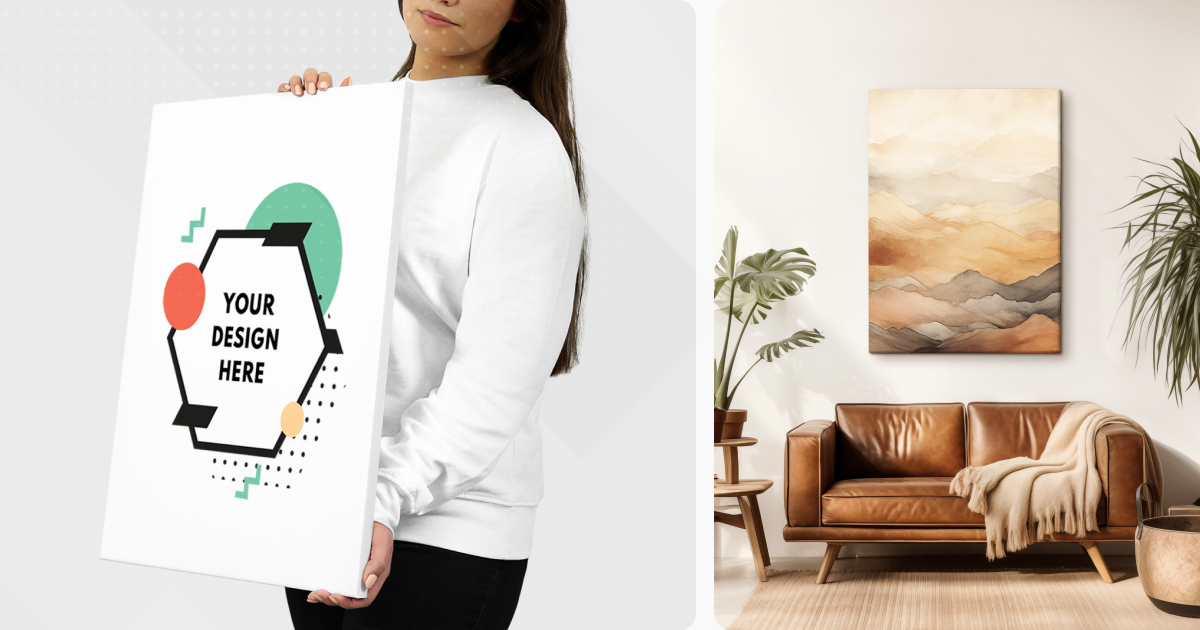
Scroll through social media and you’ll see it: carefully styled gallery walls, minimalist line art above sofas, huge statement canvases in home offices. Wall art has quietly become one of the most visible ways people personalise their space.
Behind many of those prints, there isn’t a factory or a warehouse. There’s a designer with a laptop – and a specialist print-on-demand partner doing the heavy lifting.
One of the companies enabling that model for wall art brands is Printseekers, a print-on-demand provider built around wall art and home decor.
This is how it works and why it matters for small e-commerce businesses.
From Bulk Buying to “Print When Ordered”
The old model for selling wall art was simple but risky:
- Guess which designs and sizes would sell
- Order a batch from a printer
- Store them somewhere
- Hope they eventually sell before styles change or stock gets damaged
Print-on-demand flips that model.
With Printseekers, each poster, canvas or framed print is produced only after the customer places an order. The brand never holds inventory; the print is created, packed and shipped directly to the customer under the brand’s name.
That does two important things for smaller businesses:
- It removes the need for upfront stock purchases
- It lets them offer a much wider range of sizes and formats without extra risk
For a small brand, that’s the difference between “we can afford three SKUs” and “we can offer a full wall art catalogue from day one”.
A Wall Art Specialist, Not a Generalist
Most generic print-on-demand services offer a bit of everything: t-shirts, mugs, tote bags, and somewhere in the menu – prints.
Printseekers took the opposite route and built around wall art first. Their own materials highlight more than 40 wall art product options – from posters and framed posters to canvases and wallpapers – plus related decor and merch.
For sellers, that specialisation matters because:
- Product sizing, aspect ratios and framing options are tailored to how people actually decorate their walls
- The production workflow is optimised for prints – consistency of color, sharpness and materials
- It’s easier to build a cohesive catalogue when the provider’s strengths match your niche
A brand focused purely on wall art doesn’t have to bend itself around a t-shirt-first system.
A Shopify App That Handles the Boring Parts
The fun part of running a wall art brand is the creative work. The less glamorous part is pushing orders around, checking files and tracking shipments.
Printseekers has a Shopify app that aims to remove as much of that manual work as possible. Once installed, it connects your Shopify store to their fulfilment system, so new orders for wall art products are automatically passed to production and shipped directly to your customers.
Some of the key points from the app listing and integrations pages:
- You can sell posters, canvas, framed art and wallpaper without carrying inventory
- Products and orders sync directly in Shopify
- The same backend can also work with Etsy, WooCommerce, direct API and CSV import
For a merchant, that means you don’t have to log into multiple dashboards to manually type addresses or upload files. The systems talk to each other for you.
A natural anchor sentence for this article could be:
“If you already run a Shopify store, you can install the Printseekers: Print on Demand app and start offering wall art without changing your current tech stack.”
Speed and Scale Without Owning Machines
One of the big questions with any print-on-demand partner is speed. Customers are used to fast shipping; few will tolerate long waits for a poster.
Printseekers’ own site emphasises an average production time of around 48 hours, with more than 1,000,000 orders shipped globally and over 40 wall art product options in their catalogue.
Those numbers matter because they indicate:
- A mature production setup – you don’t ship a million orders by accident
- Processes that can handle seasonality (like Q4 gifting spikes)
- Enough scale to invest in better machinery and quality control
For a small brand, plugging into that infrastructure is a shortcut. Instead of trying to assemble your own production network, you tap into one that’s already running.
Human Support in a Software-Led Workflow
Print-on-demand is heavily automated by design. But when something goes wrong – a misprint, a courier issue, a complex wholesale order – having a human to talk to makes a difference.
Printseekers positions itself strongly around personal support. Their website highlights that each client gets a dedicated personal manager, and they even promote sample packs so merchants can test materials before committing.
On the Shopify app review side, the early feedback is positive, with merchants praising print quality, smooth integration and responsive customer support, reflected in a 5/5 average rating at the time of writing.
For merchants, that combination – automation backed by accessible human support – often matters more than shaving a few cents off unit cost.
What This Means for Smaller Brands
Put all of that together and you get a clear pattern for the next wave of wall art brands:
- Micro teams, macro catalogues. One or two people can offer dozens of sizes and styles without handling stock.
- Brand-first, factory-second. The “factory” is now a service you connect to, not something you build yourself.
- Experimentation without fear. You can test new designs, formats and niches without tying up capital in inventory.
Print-on-demand won’t design your art or write your marketing emails. But for wall art specifically, companies like Printseekers make it realistic for a small brand to act big – without warehouses, machines or pallets of unsold prints.
And for customers, the result is simple: more choice on the wall, fewer reasons to settle for generic posters from a bargain bin.

