
Most people who struggle with their sexuality have already tried talking about it. They have spoken to a therapist, read the books, perhaps attended a workshop or two. And yet, for a significant number of them, something essential remains unchanged. The understanding is there — the insight, the narrative, even a degree of self-compassion — but the body has not caught up. The tension is still there. The numbness persists. The difficulty with intimacy continues to surface, reliably, in the same form.
This gap — between what a person understands about themselves and what they actually experience in their body — is one of the central challenges of sexual healing. It points to something that talking-based therapies, however skilled, are structurally limited in addressing: the fact that a great deal of our sexual difficulty does not live in the mind at all. It lives in the tissues, the nervous system, the posture, the breath. It lives in the body — and it must be met there.
How the Body Stores What the Mind Would Rather Forget
The mechanisms by which emotional and psychological experience becomes stored in the body are now reasonably well understood in contemporary neuroscience. The autonomic nervous system responds to threat — whether physical or emotional — by organising the body for survival: tensing muscles, restricting breath, narrowing awareness, shutting down sensation in vulnerable areas. When the threat passes and the nervous system is able to complete its natural discharge cycle, these responses resolve. But when they cannot — because the experience is overwhelming, because there is no safe space for discharge, or simply because the same pattern repeats too many times — the body’s response becomes habitual. It becomes the way the body simply is.
In the sexual domain, this process is particularly significant. Sexual vulnerability is among the deepest forms of human exposure; the experiences of shame, violation, or emotional abandonment in this domain tend to leave particularly durable somatic traces. A woman who learned early that her body was dangerous, wrong, or available for others’ use will carry that learning not merely as a belief but as a pattern of chronic muscular tension, restricted pelvic breath, and defended sensation — sometimes for decades, sometimes for a lifetime, unless something intervenes at the level of the body itself.
The Tantric Approach: Meeting the Body Where It Is
The Tantric tradition developed, over many centuries, a remarkably sophisticated understanding of the body as an energetic and experiential field — one that could be worked with directly, through attention, breath, and conscious touch, to release held patterns and restore the natural flow of vitality and sensation. This is not mysticism for its own sake; it is a practical, body-centred methodology whose effects are directly felt and, for many people, transformative in ways that nothing else has achieved.
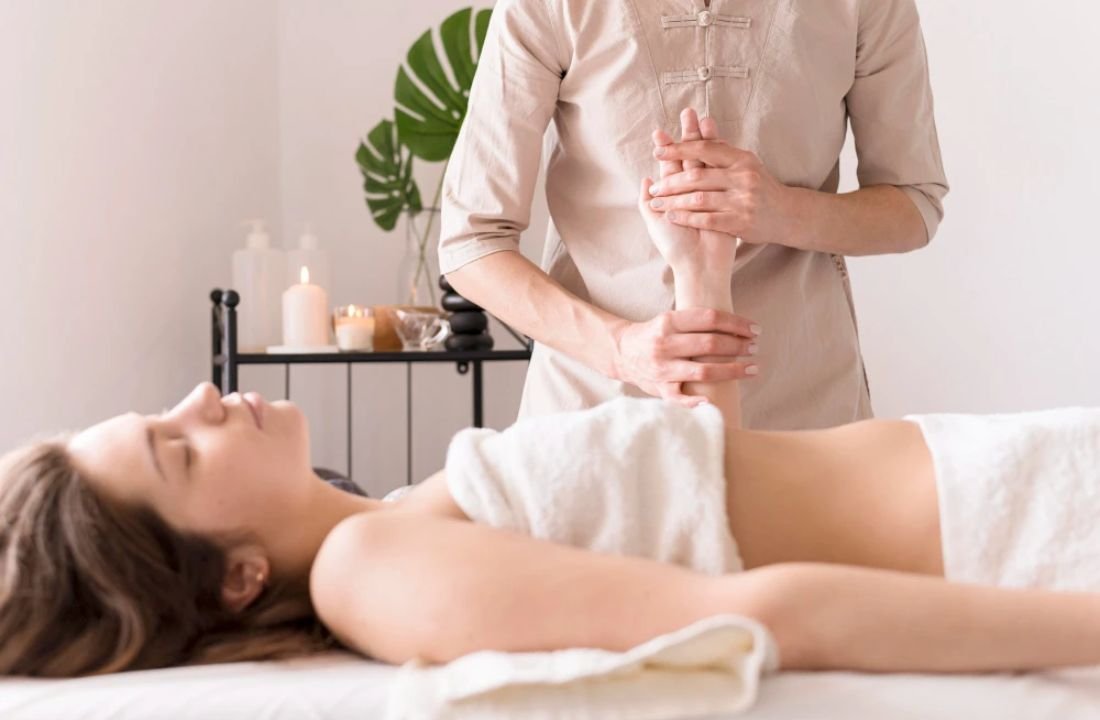
A professional session of tantric bodywork creates the conditions for this release. The practitioner works slowly and attentively, tracking the client’s breath and physical responses, approaching areas of holding or numbness with patience rather than pressure. The client is always in control of the pace and scope of the work. Nothing is imposed; everything is invited. In this quality of relational safety — which is itself profoundly therapeutic — the nervous system gradually begins to trust that it is possible to feel, to open, and to remain unharmed.
Breath is woven throughout. In the Tantric understanding, breath is the primary vehicle for moving energy through the body; where breath reaches, sensation follows. Learning to breathe fully into areas that have been held or defended is, for many clients, one of the most immediately powerful aspects of the work — and one of the skills they carry forward into their own lives long after a session ends.
Beyond Problem-Solving: Tantra as a Path of Development
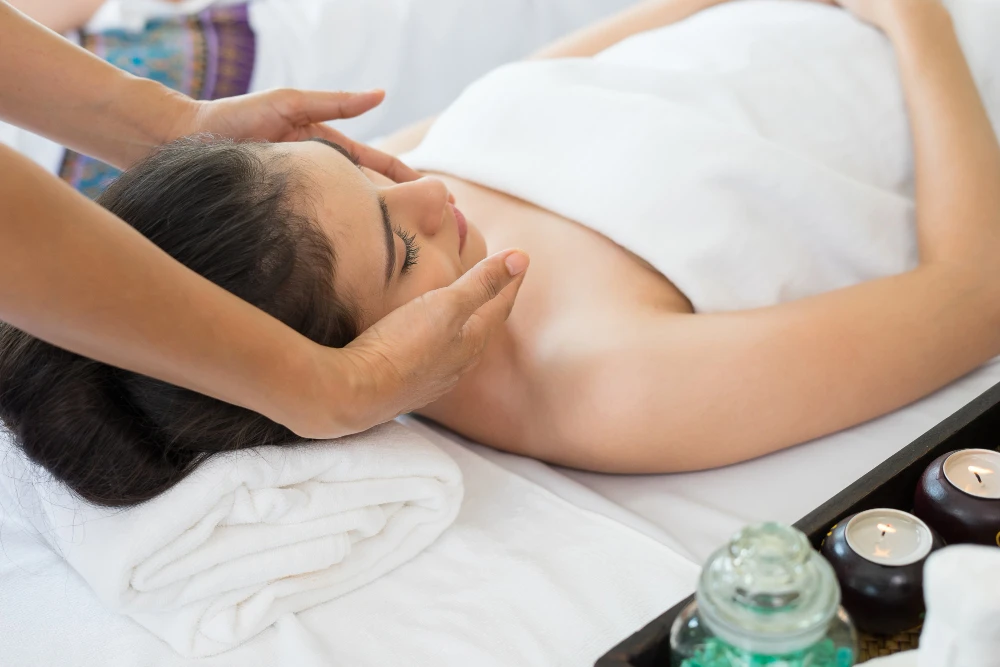
It would be a mistake to frame tantric bodywork solely as a therapeutic intervention for people with sexual difficulties. While it is undoubtedly effective in that context, the Tantric tradition was not primarily conceived as a problem-solving tool. It was conceived as a path of development — a systematic approach to expanding human experience, deepening embodied awareness, and cultivating a quality of aliveness and presence that transforms not just the sexual domain but the whole of life.
Many people who come to this work have no specific difficulty to resolve. They come because they sense that their capacity for pleasure, sensation, and embodied presence is smaller than it could be — that life is being lived at a fraction of its possible richness. The Tantric framework offers a genuine path to expanding that capacity: not through performance or technique, but through the progressive deepening of awareness, breath, and feeling in the body itself.
Those who engage with this work over time frequently report changes that extend well beyond the specifically sexual. Greater vitality in daily life, a more stable and grounded sense of self, improved capacity for emotional intimacy, and a deepened relationship with creativity and purpose are among the most commonly described effects. The body, it turns out, is not merely the location of our problems. It is also the source of our aliveness — and investing in it has returns that touch everything.
Choosing a Practitioner: Why History and Integrity Matter
The decision to engage in therapeutic bodywork of this kind requires a practitioner worthy of the trust it involves. Genuine expertise in this field is not conferred by a short training course or a convincing website; it is built over years of dedicated practice, continuous learning, and the kind of ethical clarity that comes only from having sat with many people in states of genuine vulnerability. When looking for serious, professional Tantric Massage, Tantric Therapy London is a practice that exemplifies precisely this standard. Established in 2002, it is one of the first and longest-running practices in the UK dedicated to authentic tantric bodywork — founded before the current market in ‘Tantra’ existed, and grounded from the outset in serious therapeutic purpose.
Over more than two decades, the practice has developed deep expertise in working with the full spectrum of sexual and intimacy difficulties: vaginismus, anorgasmia, trauma recovery, loss of desire, embodiment difficulties, and the subtler but equally real experience of disconnection from one’s own erotic life. It also works with men, women, and couples through sex coaching and Tantric sexuality workshops. The practice has no affiliation with the adult market and operates at all times within a professional, ethical framework centred entirely on the client’s wellbeing.
An Invitation, Not a Promise
Authentic tantric work does not offer guarantees. It offers conditions — the quality of space, attention, and skilled contact in which the body’s own healing intelligence can begin to move. What arises in those conditions is always unique to the individual: always unexpected, often profound, sometimes quietly and entirely life-altering.
If you have tried talking and found it insufficient; if you carry a sense that your body holds something that has not yet been reached; if you are drawn to the possibility of a different relationship with your own aliveness — this work may be precisely what you have been looking for. Not as a shortcut or a novelty, but as a serious, time-tested, and deeply human form of healing that begins exactly where it must: in the body, in the breath, and in the quality of how we allow ourselves to be touched.