
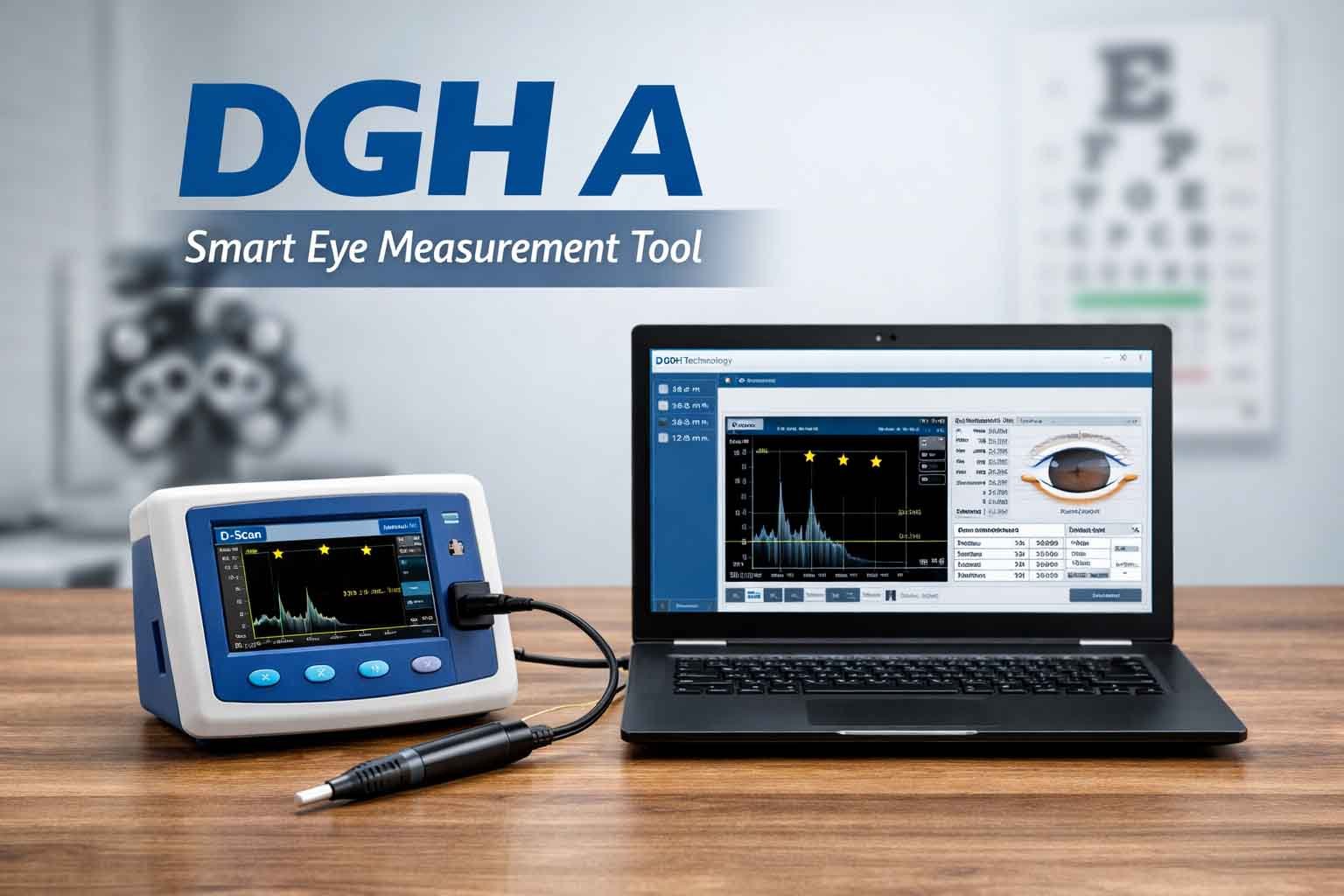
Have you ever wondered how doctors measure the inside of your eye before surgery? It may sound complex, but today it is done with smart and simple tools. One of those tools is DGH A. It is small, easy to use, and very helpful for eye doctors.
In 2026, eye care is more advanced than ever. Doctors need correct numbers before doing cataract surgery or checking eye growth in children. Even a tiny mistake can affect vision. That is why tools like DGH A are very important in modern eye clinics.
DGH A is made by DGH Technology in the United States. The company has been working in eye ultrasound since 1982. All devices are made in Pennsylvania with strong quality control. In this article,
What Is DGH A
DGH A is a special ultrasound machine made for eye doctors. It belongs to a group of tools called A-Scan ultrasound devices. These tools use safe sound waves to measure the inside of the eye. The device is also known as the Scanmate A.
This smart device measures important things like eye length and lens thickness. These numbers help doctors plan cataract surgery and check eye growth. Without correct measurements, surgery results may not be perfect. So DGH A plays a very big role in eye care.
The best part about DGH A is that it is small and light. It connects to a Windows computer using a simple USB cable. It is easy to carry, easy to set up, and easy to use. That is why clinics and hospitals around the world trust it.
Why Eye Measurement Is Important
Let’s think about cataract surgery for a moment. Before placing a new lens inside the eye, doctors must know the exact eye length. This length is called axial length. Even a difference of 0.1 millimeter can change how well a person sees after surgery.
Doctors also measure lens thickness. The natural lens inside the eye has a certain size. Knowing this size helps doctors choose the correct artificial lens. If the numbers are wrong, the patient may still need glasses after surgery.
Eye measurement is also very important for children with myopia. Myopia means short-sightedness. Doctors track how fast the eye is growing. If the eye grows too fast, treatment may need to change. That is why tools like DGH A must give very correct and repeatable numbers every time.
How DGH A Works
Using DGH A is simple and smooth. First, the doctor connects the device to a computer using a USB cable. Then they open the software and enter the patient’s name and details. Everything is done step by step on the screen.
Next, the doctor gently places a small probe near or on the eye. The probe sends safe sound waves into the eye. These waves bounce back and the machine reads them. Within seconds, the screen shows eye length and other details clearly.
The device also has a star and sound guide system. When the probe is placed correctly, stars appear on the screen. A sound also confirms good positioning. If too much pressure is applied, a safety lock stops the reading. This keeps the patient safe and the numbers accurate.
Features of DGH A
1. Star and Sound Guidance System
One very helpful feature of DGH A is its star and sound guidance system. When the doctor places the probe correctly, one, two, or three stars appear on the screen. More stars mean better positioning and better accuracy.
At the same time, the device makes a sound to confirm the correct position. This helps doctors know instantly if they are doing it right. It makes the whole process faster and easier, especially for new users.
2. Safety Compression Lock
Sometimes, if a probe is pressed too hard on the eye, it can change the shape of the cornea for a short time. This can lead to wrong numbers. DGH A solves this problem with a safety compression lock.
If too much pressure is detected, the device stops the measurement automatically. This protects the patient’s eye and keeps the results correct. It is a small feature, but it makes a big difference in safety and accuracy.
3. Portable and Lightweight Design
Many older ultrasound machines are large and heavy. But DGH A is different. The device itself weighs less than one pound. Even with all accessories, it is under two pounds.
Because it is small and light, doctors can carry it easily between rooms or even take it to mobile eye camps. This makes it perfect for small clinics, big hospitals, and even remote areas where large machines are not practical.
4. USB Connectivity
Another smart feature of DGH A is its USB connection. You simply plug it into a Windows computer. There is no need for big systems or complex setup. It works smoothly with normal clinic computers.
This also allows easy saving and printing of reports. Many clinics connect it to EMR or EHR systems. That means patient records can be stored safely and quickly without extra steps.
5. Built-In Myopia Growth Tracking
For children with myopia, tracking eye growth is very important. DGH A includes software that creates growth charts. These charts show how the eye length changes over time.
Doctors can compare old and new results easily. If the eye is growing too fast, treatment can be adjusted. This helps protect children’s vision in the long term.
6. Built-In IOL Calculator
When planning cataract surgery, doctors must calculate the power of the artificial lens. DGH A includes built-in IOL formulas to help with this step.
Instead of using separate calculators, doctors can see the suggested lens power directly on the screen. This saves time and reduces mistakes during surgery planning.
Contact Mode and Immersion Mode
DGH A offers two ways to measure the eye. The first is contact mode. In this method, the probe gently touches the eye. Numbing drops are used so the patient feels no pain. This method is simple and quick.
The second method is immersion mode. In this method, a small shell filled with liquid is placed on the eye. The probe measures through the liquid without touching the cornea directly. This reduces pressure and can give even more accurate results.
Having both options makes DGH A flexible. Doctors can choose the best method based on the patient’s condition. This makes the device useful for many different situations.
Built-In Lens Power Formulas
When a cataract is removed, doctors place a new artificial lens inside the eye. This lens is called an IOL, which means intraocular lens. Choosing the correct lens power is very important for clear vision after surgery.
DGH A includes many trusted formulas such as SRK/T, Hoffer Q, Haigis, Holladay, and Shammas. It even includes formulas for patients who had LASIK or PRK surgery in the past.
These built-in formulas make surgery planning easier and safer. Doctors do not need extra tools. Everything is available in one system, which saves time and improves confidence.