
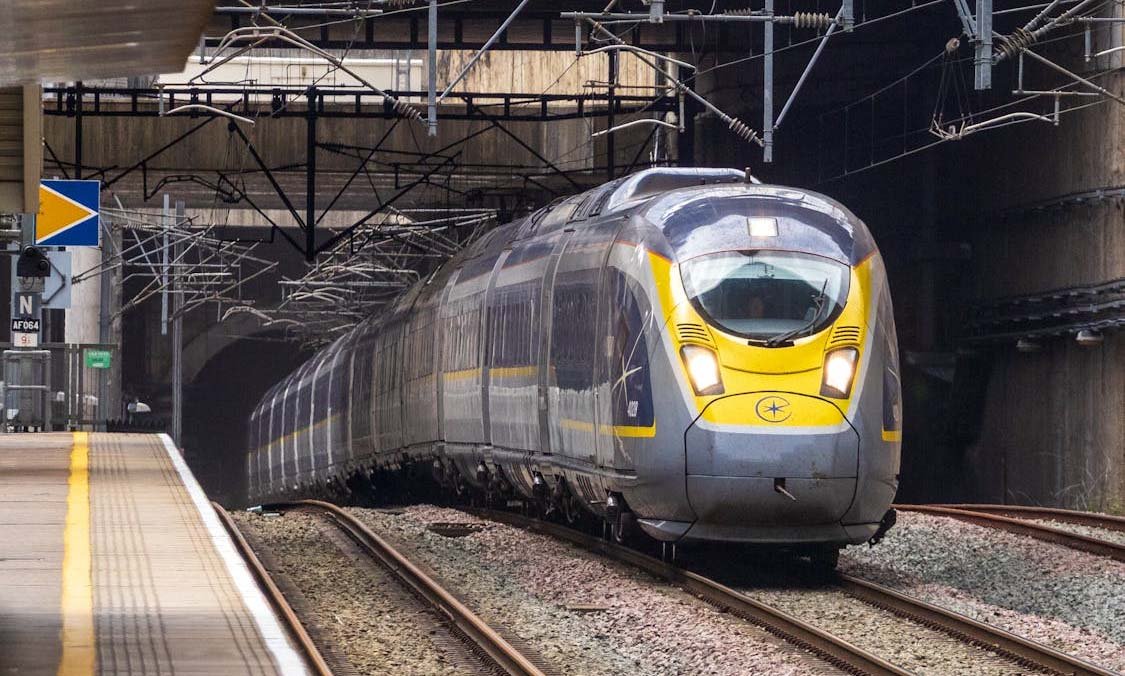
Eurostar high-speed train approaches the platform exit from a tunnel, showcasing modern rail travel.
A British weekend abroad begins long before the platform. It begins on a Thursday evening, with a coat that has not been worn since March, a passport check that takes longer than it used to, and the small, half-conscious calculation of how much time the crossing will eat from the trip itself.
Three routes carry most of the weekend traffic out of the country. Eurostar lifts from St Pancras and lands in Lille or Paris before the working day has finished.
What follows is a field log from three weekends across the spring of 2026, with the departure times that held up, the port logistics that did not, and the small admin items a UK passport now carries through every crossing.
Key Takeaways
- A British weekend on the Continent works best as a Friday-evening departure and a Sunday-night return, with three viable routes: Eurostar (rail), Dover-Calais (short-sea), and the Hull-Rotterdam overnight (long-sea).
- Eurostar from St Pancras reaches Lille in 1 h 22 m and Paris Gare du Nord in 2 h 16 m; the Friday 19:01 to Lille and the 19:31 to Paris are the steadiest weekend departures.
- Dover-Calais runs hourly on P&O and DFDS, with foot-passenger boarding now consolidated at the Dover Eastern Docks Western Pier; the 90-minute crossing time has held since the 2023 schedule reset.
- The P&O overnight from Hull to Rotterdam Europoort sails at 20:30 and arrives at 08:00 local; a cabin on the Pride of Rotterdam runs £140-£220 for two on a weekend.
- A UK passport on a 2026 crossing needs at least three months’ validity from the return date, the ETIAS rollout is staged through 2026, and a daily-pass charge from the home network now applies in France, Belgium and the Netherlands.

Commuters at Milano Central Station featuring modern trains under the iconic arched roof.
Why the Weekend Crossing Has Come Back
The British short weekend in Europe almost disappeared between 2020 and 2022. Schengen testing rules, the post-Brexit border rhythm, and a returned price-friction on mobile data made the Friday-Sunday loop feel heavier than it had been in 2018.
The route choice now turns on a different question than it did before the pandemic. The Eurostar is fastest but books out earliest. The Dover-Calais sea crossing has more flexibility on a Friday afternoon but more queue uncertainty on the return Sunday. The Hull overnight is the slowest of the three and the only one that hands the traveller a full night’s sleep inside the journey. The reader’s job is to match the route to the weekend rather than the weekend to the route.
Route One: Eurostar Friday Out, Sunday Back
The Eurostar weekend begins on the eastern apron of St Pancras at five o’clock on a Friday. The 19:01 to Lille is the cleanest departure for a two-night weekend in Flanders or French coastal Picardy.
The Sunday return is the harder leg. The 18:13 from Paris reaches St Pancras at 19:39 local, and the 16:42 from Lille lands at 17:09; both run on the busiest weekend train of the schedule, and the queue at the Gare du Nord UK Border Force booths can take forty minutes on a high summer weekend.
A short-weekend itinerary that pays:
- Friday 19:01: St Pancras to Lille Europe, arrive 22:23. Dinner at Estaminet T’Rijsel or a bottle of Goudale at Au Bureau on the Place du Théâtre.
- Saturday: the Palais des Beaux-Arts opens 10:00, the Vieille Bourse market runs the full afternoon, and the Wazemmes neighbourhood opens for a slow Saturday evening.
- Sunday morning: the Wazemmes market until 14:00, then a walk along the Deûle canal to the Citadelle Vauban.
- Sunday 16:42: Lille Europe to St Pancras, arrive 17:09.
Route Two: Dover-Calais on a Friday Afternoon
The Dover-Calais crossing is the route the British weekender has used for two centuries, and the rhythm is still the one the South Eastern Railway laid down in the 1840s. The drive from London on a Friday afternoon takes two and a quarter hours on the M20, two and three quarters at peak.
The route works for two trip patterns. The car traveller leaves the M20 at the Eastern Docks, sails across, and is on the A26 Calais-Reims autoroute within forty minutes of disembarking, with northern Burgundy, the Champagne villages, or the Belgian Westhoek inside a three-hour Saturday drive.
The return is where the Dover-Calais corridor stays unpredictable. The Sunday afternoon and evening sailings carry the weekenders home alongside the Monday-morning hauliers, and the Calais ferry terminal has the only border check on the route.
Route Three: The Hull Overnight on a Long Weekend
The Hull-to-Rotterdam overnight is the slowest of the three routes and the one that handles a four-night long weekend best. P&O’s Pride of Rotterdam sails from the King George Dock at 20:30 and arrives at Rotterdam Europoort at 08:00 local.
The crossing buys the traveller a working night’s sleep and lands them within forty minutes of Rotterdam Centraal by the Maasvlakte shuttle bus and the RET metro. From the Centraal station, the Dutch railway puts Amsterdam at 41 minutes, Utrecht at 30, and The Hague at 25 — far enough to make the long weekend feel like a real trip and slow enough that the Channel is part of the holiday rather than an item to be got through.
The route is the one that has kept the Hull-East Riding traveller in the European weekend conversation. The King George Dock has its own car park, the boarding rhythm is calmer than the Dover terminal, and the breakfast on arrival at Europoort is the closest thing a British weekender now gets to the old overnight-ferry tradition that ran out of Harwich and Newcastle into the 1990s.
What a UK Passport Needs in 2026
The post-Brexit border rhythm has settled into a recognisable shape. A UK passport at a Schengen crossing now needs at least three months’ validity from the return date and a date-of-issue inside the last ten years. The European Entry/Exit System (EES) began its staged rollout in October 2025, and by spring 2026 the biometric checks are operational at Calais, Dunkerque, Rotterdam Europoort, and the Gare du Nord UK Border Force booths. Allow an extra ten to twenty minutes on the outbound leg until the system stabilises.
The European Travel Information and Authorisation System (ETIAS) has its application window opening through the second half of 2026. The £6 fee, three-year validity, and online application form are confirmed; the precise enforcement date is the line UK readers should track on the European Commission’s Home Affairs portal between now and the autumn.
Staying Online at Sea and Between Ports
The three routes cross four network regimes — UK, France, Belgium and the Netherlands — and the data behaviour is different on each leg. The Eurostar tunnel holds 4G across most of its length on Orange France and SFR through the southern bore. The Dover-Calais ferry runs on cellular within four nautical miles of either coast and on ship Wi-Fi in the middle of the crossing. The Hull-Rotterdam route is the longest stretch without cellular signal on any standard British weekend trip.
On the UK side of the crossing
Before flying, grab a travel eSIM with coverage on EE — I used HelloRoam’s the UK eSIM for the spring 2026 St Pancras-to-Lille loop, and it held up where the home daily-pass would have ticked on the return crossing without saving a thing for the working notes on the Eurostar back. Across central London and the Kent rail corridor, EE leads on 5G through St Pancras and Ashford International, with Vodafone UK close behind on 4G in the Dover terminal and O2 steadiest on the M20 corridor. Three UK has the deepest coverage at Hull and the King George Dock; the boarding rhythm picks up signal on the harbour wall and loses it within a mile of leaving the Humber.
On the Continent
Orange France and Bouygues split the strongest signal on the Eurostar Lille and Paris approaches. SFR holds the steadiest 4G inside the tunnel south of Coquelles. In the Netherlands, KPN leads through Rotterdam Centraal and the Europoort approach, with Vodafone Netherlands holding the Maasvlakte. Belgium’s Proximus runs the densest coverage on the West Flanders coast and the Ostend-Bruges line.
| Region/Route | Local Carrier | Signal Quality | Notes |
|---|---|---|---|
| London and Kent rail corridor | EE | Strong 5G in zones 1-2 and Ashford | Best for the British leg of any cross-Channel trip |
| Eurostar tunnel southbound | SFR | Steady 4G through the southern bore | Orange France takes over north of Calais Fréthun |
| Dover Eastern Docks | Vodafone UK | Reliable 4G in the terminal and on the harbour wall | Cellular drops within four nautical miles of the French coast |
| Hull King George Dock and the Humber | Three UK | Strong 4G at the dock; signal lost a mile out | Cellular returns on approach to Europoort the next morning |
| Calais-Lille-Bruges arc | Orange France / Proximus | Dense 4G/5G in Lille and Bruges centres | Bouygues second in central Calais; Proximus leads on the Belgian coast |
| Rotterdam Centraal and Europoort | KPN | Strong 4G/5G in central Rotterdam | Vodafone Netherlands holds the Maasvlakte and the Hook of Holland |
When the home network is the cheaper instrument
For a single-country weekend on a Friday-Sunday loop, the home network’s daily pass tends to be the cheaper instrument. For a multi-route weekend that touches France, Belgium and the Netherlands, or for a four-night Hull-Rotterdam loop with a working session built in, an independent cross-border plan recovers most of the price-friction that returned to UK contracts in 2022.
Where to Stay and What to Book First
Lodging on the three routes runs roughly £85-£140 per night in Lille and Bruges, £110-£170 in central Paris, and £95-£150 in Rotterdam and The Hague at the April-May shoulder rates of 2026. Book the Eurostar legs sixty days in advance for the steadiest fares, the Dover-Calais ferry forty-eight hours ahead for the off-peak Friday afternoon sailings, and the Hull-Rotterdam cabin a fortnight ahead on weekends and a month ahead through July and August.
FAQ
How long does the Eurostar take from London to Lille on a Friday evening? The 19:01 Eurostar from St Pancras International arrives at Lille Europe at 22:23 local, a journey of 1 h 22 m. The Paris service on the same evening reaches Gare du Nord at 22:47 local in 2 h 16 m. Both depart from the eastern apron at St Pancras and clear UK Border Force and French Police aux Frontières before boarding.
Is the Dover-Calais ferry still the fastest sea route to coastal Europe? The Dover-Calais corridor remains the fastest scheduled short-sea crossing from the UK at 90 minutes of open water, running hourly on P&O Ferries and DFDS Seaways from the Dover Eastern Docks. The Folkestone-Coquelles Eurotunnel Le Shuttle is faster end-to-end for car traffic at 35 minutes of crossing but counts as rail rather than ferry.
What does a UK passport need for a weekend in France after Brexit? A UK passport entering the Schengen Area in 2026 needs at least three months’ validity from the planned return date and a date of issue within the last ten years. The European Entry/Exit System (EES) biometric checks are operational from late 2025, and the ETIAS travel authorisation enforcement window opens through the second half of 2026 with a £6 fee and three-year validity.
Is the overnight P&O ferry from Hull to Rotterdam worth it for a long weekend? The Hull-Rotterdam route works for a four-night long weekend rather than a two-night one. The Pride of Rotterdam sails at 20:30 from the King George Dock and arrives at Europoort at 08:00 local, putting the traveller in central Rotterdam by 09:00 and Amsterdam by 09:45. The return cabin runs £140-£220 for two on weekends in the spring shoulder.
Which UK carrier holds signal on the cross-Channel route? EE leads on 5G through St Pancras and the Kent rail corridor to Ashford International. Vodafone UK is steadiest in the Dover terminal and along the harbour wall. Three UK holds the deepest coverage at Hull King George Dock. Cellular drops within four nautical miles of either coast on the Dover-Calais and Hull-Rotterdam sea crossings.
A Weekend the Channel Has Returned
The British weekend in coastal Europe has not changed its shape; it has changed its admin. The Eurostar still leaves St Pancras at the hour the schedule has held since 2007. The Dover-Calais ferry still crosses in the ninety minutes the South Eastern Railway promised in the 1840s. The Hull overnight still sails on the rhythm of the North Sea tide. What has shifted is the small print: the three months on the passport, the staged biometric check at the Schengen border, the daily-pass clock that now ticks across the Channel on a British contract. The route is still there, waiting on a Friday evening. The trick is in the planning.