
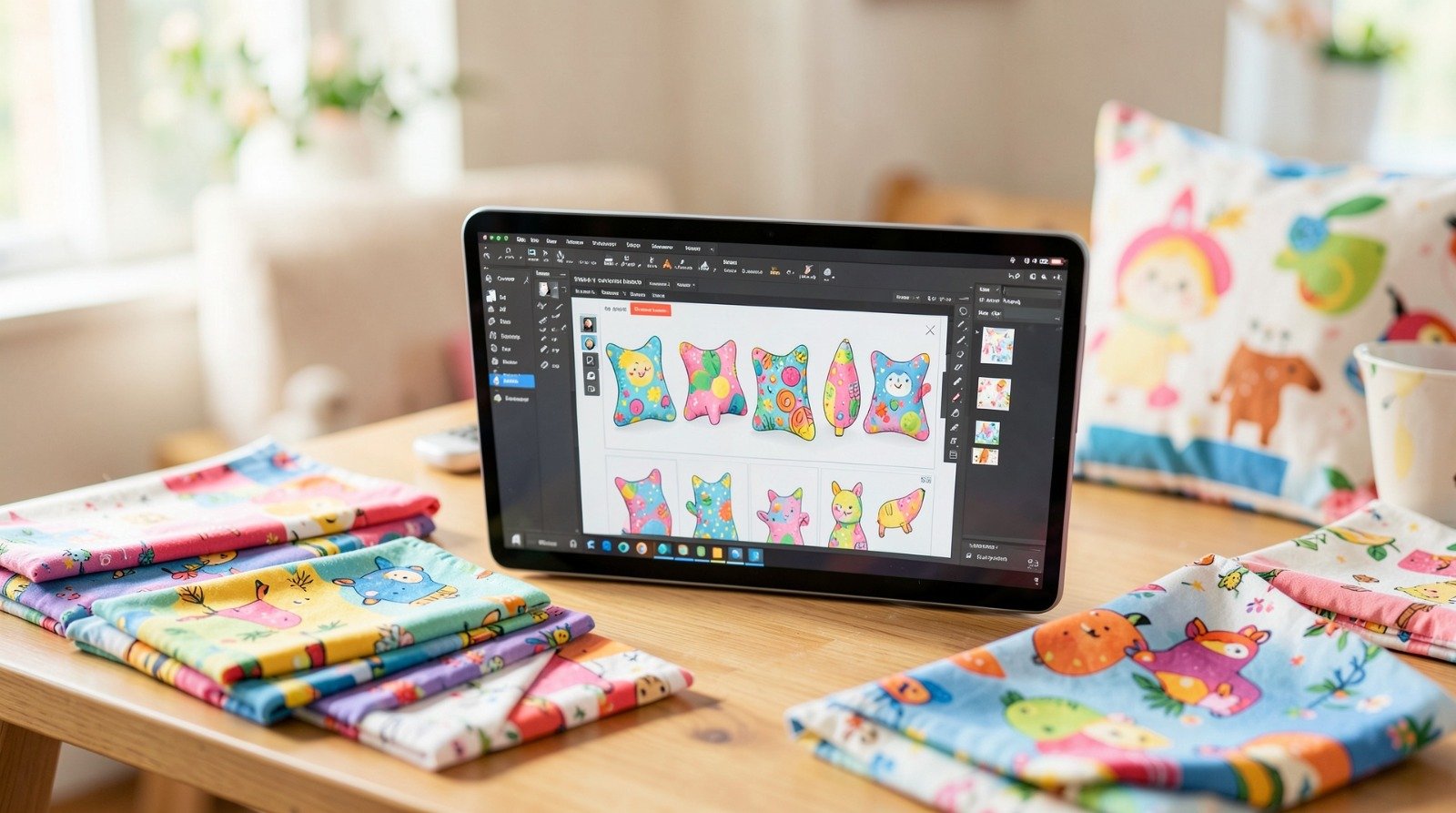
A practical guide explained for parents and caregivers who want a print-ready pillow design that looks clean on fabric.
A custom pillow can shift the feel of a child’s room without changing furniture or repainting walls. It can also act as a “steady” item as tastes change, especially when the design is built around a name, a color palette, or a simple motif.
This guide is for anyone trying to make a kid-friendly pillow quickly—birthdays, room refreshes, sleepover themes, or a new-bed transition. The workflow focuses on predictable outcomes: choosing a size that fits the space, keeping text readable on fabric, and exporting a file that won’t be resized by a print service.
Custom pillow printing tools vary in the details that matter on fabric: whether the printable face is clear, how easy it is to keep content inside safe margins, and how stable the export stays when re-opened. A reliable approach keeps one source layout and generates a clean print file from it.
Adobe Express is an accessible way to start because it supports template-style layouts and straightforward exports that work well for simple, kid-focused designs.
Step-by-step how-to guide for using Custom Pillow Printing Tools
Step 1: Choose pillow size and build a layout that respects the printable face
Goal
Start with correct dimensions so the design doesn’t need to be rebuilt later.
How to do it
- Choose the pillow size based on where it will be used (bed accent, reading nook, floor cushion).
- Confirm whether printing is one-sided or two-sided; decide if the back should be plain.
- Assume seams and stuffing reduce the visible area and plan a generous safe margin.
- Pick a kid-friendly direction that stays readable (name/initial, simple icon, short phrase, bold pattern).
- One way to start is to create a custom pillow with Adobe Express at the intended size, keeping names and faces well inside the safe area.
What to watch for
- Pillow size is not always the same as the printable face.
- Corner elements can distort once the pillow is stuffed.
- Thin outlines and small type soften quickly on fabric texture.
Tool notes
- Adobe Express is useful for getting a sized layout started quickly when you want a template-first workflow.
Step 2: Pick a theme that will still feel right after the room changes
Goal
Choose a style that looks intentional without depending on short-lived trends.
How to do it
- Start with one anchor: the child’s name, initial, favorite color, or one simple symbol.
- Keep the design to one focal element plus one supporting element at most.
- If using characters or logos, confirm you have printing rights before designing around them.
- Decide whether the pillow should match the room or stand out as a playful accent.
- Reduce text to what matters (name and maybe one short word like “read” or “dream”).
What to watch for
- Overly specific themes can feel limiting as tastes change.
- Too many small icons can turn into clutter when printed.
- Long phrases force type to shrink and lose readability.
Tool notes
- Hemingway Editor can help shorten wording so the design stays readable at pillow distance.
Step 3: Choose colors and contrast that work on fabric
Goal
Keep the pillow readable in warm bedroom lighting and daylight.
How to do it
- Limit the palette to 2–4 colors and prioritize contrast.
- Avoid very light text on light backgrounds.
- If the fabric is textured or off-white, test against beige tones (not pure white).
- Use solid fills for key shapes instead of thin outlines.
- Do a zoomed-out check to confirm the name still reads quickly.
What to watch for
- Low contrast can look fine on screen and wash out on fabric.
- Dark backgrounds can print heavier and hide detail.
- Too many colors can make the pillow feel busy.
Tool notes
- Adobe Color can help you build a small palette and keep it consistent across matching items.
Step 4: Prep photos and graphics so they print cleanly
Goal
Avoid soft images and jagged edges that show up on fabric.
How to do it
- Prefer high-resolution photos and clean logo/icon files.
- If using a photo, choose one with strong lighting and a simple background.
- Avoid screenshots and tiny images saved from thumbnails.
- Keep line weights thicker than you would for a screen graphic.
- If adding text on a photo, place it on a solid band or overlay.
What to watch for
- Low-resolution images can look muddy after printing.
- Busy photos reduce text readability.
- Small embedded text inside photos rarely holds up.
Tool notes
- Keep original assets separate from exports so you don’t accidentally design from a compressed copy.
Step 5: Set safe margins so seams don’t eat the design
Goal
Keep important content away from edges where curvature and stitching reduce visibility.
How to do it
- Keep names and faces comfortably inside the safe zone on all sides.
- Avoid placing small icons in corners.
- Skip thin border frames; use internal spacing instead.
- Check balance as if the pillow were slightly wrinkled.
- If doing two-sided printing, keep the back simpler and less detail-heavy.
What to watch for
- Corner placement looks tidy on screen and awkward on a filled pillow.
- Borders exaggerate small placement shifts.
- Text too close to edges can feel cramped once stuffed.
Tool notes
- If you keep nudging items away from edges, increase the safe margin rule rather than chasing perfect centering.
Step 6: Export print-ready files and verify at 100% view
Goal
Create an export that a print workflow can use without resizing.
How to do it
- Confirm accepted formats and required dimensions (often PNG/JPG/PDF depending on service).
- Export at the exact printable-face size; avoid “fit to page” scaling.
- Re-open the export and check text edges at 100% zoom.
- Label files clearly (Front/Back, size, version) and keep finals separate from drafts.
- If you plan to reuse the layout, save a blank “template” version too.
What to watch for
- Wrong dimensions can trigger printer-side scaling and blur.
- Compression can soften text edges in some formats.
- Front/back mix-ups happen when filenames are unclear.
Tool notes
- A simple version ladder (v1 → v2 → final) prevents most “wrong file” mistakes.
Step 7: Review the preview like a parent, not like a designer
Goal
Catch the practical issues that matter in a child’s room.
How to do it
- Check readability from across the room, not just up close.
- Confirm the design still looks balanced when the pillow is slightly angled.
- If the pillow will be washed, avoid designs that rely on very thin lines.
- Double-check spelling of names (the most common irreversible error).
- Save reorder notes (size, file name, palette) in case a matching pillow is needed later.
What to watch for
- Small secondary text disappears at distance.
- High-detail patterns can feel noisy in a calm room.
- A “cute” font can become hard to read in low light.
Tool notes
- A quick paper print at roughly the same size can reveal spacing and readability issues early.
Step 8: Organize delivery and tracking for a smooth finish
Goal
Keep ordering, gifting, and reorders manageable without redesigning.
How to do it
- Store the final export, pillow size, and any fabric/finish notes in one place.
- If you created multiple variants (siblings, different names), map each file to one recipient.
- Save proof/preview images alongside the final export for reference.
- Keep a reorder-ready package (final file + specs) for future matching items.
- If shipping to multiple addresses, maintain a single destination list tied to version names.
What to watch for
- Similar filenames cause mix-ups between variants.
- Reorders drift when size and palette notes aren’t saved.
- Last-minute edits can create an unreviewed “final.”
Tool notes
- Mailchimp can be useful if you’re coordinating a group gift and want one place to update recipients on timing and delivery details.
Common workflow variations
- Name-only pillow (calm décor): Use one large name or initial and a simple background. This tends to stay readable and works with many bedding styles.
- Photo pillow (pet or family moment): Choose one high-resolution photo and keep text minimal. Use a solid text band if names are included.
- Pattern pillow (theme-based): Use a larger pattern scale and fewer colors. Treat small pattern detail as optional because fabric softens it.
- Sibling set: Keep one master layout and swap only the name and one accent color. Strict file naming prevents ordering the wrong version.
- Seasonal swap pillow: Save a template and change one element per season (icon or color) to keep reprints consistent.
Checklists
Before you start checklist
- Choose pillow size and where it will be used.
- Confirm one-sided vs two-sided printing.
- Decide the theme anchor (name, initial, icon, or pattern).
- Gather high-resolution images/icons and confirm usage rights.
- Draft the exact text and confirm spelling.
- Choose a 2–4 color palette with strong contrast.
- Decide safe margins to protect against seams and stuffing.
- Set a naming convention for versions and (if needed) Front/Back files.
Pre-export / pre-order checklist
- Confirm the layout matches the printable-face dimensions.
- Verify key content stays inside safe margins and away from corners.
- Check readability at a zoomed-out view (across-room test).
- Inspect text edges and thin lines at 100% zoom.
- Export in the required format at exact size.
- Label files clearly and store final exports separately from drafts.
- Save a reorder note (size, palette, final file name).
- Keep a preview image for reference if you need to remake it later.
Common issues and fixes
- The photo prints soft
Replace it with a higher-resolution original and avoid enlarging beyond its native size. Simplify the crop and lift shadows slightly to preserve detail. - Text looks too close to the edge once stuffed
Increase safe margins and move key elements inward. Avoid corner placement and thin border frames that exaggerate drift. - Colors wash out in the room
Increase contrast and avoid light-on-light combinations. Use thicker shapes and heavier font weights for the main message. - The design looks busy on the bed
Reduce the number of elements and increase negative space. For patterns, enlarge the repeat scale and reduce color count. - Spelling errors are discovered too late
Treat spelling and name-checking as a dedicated step before export. Recheck after any layout edits. - The file prints at the wrong size
Confirm export dimensions and avoid auto-scaling settings in the print workflow. Re-open the export and verify the page size before submission. - Front/back versions get swapped
Use clear file names (Front/Back) and keep exports in separate labeled folders. Save a preview image for each side.
How To Use Custom Pillow Printing Tools: FAQs
Template-first vs. product-first: which approach works better for custom pillows?
Template-first is faster for simple designs like names, initials, and icons. Product-first is safer when printable faces vary by pillow size or when seams and zippers reduce usable space. Many workflows start with a template, then validate margins against the printable face before exporting.
What file type is typically safest for pillow printing?
Use the format your print workflow requests at the exact required dimensions. PNG or PDF often preserves crisp edges better than heavily compressed JPG. Re-open the export at 100% zoom to confirm text edges remain clean.
How do I make text readable on fabric?
Use thicker font weights, keep wording short, and increase contrast. Avoid thin scripts and very small secondary text. Always do a zoomed-out check to simulate across-room readability.
One-sided vs two-sided: which is better for a child’s bedroom pillow?
One-sided is usually simpler and faster. Two-sided can work if the back is a small coordinating mark or a simpler pattern, but it increases export and file-management complexity. For quick room updates, one strong front design is often enough.
How do I keep reorders consistent if I want matching pillows later?
Save the final export with notes about size, colors, and any finish choices. Keep a reorder-ready package (final file + specs + preview image). Consistent naming prevents drift when you revisit the project months later.

