
Growth can expose weak points in a business long before they appear in the accounts. A company may have more enquiries, more regular customers, and a fuller diary, yet still lose time because its vehicle setup no longer matches how it works.
That is often when a VW Transporter for sale becomes more than a vehicle search. It becomes a decision about how the business wants to operate. A company comparing current Swiss Vans Transporter stock is not simply choosing a van to replace an old one; it is deciding how staff, tools, stock and customer expectations will be managed as the business becomes more established.
The most successful growing companies do not add vehicles without a plan. They use each van to create a more repeatable way of working. The right Transporter can help turn a busy owner-led operation into something more organised, easier to hand over and better prepared for the next stage.
The point when a first van stops being enough
A business’s first van often reflects the owner’s early priorities. It may have been chosen because it was affordable, available quickly or large enough for the initial equipment. In the early stages, that can be entirely sensible.
The problem appears when the company develops beyond that first setup. An apprentice joins. The business begins carrying a wider range of stock. Jobs become more spread out geographically. Customers expect more formal arrival times and better communication. The van is still moving, but it may no longer be helping the business move forward.
This isn’t always about needing a much bigger vehicle. Sometimes the change needed is more subtle. The business may need better storage, more reliable access to equipment, a more comfortable cab for longer journeys or a vehicle that gives the team a consistent standard to work from.
A VW Transporter can appeal at this stage because it offers a practical base for businesses that want to improve their working routine without moving into an unnecessarily large commercial vehicle.
A van can become the company’s operating system.
The most valuable vehicles do not just carry equipment. They make the work easier to repeat.
Imagine a property-maintenance business with two engineers. In its early days, each person may have kept tools wherever there was space. One van might carry spare parts in loose boxes; another might carry a completely different set of equipment. That approach works until the company is busy enough that staff need to cover each other’s jobs.
At that point, inconsistency starts to cost money. The engineer arriving at a call-out cannot find the usual equipment. A tool is left in the wrong van. A customer is told a job will need a second visit because a part was not carried. None of these failures looks dramatic in isolation, but together they make a business feel less dependable.
A properly specified Transporter can create a different routine. Storage has a purpose. Frequently used equipment has a fixed place. Drivers know where key items are kept. The vehicle becomes a mobile version of the company’s standards.
That is why the load area matters as much as the badge on the front.
The rear space should support the business model.
A VW Transporter for sale is available in different body styles, wheelbases, seating arrangements, and specifications. The right choice depends on how the business makes money.
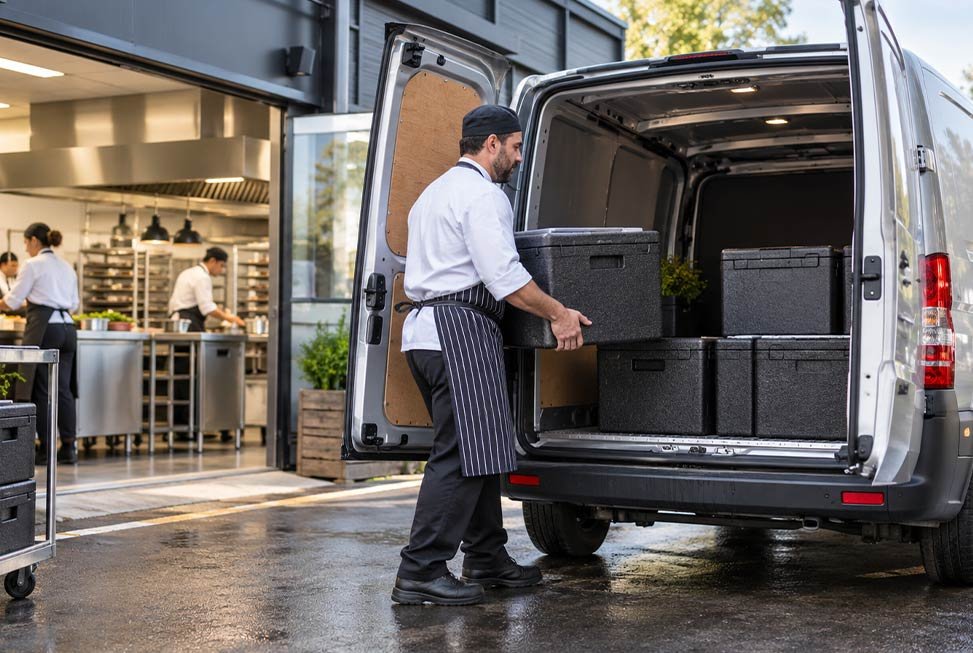
A panel-van layout can work well for a company that needs a protected, organised rear workspace. It may suit electricians, HVAC engineers, caterers, installers or service businesses that carry tools and controlled stock. The objective is to create an interior that reduces wasted movement and protects valuable equipment.
A Kombi can make more sense for businesses where people are part of the cargo plan. A small landscaping team, audiovisual crew or building contractor may need staff to travel together while retaining useful load space behind the rear seats. The business then has to assess whether the remaining space is enough for the real job, not only for a light-load journey.
The practical question is simple: what needs to happen between the rear doors opening and the work starting?
If the answer involves searching through boxes, moving heavy items out of the way or making a second trip for equipment, the vehicle setup needs more thought.
Standardisation is what makes the second van easier
One of the strongest reasons to choose a well-planned van is not the first vehicle itself. It is what happens when you need a second one.
A business that has already worked out the ideal racking arrangement, security routine, load layout and driver equipment can repeat that system. The second van does not have to be designed from scratch. New staff can be trained faster because the layout is familiar. The owner can move between vehicles without losing time finding tools or adjusting to different setups.
This is where a Transporter can be particularly useful as a business scales. A consistent platform lets the company create a recognisable vehicle standard, rather than acquiring a random mix of vans whenever one becomes available.
That consistency can also improve presentation. Matching or similar vans, clean branding and a tidy load-space approach tell customers that the business has systems in place. It is a small but meaningful signal of reliability.
Driver experience supports staff retention.
A growing business eventually needs to think about the driver as well as the owner.
An owner may tolerate an uncomfortable cab, poor storage, or basic specifications because they see the van as a necessary expense. An employee is more likely to judge the vehicle as part of their working environment. If they spend most of the day driving, parking, loading and unloading, the quality of that environment matters.
A well-specified Transporter can make long routes less tiring and busy urban work less stressful. In practice, cab storage, connectivity, parking assistance, climate control, and supportive seating are not always optional extras. They can affect how smoothly the day runs and how much care the driver takes with the vehicle.
The key is to choose features for a clear reason. A business covering city-centre service calls may benefit from parking assistance and a compact body. A company travelling nationally may value motorway comfort and better driver-support systems. The best specification removes friction from the routes the business actually drives.
Do not confuse a premium image with an impractical vehicle
The Volkswagen Transporter has a strong visual identity, which can help customer-facing businesses. But appearance should never override the working requirement.
A more distinctive finish, upgraded trim, or quality signwriting can help a company look established. However, the van still needs to carry the right load legally, access regular job sites and remain affordable to maintain. A premium-looking vehicle that cannot accommodate the day’s normal equipment will quickly become a frustration.
The best approach is to build from the inside out. Start with payload, load dimensions, doors, racking and security. Move to cab comfort and driver requirements. Then consider the exterior presentation.
When you follow that sequence, the finished van looks credible because it is credible. It reflects a business that has planned its vehicle around its work.
Growth is easier when the basics are repeatable.
A VW Transporter is not a shortcut to growth. It will not create more demand, hire better staff or solve every operational challenge. It can remove small, repeated inefficiencies that become more costly as the diary fills up.
The right vehicle can help the business arrive on time, carry the correct equipment, protect its tools, support the driver and create a consistent standard for future vehicles. Those benefits rarely appear as a single line on a quotation, but they can shape how professional the company feels to its staff and customers.
For a business moving beyond its first stage, that is the real value of choosing the right van. It is not simply a replacement. It is a better foundation for the way the company intends to work next.

