
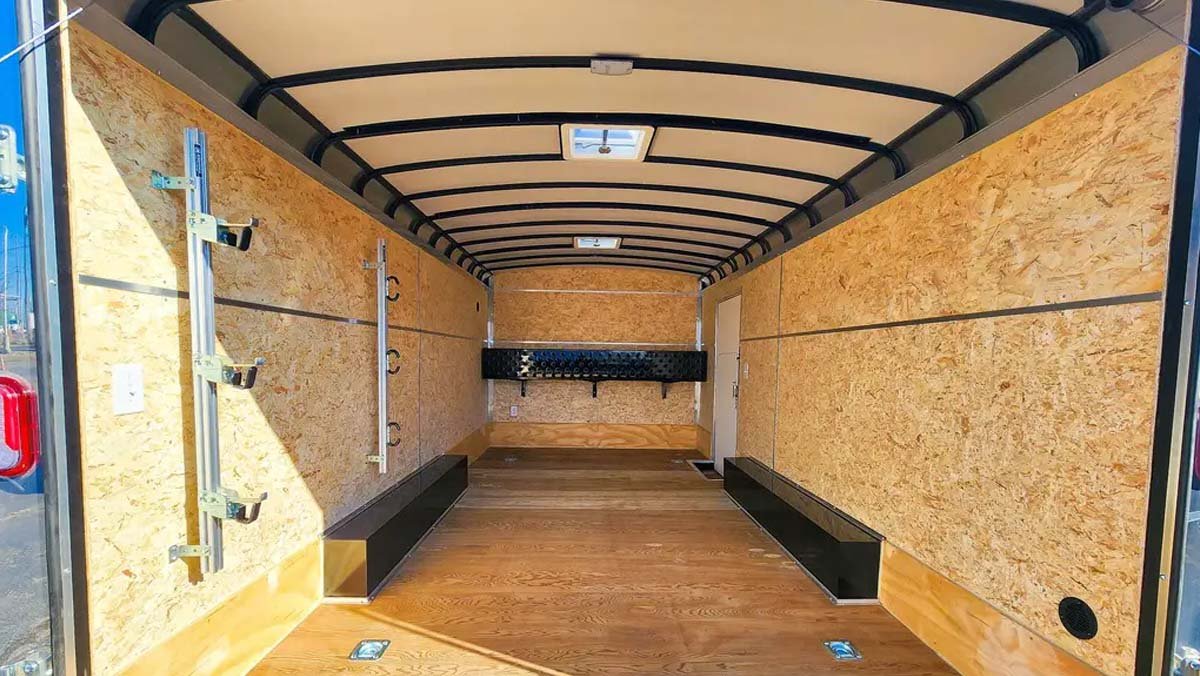
Getting the right trailer is as important as the work you do with it. The better the design, the more efficient the construction or maintenance project. With a strong, well-built, time-saving trailer, your machines and materials can move freely to wherever they’re needed most. So you get the job done sooner and move on to the next one. As they say, time is money.
The Real Cost of Buying Cheap
Low-cost trailers may seem like a perfect solution. You save on initial costs and still have enough money left over to reinvest in your business. Unfortunately, these trailers aren’t durable enough for regular commercial use. The steel is thinner, the welds are weaker, and the suspension struggles with repeated heavy loads. All this adds up to a stream of ongoing problems and repair bills. New axles, a rewelded drawbar, bracing or a complete replacement coupling, replacement or reinforcing drawbar flooring, replacement or rebuild of a trailer coupling, new tires, all contribute to unnecessary bills for repair.
Building a Trailer That Actually Fits the Work
Advantages of owning a commercial-grade trailer include being able to customize it to suit your specific business needs. For instance, landscapers who transport a lot of green waste require cage sides of a certain height to ensure maximum volume with each trip. Similarly, builders who transport soil or aggregate need hydraulic tipping to reduce the unloading time. If your team uses a mini-excavator or compact roller, the trailer requires rated ramp doors and heavy-duty tie-down points such as D-rings, which should be welded onto the chassis, not bolted onto the floor where it can bend under the weight of the equipment.
Opting for a premium, Australian standard, trailer from a reputable manufacturer like Martin Trailers ensures you get the structural integrity and high-grade components necessary for withstanding the harsh conditions found in demanding trade environments.
Tandem axle configurations are better at distributing weight across both the highway and the sort of uneven roads you often have to deal with on site. Leaf spring suspension may not give as smooth a ride as independent on a new 4WD, but they handle the repeated heavy loading of real work better than any other system. Hot-dip galvanizing on the chassis may add a little extra to the bottom line, but it’s a fraction of the cost you’ll be spared if your trailer starts rusting through from exposure to wet soil, compost, and construction site runoff.
What Happens When a Trailer Fails on the Job
This is where things can become quite significant.
For example, if your trailer breaks down due to a snapped axle or failed coupling during the week, and your trailer is out of action, you will have three crew members standing around, a client site that cannot be serviced, and a job that is now behind schedule. The repair bill represents one cost, but the lost billable hours represent another cost, and this cost is often higher. If a subcontractor or second crew was counting on you to move materials, that’s another relationship you will have to manage.
Downtime cost is the most underestimated metric for most trades when pricing equipment. In reality, one bad failure day could cost you more than the price difference between a budget trailer and a commercial one. And if it happens twice, well, the math is easy.
Legal Weight Limits Aren’t Optional
Domestic trailers have Aggregate Trailer Mass ratings that simply don’t match what trade work demands. Loading a light-duty trailer beyond its rated capacity isn’t just mechanically risky, it violates transport regulations, voids your business insurance, and exposes you to personal liability if there’s an accident.
Any trailer with an ATM exceeding 2,000 kg must be fitted with an independent braking system operating on all wheels, such as electric brakes. That’s a legal requirement, not a specification upgrade. Commercial trailers meet this standard as a baseline. Many domestic trailers don’t come close, which means operators either run underloaded, wasting trips, or run overloaded and accept the legal risk.
Neither option makes business sense.
Resale Value Changes the Equation
Let’s talk about something that is often overlooked: commercial trailers retain their value.
A well-maintained, heavy-duty trailer from a reputable builder will get some of its purchase cost back when you sell it. And there’s a market for used commercial trailers. Smaller operators and expanding businesses are always on the lookout for them. A budget trailer won’t have any value left after three years of use on a construction site. A commercial trailer will.
It’s a second-hand tool in every sense, but a well-looked-after commercial trailer is an appreciating asset, not just a cost.
Do the math: lower maintenance and repairs, less downtime, the cost of staying legal and a decent resale value. The commercial trailer becomes the cheap one, the budget alternative costs you more in the end.
Your tools are an investment, not a cost. And guess what? The guys with the growing businesses are doing it like that.

