
As businesses continue to expand their digital operations, the demand for reliable internet infrastructure keeps growing. Whether a company runs cloud services, hosts applications, manages e-commerce platforms, operates SaaS products, or supports remote teams, IP addresses are essential for keeping systems connected and accessible.
However, IPv4 addresses have become increasingly limited. Since the global pool of available IPv4 addresses is nearly exhausted, businesses often face challenges when they need additional IP resources. Buying IPv4 addresses can be expensive and complicated, especially for companies that only need them for a specific project, campaign, region, or period of time.
This is where IPv4 leasing becomes a practical solution.
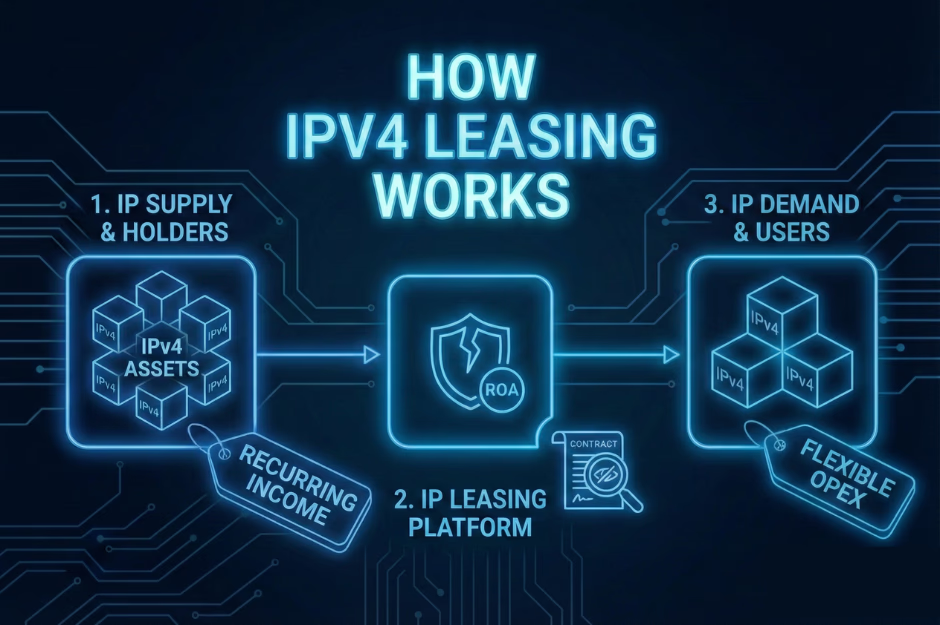
IPv4 leasing allows businesses to use IP addresses without purchasing them outright. Instead of making a large upfront investment, companies can lease IP resources from a provider and use them according to their operational needs.
What Is IPv4 Leasing?
IPv4 leasing is the process of renting IPv4 addresses from an owner or leasing provider for a fixed period. The business leasing the addresses can use them for hosting, networking, email infrastructure, cloud services, VPNs, data centers, or other digital operations.
In simple terms, it works much like renting office space. A company may not need to buy an entire building to run its operations. Instead, it can rent the space it needs and scale up or down when required. IPv4 leasing follows the same idea: businesses gain access to IP addresses without the long-term cost and responsibility of ownership.
For companies that are new to this process, it is helpful to understand how to lease IP addresses properly, including what to check before choosing a provider and how leased IPs can support business growth.
Why Do Businesses Lease IPv4 Addresses?
There are several reasons why businesses choose IPv4 leasing instead of buying IP addresses.
The first reason is cost efficiency. Purchasing IPv4 addresses can require a significant upfront budget. For startups, growing companies, or project-based teams, leasing is often more affordable and flexible.
The second reason is scalability. A business may need more IP addresses during a product launch, marketing campaign, regional expansion, or infrastructure upgrade. Leasing allows companies to increase their IP capacity when demand rises and reduce it when demand slows down.
The third reason is speed. Buying IPv4 addresses can involve negotiations, transfers, registry updates, and compliance checks. Leasing is usually faster, helping businesses access IP resources when they need them.
Another important reason is operational flexibility. Some businesses need IPv4 addresses for only a few months, while others need long-term leasing options. Leasing provides different terms depending on the company’s technical and business requirements.
Common Use Cases for IPv4 Leasing
IPv4 leasing can support many business operations. Some common use cases include:
1. Web Hosting and Cloud Services
Hosting providers, cloud platforms, and data centers often require large numbers of IP addresses to serve customers. Leasing IPv4 addresses helps them expand capacity without purchasing expensive IP blocks.
2. SaaS Platforms
Software-as-a-Service companies may need dedicated IP addresses for applications, customer environments, security controls, or regional service delivery. Leasing gives SaaS providers the flexibility to manage infrastructure as their customer base grows.
3. Email Infrastructure
Businesses that send transactional emails, customer notifications, or marketing campaigns may need dedicated IP addresses for better email delivery management. Leased IPs can help companies separate email traffic and maintain better control over sending reputation.
4. VPN and Proxy Services
VPN providers, cybersecurity firms, and network service companies often require IPv4 addresses across different regions. Leasing can provide access to the required IP space without permanent ownership.
5. E-commerce and Online Platforms
Online businesses may need additional IPs for hosting stores, managing regional websites, supporting payment systems, or improving uptime. IPv4 leasing can support these needs as the business expands.
Types of IPv4 Leasing
Not all IPv4 leasing arrangements are the same. Businesses should understand the available options before choosing a leasing model.
Some companies lease directly from IP owners, while others work with managed leasing providers. Some leases are short-term, while others are designed for long-term stability. Certain providers may also include technical support, routing assistance, reputation checks, RPKI configuration, rDNS setup, or abuse handling.
Understanding the different types of IP leasing can help businesses choose the model that best fits their technical needs, budget, and growth plans.
For example, a small company may only need a small IP range for a short campaign, while an ISP or hosting provider may require a larger block with stronger continuity assurance and operational support.
What Should Businesses Consider Before Leasing IPv4 Addresses?
Before leasing IPv4 addresses, businesses should evaluate several important factors.
IP Reputation
IP reputation is critical, especially for businesses involved in email, hosting, or customer-facing services. Poorly maintained IP addresses may have been abused in the past, which can affect deliverability, trust, and service performance.
Businesses should ask whether the IPs are clean, properly vetted, and suitable for their intended use.
Routing and Technical Support
Leased IPv4 addresses must be properly routed to work correctly. Companies should check whether the provider offers support for routing, LOA documentation, RPKI, rDNS, and other technical requirements.
A provider with strong technical support can reduce setup issues and help the business deploy IPs faster.
Lease Terms
Businesses should carefully review the lease duration, renewal terms, pricing, usage policies, and cancellation conditions. Clear lease terms help avoid disruptions later.
Compliance and Abuse Handling
A reliable leasing provider should have clear policies for abuse reports, network security, and compliance. This is especially important for companies operating at scale or serving customers in multiple regions.
Scalability
A good IPv4 leasing solution should support business growth. Companies should choose a provider that can offer additional IP resources when needed.
Benefits of IPv4 Leasing for Businesses
IPv4 leasing offers several benefits for modern companies.
It reduces upfront costs, making it easier for businesses to access IP resources without a large capital investment. It also allows companies to scale infrastructure based on demand instead of committing to permanent ownership.
Leasing can also improve speed to deployment. Businesses can access IP addresses faster and use them for projects, customer services, or infrastructure expansion.
Another key benefit is flexibility. Companies can lease IPs for short-term or long-term needs depending on their goals. This is useful for businesses that operate in fast-changing digital environments.
Finally, managed IPv4 leasing can reduce technical complexity by providing additional support for configuration, routing, reputation management, and ongoing operations.
Is IPv4 Leasing Right for Your Business?
IPv4 leasing is a strong option for businesses that need additional IP addresses but do not want to purchase them outright. It is especially useful for companies that value flexibility, scalability, and cost control.
If your business is expanding its digital infrastructure, launching new services, supporting more customers, or entering new markets, IPv4 leasing can provide the resources needed to grow efficiently.
However, choosing the right provider is important. Businesses should look for clean IP addresses, transparent lease terms, reliable technical support, and a leasing model that matches their operational needs.
Conclusion
IPv4 addresses remain essential for business connectivity, hosting, cloud infrastructure, SaaS platforms, email systems, and online services. As IPv4 resources become harder to obtain, leasing offers a practical and flexible alternative to buying.
For beginners, IPv4 leasing may seem technical at first, but the concept is simple: businesses rent the IP addresses they need, use them for their operations, and scale based on demand.
By understanding how IPv4 leasing works, what types of leasing are available, and what factors to consider before choosing a provider, businesses can make smarter infrastructure decisions and support long-term digital growth.

