
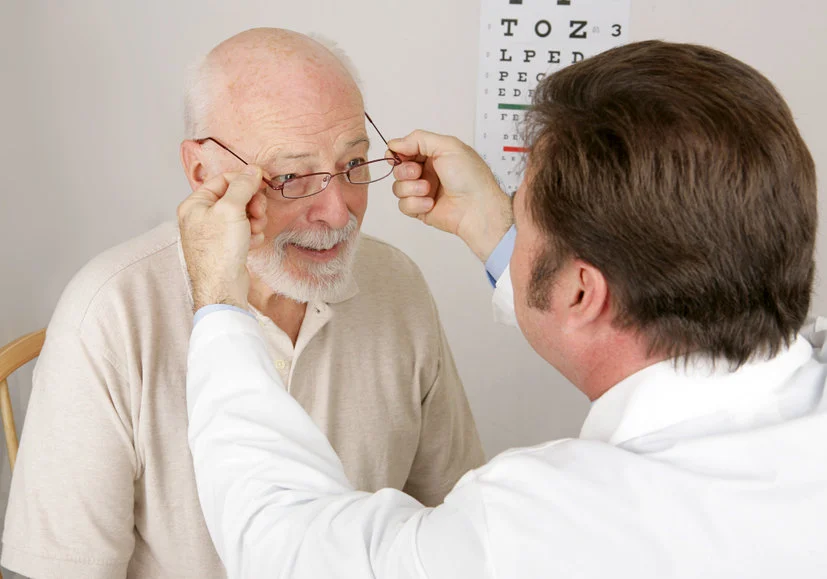
Cataracts are often described as an inevitable part of ageing, something that happens to everyone eventually if they live long enough. That framing is partly true but somewhat misleading. Cataracts do become more prevalent with age, but age is not the only factor driving them, and how quickly they develop is influenced significantly by things within individual control. UV exposure is one of the most consistent of those factors, which is where sunglasses enter the conversation in a way that is more clinically meaningful than most people assume.
What Cataracts Actually Are
The crystalline lens inside the eye is naturally transparent, which is what allows light to pass through it cleanly and focus on the retina. A cataract is the progressive clouding of that lens, caused by changes to the proteins that make up its structure. As those proteins denature and clump together, the lens becomes less clear and eventually opaque enough to cause significant vision impairment.
The process is gradual and typically painless. Most people with early cataracts are not aware of them. As they progress, the common symptoms include increasingly blurred vision, greater sensitivity to glare, faded colour perception, and the need for stronger prescription glasses at more frequent intervals as the changing lens affects the refractive error.
Cataracts are the leading cause of reversible blindness globally. Surgery to remove the clouded lens and replace it with a clear artificial implant is safe, effective, and widely available, but the experience of progressive vision loss while waiting for surgery to become necessary is not one anyone would choose to accelerate through avoidable exposure.
Causes of Cataracts and Where UV Fits In
Age is the most significant risk factor, and this is where the inevitable framing comes from. The lens proteins change over decades regardless of other factors. But the rate at which that process occurs is meaningfully affected by several external influences.
UV radiation is among the most consistently supported of the modifiable causes of cataracts. The lens absorbs UVB radiation particularly efficiently, and cumulative UVB exposure over years damages the lens proteins in a way that accelerates the clouding process. Studies comparing populations with high lifetime sun exposure to those with lower exposure consistently show earlier onset and faster progression of cataracts in the high-exposure group.
Other established causes of cataracts and contributing factors include smoking, which doubles the risk relative to non-smokers through oxidative damage to the lens; poorly controlled diabetes, where elevated blood glucose affects the lens through a separate biochemical mechanism; prolonged use of corticosteroid medications; and significant eye trauma. Some of these are controllable. Some are not. UV exposure sits firmly in the controllable category.
What Sunglasses Actually Do
Sunglasses with adequate UV protection block the ultraviolet radiation that would otherwise reach the lens and contribute to the cumulative damage that drives cataract progression. This is not a marginal effect. The lens absorbs UV across a lifetime, and reducing that cumulative dose reduces the pace at which the proteins degrade.
The key specification to look for is UV400 protection, which means the lens blocks all ultraviolet radiation up to 400 nanometres, covering both UVA and UVB fully. A dark tint without UV400 protection offers no meaningful cataract protection. The pupil dilates behind a dark lens, which actually increases the amount of unfiltered UV reaching the lens if the lens itself is not blocking it. This is one of the more important practical distinctions in sunglasses, and it is frequently overlooked by buyers focused on lens colour rather than lens specification.
Lens colour and tint depth are not reliable indicators of UV protection. A clear lens with a UV coating can provide full UV400 protection. A dark grey lens without it can provide almost none. The UV protection specification, not the appearance of the lens, is what determines whether the sunglasses are doing anything useful for long-term eye health.
Eye Protection Beyond Cataracts
UV exposure is linked to other eye conditions alongside cataracts. Pterygium, a growth of tissue on the white of the eye that can extend onto the cornea, is strongly associated with UV exposure and is more common in people who spend significant time outdoors without eye protection. Age-related macular degeneration, the leading cause of irreversible central vision loss in adults over fifty, has a documented association with cumulative UV exposure as a contributing risk factor alongside genetic and lifestyle variables.
Wearing sunglasses with genuine UV400 protection is therefore not only relevant to cataract prevention. It is a broader investment in long-term eye health across multiple conditions that share UV exposure as a modifiable risk factor.
When and How Much Protection Is Enough
UV exposure is not limited to beach days and summer holidays. UV radiation reaches the eye on overcast days, reflects off water, snow, and light-coloured surfaces, and is more intense at altitude than at sea level. The cumulative dose that affects the lens builds across a lifetime of ordinary outdoor exposure, not just exceptional conditions.
Wearing UV400 sunglasses consistently when outdoors, particularly during the hours of peak UV intensity between 10am and 4pm, and in environments with high UV reflection, reduces the cumulative dose meaningfully over years and decades. For children and young adults, the protective benefit of consistent early habits is greater than for older adults simply because there is more time remaining over which the dose would otherwise accumulate.
Wide-brimmed hats reduce the UV reaching the eye from above and complement sunglasses protection, particularly in high-exposure environments.
The Bottom Line
Sunglasses cannot guarantee that cataracts will not develop. The ageing process affects the lens independently of UV exposure, and other risk factors play their roles alongside it. What consistent use of UV400 sunglasses does is reduce one of the most significant modifiable contributors to cataract development and slow the rate at which the process occurs.
That is a meaningful benefit for a habit that costs nothing beyond the initial purchase of a pair of sunglasses that meets the UV400 standard. Given that the alternative is a lifetime of unfiltered UV accumulating in the lens, the case for wearing them consistently is straightforward.

