
At A Glance
- Are your patio doors jamming or sticking? It could be due to the patio door hinges
- Adjusting your patio door hinges is a simple DIY technique to try before replacing hinges
- Adjust the hinges clockwise to tighten/raise and anti-clockwise to lower/loosen it off
- Test regularly and keep a close eye on any issues so you can take action promptly
Are you having trouble with your patio door hinges? This quick and easy guide will help you fix the issue(s) you encounter. Most of the time, adjusting patio door hinges is an easy process. It’s like adjusting double-glazed door hinges; the process should feel very familiar.
Thanks to this advice, brought to you by ironmongery experts at Locks & Hardware, you should be able to align your patios for smoother sliding.
Patio doors remain one of the most popular exterior door types in the UK. Yes, we don’t get the best weather here, but when we do, we want to make the most of that nice weather. When your patio door hinges start acting up, though, it can make using your beloved patio a bit of a headache. How do we avoid that problem? Adjusting the hinges is usually enough. Let’s take a look at what you need to do.
Hinge Misalignment On Patio Doors: Will This Damage Your Doors?
Unfortunately, yes – if your patio doors aren’t opening or closing properly, it will cause damage. If you open your patio doors, they should more or less glide open. There should be no resistance, right?
They should smoothly slide open, not catching or jamming. However, if your patio door hinges are out of sync, jamming becomes common. Over time, this will cause your patio doors to stick. It may even cause them to scratch along the floor, damaging the running track and the patio door frame.
More importantly, ill-adjusted patio door hinges become a safety concern. Your patio doors offer a quick way out of the building in the event of an emergency. Well, if your patio doors jam due to the patio door hinges not being properly aligned, you could have to smash the glass to escape. We never want you to have to replace your patio doors, so adjusting the hinges regularly is recommended.
Adjusting misaligned patio door hinges will make sure that your doors open smoothly. As soon as you spot problems with your patio doors, it’s time to check the hinges!
Why Do Misaligned Patio Door Hinges Cause Doors To Stick?
Your patio door hinges hold the door level and in place with the frame and the track. If the hinges sag, then the doors are no longer being held level, right?
If the doors are not level, they are more likely to dip. Dipped doors drag along the floor as opposed to smoothly sliding across the running track.
By the way, it’s important to note that patio door hinge adjustments are commonplace. Think about the weight of your patio doors. It’s only natural that, over time, the hinges may feel the strain of holding such a weight. Luckily, adjusting your patio door hinges is a quick and simple process. Most times, you only need a simple set of tools, including a screwdriver and, potentially, a Hex key.
Realigning Patio Door Hinges For Smooth Operation: Step-By-Step
The first thing you need to do is gather your tools. You’ll need a Hex key (usually a 5mm Hex) as well as a screwdriver. We recommend getting both a Philips and a flat head, as you may need both. We also would suggest getting your hands on a spirit level so you can verify everything is level afterwards.
Identifying Your Patio Door Hinges
Most patio doors in the UK will use either butt hinges or flag hinges. If you have ever had to go about adjusting double-glazed door hinges or exterior UPVC door hinges, these should feel familiar to you!
Butt hinges are the most common choice for UPVC doors and patio doors. These have a set of two metal plates, one of which connects to the door and one which connects to the frame. They then have a pin that connects the hinge’s leaves together. Butt hinges are a little less adjustable than flag hinges.
Flag hinges, meanwhile, are more versatile. They’ll have a singular metal plate that is connected to the door and then a pin that connects the ‘flag’ plate to the door frame. They are very easy to adjust and allow for lateral and vertical adjustments, meaning you can tighten/loosen or raise/lower the door.
Discovering Your Issue
Patio door hinges may need to be adjusted laterally or vertically. Depending on your hinge type, you may be limited to one adjustment or no adjustments. If your hinges do not allow any adjustment, you may consider upgrading to more flexible patio door hinges.
Start by scanning the door for any signs of gaps. Gaps near the top or bottom mean your door needs to be adjusted vertically. Any gaps around the sides mean you need a lateral adjustment. If you think your eyes are playing tricks on you, use a spirit level to verify whether your door is level or not.
Adjusting Patio Door Hinges
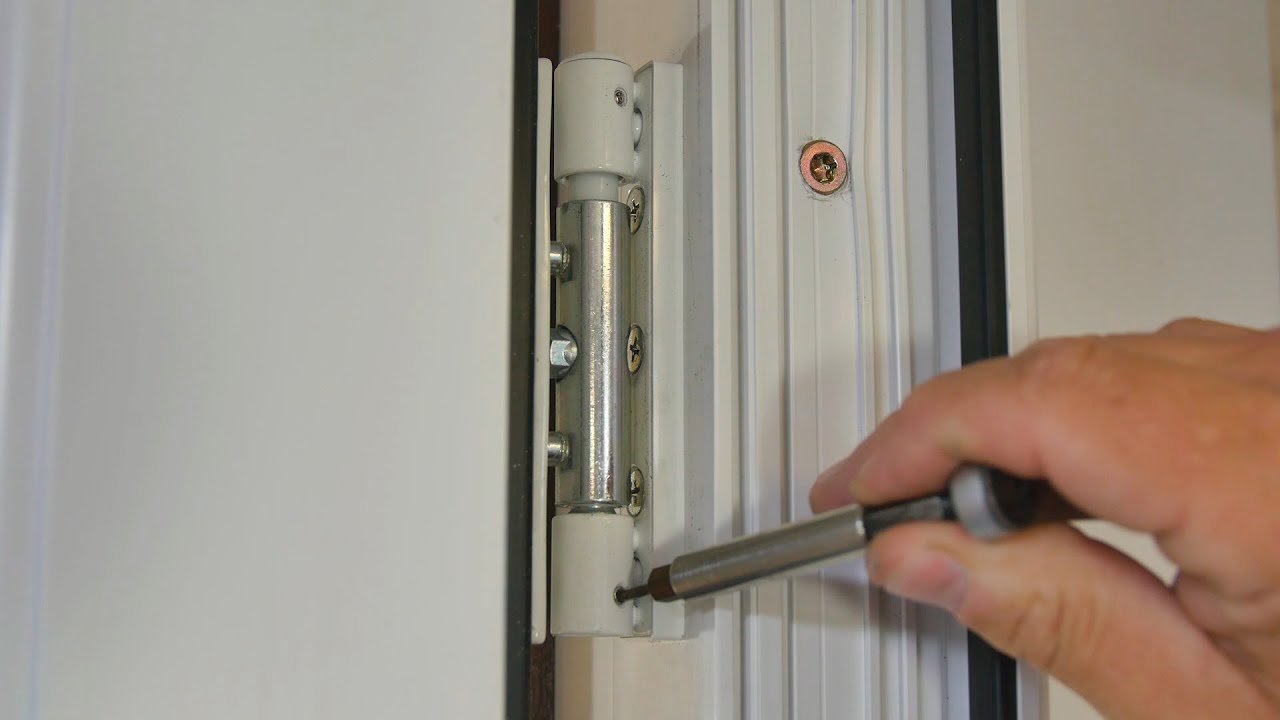
To get started, open the door. Take a look at the hinges. Can you see a small adjustment screw near the top or bottom of the hinge? If so, you need to use a Hex key to adjust this. Turn the screw with a small increment. For raising or tightening the door, go clockwise. To lower or loosen the door, go counterclockwise. Most of the time, one or two small rotations are enough to get started with.
Adjust the height or lateral position of the door. This should be enough to get your patio doors back in line with the running track. Close the door over and test. Look for any signs of struggle, jamming or general resistance. If you aren’t quite where you need to be, keep adjusting. You’ll find the sweet spot eventually!
Keep Your Hinges Clean & Tight For Best Performance
Lastly, Locks & Handles experts recommended two things to us. One, checking your patio door hinges on a regular basis. As soon as you spot any alignment issues, adjust!
Adjustments could be needed after each season, as the temperature and weather can have an impact on door alignment. While adjusting your hinges, be sure to give them a good cleaning. Use a basic mix of detergent and hot, soapy water. Give the hinge a thorough scrub down, removing any debris.
Once you get the hinge clean, give it time to dry, then wipe it down. Finally, apply some lubricant – we recommend a silicone-based lubricant to avoid any oil build-up.
Carry out both these steps on a regular-ish basis, and you should be able to avoid many of the issues with patio door hinges. A little maintenance and cleaning go a long way toward keeping those patio doors opening smoothly!

