
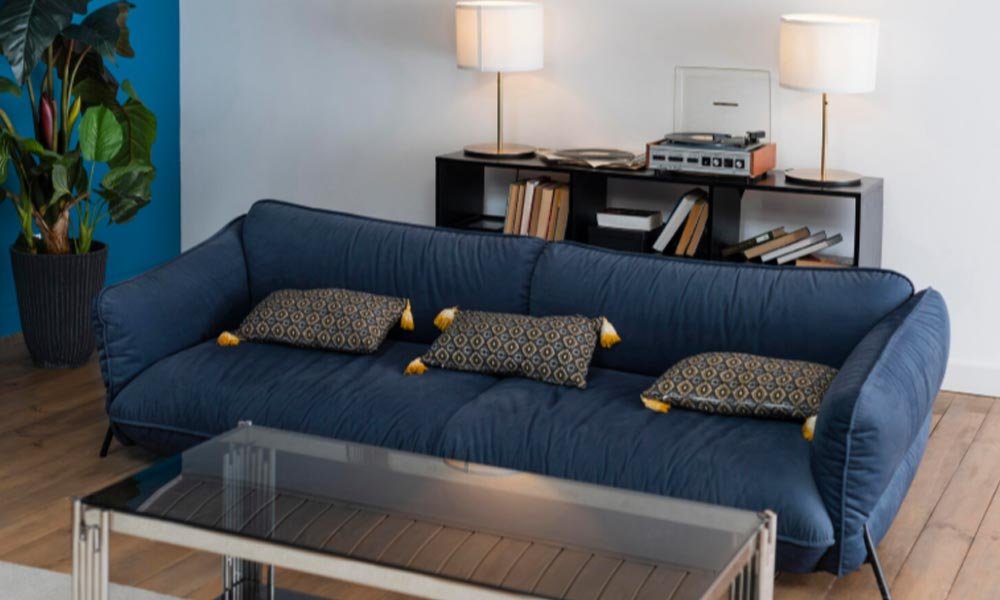
A sectional sofa can completely change the way a living room works. It can open up a small apartment, define a conversation area in an open-plan home, or turn a large family room into a more comfortable gathering space. But the shape of the sectional matters as much as the style, fabric, or color.
Two of the most common options are L-shaped and U-shaped sectionals. They may look similar at first because both offer more seating than a standard sofa, but they create very different room experiences. An L-shaped sectional usually extends in one direction, making it useful for corners, open layouts, and rooms where traffic flow matters. A U-shaped sectional surrounds the seating area from three sides, creating a more enclosed and social arrangement.
The right choice depends less on which one looks bigger or more luxurious and more on how the room is used. A living room for quiet evenings, light entertaining, and flexible movement may need a different layout from a family media room where everyone gathers for movies, games, or long conversations.
This is why comparing l-shape and u-shape sectionals should start with the room itself: its width, walking paths, focal point, window placement, and the number of people who actually use the space every day. A sectional should not simply fill the room. It should organize it.
Start With the Room’s Movement Pattern
Before choosing between an L-shape or U-shape sectional, look at how people move through the room. This is the part many homeowners overlook.
A living room is rarely just a sitting area. It may connect to the kitchen, hallway, balcony, staircase, entryway, dining area, or home office corner. If the sectional blocks these paths, even a beautiful sofa will feel wrong.
An L-shaped sectional usually works better when the room needs an open side for movement. It can sit along two walls, float in an open-plan space, or create a soft boundary between the living and dining areas. Because one side remains open, the room usually feels lighter and easier to walk through.
A U-shaped sectional works best when the living room is meant to become a central zone. It naturally says, “This is where people gather.” That can be perfect in a large family room or media space, but it can feel heavy in a narrow room or apartment where every walkway matters.
A good first question is not “Which sectional seats more people?” It is “Where do people need to walk?”
The Space Planning Difference
The most practical difference between L-shaped and U-shaped sectionals is the amount of open floor area they leave behind.
An L-shaped sectional tends to use two sides of a room or zone. It gives you seating without closing the area completely. That makes it easier to add a coffee table, side chair, floor lamp, storage unit, or play space.
A U-shaped sectional takes control of the seating zone. It works almost like built-in furniture because it creates a strong shape in the middle of the room. This can make the room feel intentional, but it also requires more breathing room around the sofa.
Here is a simple way to compare them from a layout perspective:
| Design factor | L-shaped sectional | U-shaped sectional |
| Best room type | Small to medium rooms, apartments, open-plan layouts | Medium to large rooms, family rooms, media rooms |
| Traffic flow | Easier to keep one side open | Needs more space around the seating zone |
| Visual weight | Lighter and more flexible | Stronger and more enclosed |
| Seating feel | Casual, open, adaptable | Social, immersive, conversation-focused |
| Coffee table fit | Works with rectangular, round, or nesting tables | Often needs a larger square, oval, or soft-edged table |
| Best focal point | TV wall, window, fireplace, or open living area | TV wall, fireplace, central conversation area |
| Risk if room is too small | May still work if scaled correctly | Can feel crowded or block movement |
This table shows why the right sectional is not only about seating capacity. It is about how the sofa changes the geometry of the room.
When an L-Shaped Sectional Works Better
An L-shaped sectional is often the safer and more flexible choice for modern homes, especially when the living room has to serve more than one purpose.
It works well in apartments because it can sit into a corner and leave the center of the room more open. It also works in open-plan homes because it can subtly separate the living area from the dining area without adding a wall or divider.
Another advantage is flexibility. An L-shaped sectional can be styled in several ways. It can face a TV, open toward a view, frame a coffee table, or leave room for an accent chair on the opposite side. If the room changes over time, the layout is easier to adjust.
This type of sectional is especially useful when:
- the living room is narrow or medium-sized;
- one side of the room must stay open for walking;
- the sofa needs to sit against a wall or corner;
- the room also includes a dining area, desk, or play space;
- the homeowner wants a relaxed layout without fully enclosing the seating area.
For many homes, the L-shape is the better everyday solution because it provides generous seating while still respecting the room’s movement.
When a U-Shaped Sectional Makes More Sense
A U-shaped sectional is not just a bigger sofa. It creates a different kind of living room.
Because seating wraps around three sides, the room feels more grounded and social. People can face each other more naturally, which makes U-shaped sectionals especially useful for family gatherings, game nights, large households, or entertainment rooms.
They also work well when the living room has a clear central focal point. This could be a TV wall, fireplace, large coffee table, or conversation area. The U-shape helps pull attention inward, making the space feel complete.
However, U-shaped sectionals need enough room to breathe. If they are squeezed into a tight space, they can make the room feel boxed in. The walkway around the sofa should still feel comfortable, and the coffee table should not be so large that people have to squeeze between furniture.
A U-shaped sectional is usually a better choice when:
- the room is wide enough to support furniture on three sides;
- the living room is mainly used for gathering or entertainment;
- the household needs maximum seating;
- the space has a clear focal point;
- the room would otherwise feel too open or empty.
In a large room, a U-shaped sectional can solve the opposite problem of small-space design: it can make a big living area feel warmer, more connected, and easier to use.
Think About the Coffee Table Before You Buy
One practical way to test whether a sectional layout will work is to imagine the coffee table.
With an L-shaped sectional, the coffee table usually sits in the open angle of the sofa. Rectangular tables work well when the sectional is long and narrow. Round or oval tables can soften the corner and improve flow in smaller rooms. Nesting tables can be useful when the space needs flexibility.
With a U-shaped sectional, the coffee table becomes more central. It needs to be reachable from several sides without blocking legroom. A table that is too small may feel lost inside the seating area, while one that is too large can make the center feel crowded.
A useful rule is to leave enough space for people to walk or move their legs comfortably between the sofa and the table. In most living rooms, the coffee table should feel close enough to use but not so close that it traps people in their seats.
This is where many sectional layouts succeed or fail. The sofa may fit the room on paper, but the room only works if the furniture around it also fits.
The TV Wall and Focal Point Matter
Another important question is where the eye should go when someone enters the room.
If the main focal point is a TV wall, both L-shaped and U-shaped sectionals can work, but they create different viewing experiences. An L-shaped sectional gives one longer viewing side and one lounge side, which works well for casual TV watching. A U-shaped sectional gives more seats direct access to the focal point, but only if the room is wide enough.
If the focal point is a fireplace or window, an L-shape may feel more natural because it can frame the view without closing it off. In contrast, a U-shape may work better when the goal is conversation rather than outward-facing views.
In open-plan homes, the sectional itself can become the focal point. An L-shape can divide zones gently. A U-shape can create a stronger room-within-a-room effect.
The best layout is the one that makes the focal point feel intentional rather than accidental.
Comfort Is About Posture, Not Just Size
Many people assume a larger sectional is automatically more comfortable. That is not always true.
Comfort depends on seat depth, back support, cushion firmness, arm height, and how people actually sit. A deep U-shaped sectional may be perfect for lounging, but it may not be ideal for guests who prefer upright seating. An L-shaped sectional with a chaise may be better for a household that wants both daily seating and one comfortable stretch-out spot.
Think about the main use case. A living room for conversation needs seats where people can sit comfortably and face each other. A movie room may benefit from deeper seating and more enclosed lounging. A small apartment may need a sectional that supports comfort without using every inch of available floor space.
A sectional should match the body language of the room. Do people sit upright with coffee? Stretch out with a book? Watch movies? Host guests? Let kids sprawl on the cushions? These habits should guide the shape.
A Simple Decision Framework
When choosing between L-shaped and U-shaped sectionals, it helps to move from room conditions to lifestyle needs.
Use this quick decision guide:
- Choose an L-shaped sectional if you need open traffic flow, flexible furniture placement, or a sectional that works in a smaller room.
- Choose a U-shaped sectional if you have a larger room and want the seating area to feel more enclosed, social, and entertainment-focused.
- Choose an L-shape if the living room also needs to support dining, work, children’s play, or open-plan movement.
- Choose a U-shape if the living room is the main gathering space and seating capacity matters most.
- Avoid a U-shape if the room feels narrow before furniture is added.
- Avoid an oversized L-shape if the chaise blocks a doorway, balcony path, or natural walking route.
This kind of decision-making is more reliable than choosing based only on appearance.
Final Thoughts
L-shaped and U-shaped sectionals both have a place in modern living room design. The right choice depends on the relationship between room size, movement, focal point, and daily habits.
An L-shaped sectional is usually better for flexibility, smaller spaces, and open flow. A U-shaped sectional is stronger for large rooms, social seating, and entertainment-focused layouts. Neither is automatically better. Each one solves a different spatial problem.
The most successful living rooms are not filled with the largest furniture possible. They are designed around how people move, sit, gather, relax, and live.
A sectional should make those everyday moments easier. When the shape fits the room, the whole space feels more natural.