
Running a trade business used to mean showing up, doing good work, and getting paid.
Now there’s another layer sitting on top of the actual job. Quotes. Invoices. Scheduling. Customer messages. Follow-ups. Photos. Reviews. Paperwork.
Most tradesmen didn’t sign up for that part.
But here’s the reality: the contractors growing fastest right now aren’t always the ones working harder. Often they’re the ones removing friction around the work itself.
The right app won’t fix a bad business. But it can save hours every week, help jobs move faster, and stop admin from following you home every evening.
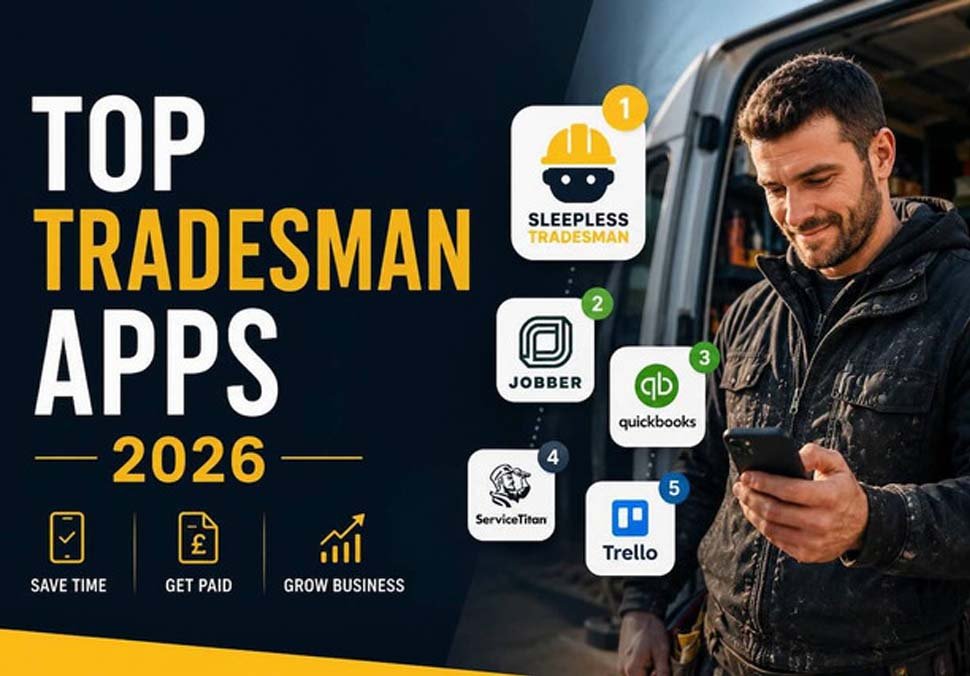
Here are five tools worth looking at.
1. Sleepless Tradesman
https://sleeplesstradesman.com
Best for: AI quoting, invoicing, lead response, and reducing admin work
Most tradesmen don’t lose time because of the physical work.
They lose time afterward.
The job finishes, but the admin starts. Quotes need sending. Invoices need creating. Customers need follow-ups. Photos from site need organizing. Messages keep arriving while you’re driving to the next job.
That work slowly stacks up.
For many contractors, evenings become a second shift sitting with paperwork rather than switching off after a long day.
That’s where Sleepless Tradesman is built differently.
Instead of acting like another complicated business dashboard with dozens of features buried in menus, it works more like an AI pocket admin for tradesmen. The focus is simple: reduce repetitive admin and help contractors move faster while still on-site.
A roofer can finish a property inspection, upload photos, add a short description of the work required, and generate a professional quote before leaving the driveway.
A plumber can complete an emergency repair and create an invoice immediately instead of rebuilding job details later from memory.
An electrician can organize customer information, generate paperwork faster, and respond before potential customers start contacting competitors.
That speed matters more than many contractors realize.
Customers often contact multiple companies at once. The contractor sending a clear professional quote first usually creates trust early. Sometimes jobs are won before pricing even becomes the deciding factor.
Sleepless Tradesman helps remove delays that quietly cost businesses money every week.
Features Contractors Actually Use
Instead of trying to become accounting software, project management software, and CRM software all at once, the platform focuses on practical workflows for trades.
AI Quote Generator for Tradesmen
Create professional quotes from job descriptions and site photos without starting from scratch every time.
Invoice Generator for Contractors
Generate invoices directly from completed work and send them quickly before paperwork starts piling up.
Mobile Workflow
Handle quotes and invoices directly from site using a phone or tablet.
Faster Lead Response
Reply while customer interest is still fresh rather than waiting until late evening.
Less Admin After Hours
Reduce paperwork that normally follows contractors home every night.
Who Sleepless Tradesman Works Best For
The platform works particularly well for:
- Roofers
- Electricians
- Plumbers
- HVAC contractors
- Landscapers
- General contractors
- Small trade teams
- Independent tradesmen
Many small businesses don’t need massive systems with endless features. They need something that saves time immediately.
That’s really where Sleepless Tradesman fits.
Not by replacing skilled work.
By reducing the admin work surrounding skilled work.
2. Jobber
Best for: Scheduling and customer management
Jobber has become a familiar name for service businesses and contractors because it handles a lot of operational work in one place.
Scheduling jobs, organizing customers, tracking visits, and managing teams become easier when everything sits inside one system.
It tends to work well for businesses growing beyond a solo operation.
A one-person electrician might only use part of it, while larger teams usually benefit more.
Strengths:
- Scheduling
- CRM tools
- Team management
- Customer communication
3. QuickBooks
Best for: Accounting and cash flow tracking
Tradesmen often avoid accounting until tax season arrives.
Then suddenly receipts start appearing from glove boxes, drawers, and old emails.
QuickBooks helps organize the financial side before things become painful.
It handles invoices, expenses, taxes, and reporting in a cleaner way than spreadsheets or paper systems.
According to QuickBooks Resource Center, cash flow management remains one of the biggest challenges for small businesses.
Keeping financial visibility matters.
Strengths:
- Expense tracking
- Accounting
- Reporting
- Payment management
4. ServiceTitan
Best for: Larger service businesses
ServiceTitan sits on the heavier side.
For bigger HVAC companies, plumbing operations, or growing field service businesses, it can centralize large parts of daily operations.
Smaller businesses sometimes find it more software than they need.
But once teams grow, dispatching and operational visibility become more important.
Strengths:
- Dispatch management
- Reporting tools
- Customer management
- Large team workflows
5. Trello
Best for: Simple organization
Trello wasn’t built specifically for trades.
But many contractors use it anyway.
Why?
Because sometimes simple works.
A few boards for:
- quotes waiting
- jobs in progress
- completed projects
- customer follow-ups
That alone can reduce mental clutter.
Not everything needs to become enterprise software.
Strengths:
- Easy setup
- Mobile friendly
- Task tracking
- Lightweight workflow management
Which App Makes Sense?
The answer depends on where the bottleneck sits.
If paperwork keeps stealing evenings, AI quoting and invoicing tools make sense.
If scheduling feels chaotic, customer management platforms help.
If finances feel messy, accounting software matters.
Most trade businesses eventually end up using a combination rather than a single app doing everything.
Final Thought
Trades are changing quietly.
Customers expect faster replies now. Faster quotes. Cleaner invoices. Better communication.
The physical work still matters most.
But the systems surrounding that work increasingly decide how smoothly a business runs.
And honestly, many contractors are probably one good app away from getting several hours back every week.

