
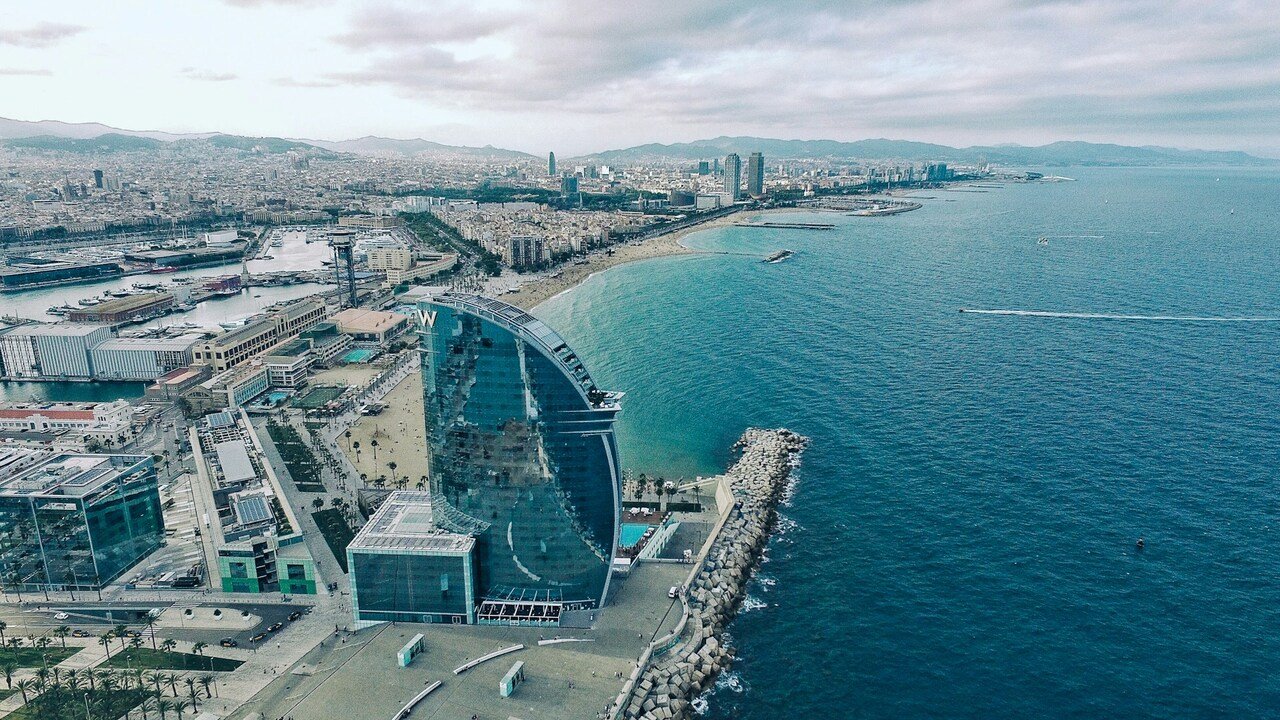
When buying abroad, you’ll come across many guides with requirements, but few go on to explain the paperwork and the order they arrive in. Spain is a bureaucratic country, so you have your work cut out.
The first document a foreign buyer needs is a Número de Identificación de Extranjero (NIE) – a Spanish tax ID, without which no property registration can proceed.
Only once that’s in hand does the practical sequence start:
- A reservation, usually formalised through an arras contract that commits both sides with a deposit of roughly 10% of the price
- Then a bank valuation (tasación) if financing is involved
Spanish lenders are required to issue a FEIN mortgage offer with a fortnight cooling off period before signing – it’s built in so that buyers aren’t pressured into a decision at the notary’s desk.
The whole process can run around six to twelve weeks end to end. It’s something that a luxury real estate agency Barcelona, like BCN Advisors, can help with, and it’s a very different rhythm from a UK property sale built around speed. Barcelona’s process is procedural and notary-driven. It’s sequential.
The tax bracket that catches people off guard
Something that catches first-time buyers out is that Catalonia’s transfer tax isn’t a flat rate. The Impuesto de Transmisiones Patrimoniales scales with price. It is:
- 10% on the portion up to €600,000
- 11% between €600,000 and €900,000
- 12% up to €1.5 million
- 13% above that
On a property in the upper-mid or luxury segment, that tiering does change the final number somewhat. So once notary fees, registry costs and legal representation are all bundled together, total acquisition costs are more like 10% to 15% on top of the purchase price.
Why the local market rewards specialist guidance
The paperwork only makes the matter of who to buy from and where all the more important. Barcelona’s luxury segment is concentrated in a handful of distinct areas, such as:
- Eixample’s modernist buildings
- Zona Alta neighbourhoods of Sarrià–Sant Gervasi, Gràcia, Les Corts and Pedralbes
- Ciutat Vella’s Gòtic and El Born, with lots of medieval streets
- Diagonal Mar, for newer waterfront developments
Using boutique agencies in these areas can mean accessing just the desirable properties, and just in the desirable neighbourhoods. They can provide guidance on the tax and notary process from abroad, while you focus on discovering what it is you’re looking for.
The numbers behind Catalonia’s current market
Timing is everything, and according to Catalonia’s own statistics institute, mortgage lending reached 9,883 new mortgages in June 2026 (up 14.2% YoY) with €2,225.3 million in capital lent.
This is clearly a market that has many buyers actively financing purchases at a faster pace than a year earlier. And that requires good local knowledge to gain bargaining power and context. Sellers want to trust you.
For anyone looking into Barcelona property, it’s important to know the paperwork inside out, so that you can adapt with the fast paced market. Speed will be needed, and this means doing the right steps in the right order. NIE, arras, FEIN disclosure, escritura, registration.

