
In the fast-paced retail environment of 2026, the moment a customer exits a store is not the end of a transaction, but the beginning of a mobile marketing campaign. As digital advertising costs continue to climb and consumer attention spans shorten, physical touchpoints have regained their status as vital branding tools. For boutique retailers and small business owners, the humble shopping bag has evolved from a simple carrier into a sophisticated communication device. By investing in custom printed paper bags that reflect a brand’s unique aesthetic, businesses are successfully transforming their clientele into a fleet of brand ambassadors. This strategy ensures that a company’s visual identity is projected throughout high traffic shopping districts, creating a ripple effect of brand awareness that digital banners simply cannot replicate.
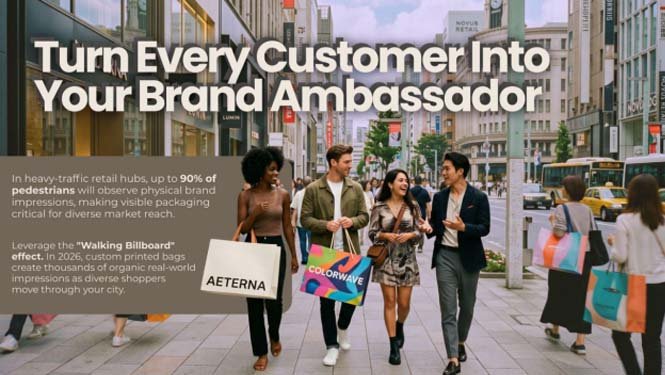
The “Walking Billboard” effect is a phenomenon that leverages the daily movement of consumers to generate thousands of organic impressions. When a person carries a striking, well-designed bag through a crowded mall or a busy city street, they are providing a silent endorsement of that brand to every passerby.
The Power of the Walking Billboard
Unlike a stationary billboard on a highway, a custom retail bag is a dynamic advertisement that moves exactly where your target audience spends their time. In high traffic areas, a single bag can be seen by hundreds of potential customers within an hour. This form of passive discovery is incredibly effective because it occurs in a real world context. When an onlooker sees a peer carrying a high quality bag from a specific boutique, it sparks curiosity and social proof.
In 2026, retail growth is heavily dependent on these physical impressions. A generic, plain bag is a missed opportunity for brand storytelling. A custom bag, however, communicates the personality, price point, and values of the shop before the observer even steps through the door. It creates a sense of “membership” among customers, where carrying the bag becomes a statement of style or ethical alignment.
Bridging the Gap: QR Codes and AR Experiences
The most significant trend in 2026 packaging is the integration of digital technology with physical paper. Smart retailers are no longer viewing their bags as static objects. Instead, they are adding QR codes into their designs to create a seamless bridge between the physical and digital worlds.
A strategically placed QR code can link a customer directly to a loyalty program registration page, an exclusive “first look” at an upcoming collection, or a discount code for their next purchase. This turns the bag into a lead generation tool that works long after the initial sale. Even more innovative is the rise of “AR unboxing” experiences. By scanning a code on the side of the bag, customers can unlock an Augmented Reality animation on their smartphones that tells the story of the product’s origin or provides a digital styling guide. This interactive element increases the “shareability” of the packaging on social media, further extending the brand’s reach.
Agility for Events: The “Last Minute Print” Advantage
For event planners and pop-up shop entrepreneurs, the biggest challenge has always been lead times. In the past, custom packaging required months of planning and massive minimum orders. However, the retail landscape of 2026 demands agility. Pop-up shops and local markets often happen on short notice, and having branded materials is essential for making a lasting impression.
PaperPak’s “Last Minute Print” service has become a game changer for SMEs and event organizers. This service allows businesses to secure high quality, branded bags with incredibly fast turnaround times, making it possible to have professional packaging ready for a weekend event or a seasonal promotion. This level of flexibility ensures that even temporary retail experiences can benefit from the walking billboard effect, allowing small brands to look just as established as their larger competitors.
Sustainability as a Brand Statement
In 2026, the “green” credentials of a brand are a primary driver of consumer loyalty. A plastic bag is often seen as a liability, whereas a high quality paper bag signals a commitment to environmental responsibility. Customizing these bags with water based inks and FSC certified materials allows a business to wear its values on its sleeve.
Boutique retailers are increasingly using their bag designs to highlight their sustainable practices. Small text on the bottom or gusset of the bag explaining its recyclability or compostability reinforces the brand’s image as a conscious and ethical choice. For many consumers, the decision to reuse a sturdy, attractive paper bag for their own daily needs is a form of sustainable living, which keeps the brand’s logo in circulation even longer.
Elevating the Perceived Value
There is a direct correlation between the quality of a store’s packaging and the perceived value of its products. A premium, heavyweight paper bag with reinforced handles and a matte finish suggests that the contents are precious and high end. This “premiumization” of the shopping experience is essential for boutique retailers who want to justify a higher price point.
When a customer walks out with a bag that feels substantial and looks like a piece of art, they feel a greater sense of satisfaction with their purchase. This emotional connection is what drives repeat business. The bag becomes a souvenir of the shopping experience, often kept and reused, which provides ongoing brand impressions in the customer’s home or office.
Strategic Design for Brand Recall
For maximum impact, the design of a custom bag must be intentional. In 2026, minimalist designs with bold, central logos are trending alongside “hidden” details, such as a splash of color on the inside of the bag or a motivational quote on the inner rim. These small surprises delight the customer during the unboxing process and make the bag more memorable.
Marketing managers are also focusing on color psychology. Using a distinctive brand color that is consistent across all platforms—from the website to the physical bag—ensures instant brand recall. When a shopper sees that specific shade of forest green or burnt orange from across a street, they immediately associate it with the store, reinforcing the brand’s presence in their mental map of the city.
Final Thoughts
Custom packaging is no longer just a luxury for big box retailers; it is a mechanical necessity for any SME looking to grow in a competitive market. By embracing the walking billboard effect and integrating digital innovations like QR codes, retailers can turn a simple necessity into a powerful marketing asset.
Whether you are launching a new boutique, running a pop-up shop, or planning a major corporate event, the bags your customers carry are your most visible representatives. With the availability of rapid printing services and the shift toward sustainable, high quality paper, there has never been a better time to invest in your physical brand presence. In 2026, the retail race is won by those who understand that every customer leaving the store is a potential ambassador, and every bag they carry is a story waiting to be told. It is time to let your packaging do the talking and watch your brand impressions soar.

